


Part I. Seascape Photography. Part 5
Description
This section is from the book "Complete Self-Instructing Library Of Practical Photography", by J. B. Schriever. Also available from Amazon: Complete Self-Instructing Library Of Practical Photography.
Part I. Seascape Photography. Part 5
476. Lighting
Lighting. The position of the source of light is an important factor in the success of seascapes. When sunsets and strong cloud effects are desired, the water usually plays a secondary part. Seascapes looking directly at the sun are very rarely successful. In order that they may be effective, waves, big or little, require just as much careful lighting as any landscape or figure subject.
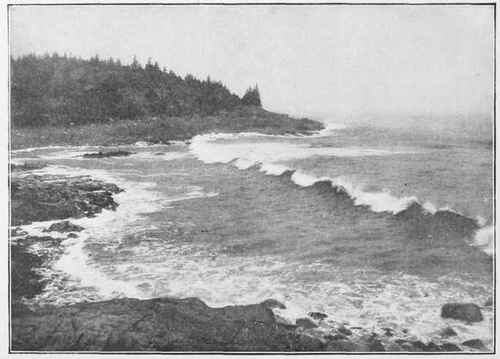
MARINE Study No. 26 By S. I. Carpenter.
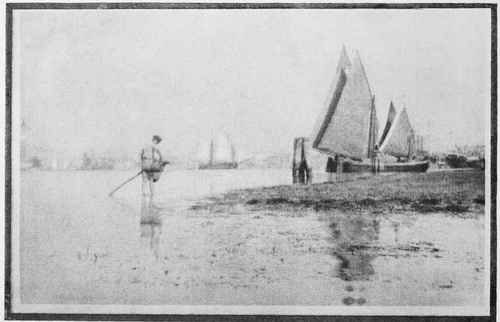
BOATS NEAR VENICE Study No. 27 - See Page 314 By Wm. H. Phillips.
477. Background
Background. The question of background is of much importance. By background we mean the general tone of the sky that backs up the seascape. A very light or blue clouded sky is visually unsatisfactory for seascapes. The water is devoid of tone and the spray is invisible when it rises above the skyline. During the springtime, however, you will find that both heavy cloud forms and rugged seas are to be seen anywhere along the coast, and a combination of these should be secured, either together or separately, and later combined in the finished print.
478. Exposures
Exposures. The light at the seaside from spring until late autumn is extremely bright, and you must exercise the greatest amount of care not to over-expose. Use the fastest speed at which your shutter is capable of working, unless you are employing a focal-plane shutter, or a shutter that will render exposures less than 1-150 of a second. The reason why seascapes require such a brief exposure - which is fully one-half that required for landscapes - is because much of the light coming from the sky is reflected by the water, which acts as a mirror. In addition to this the air is much more clear and pure, and the actinic quality of the light is not impaired by smoke or fog that reduces the normal light of towns so considerably.
Continue to:


My Books

