


Blue Color Mixing
Description
This section is from the book "Cyclopedia Of Painting", by George D. Armstrong. Also available from Amazon: Cyclopedia of Painting.
Blue Color Mixing
When it is desired to tone a blue down, a little burnt sienna and white should be added.
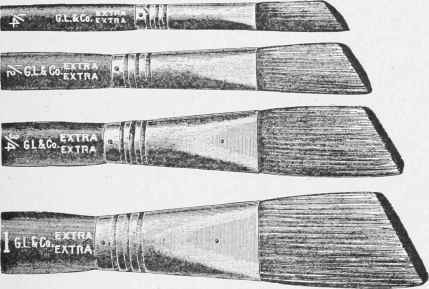
Fig. 22. Angular Bristle Fresco Brushes.
Antwerp Blue
This color should always be bought ready made. If necessary to imitate it, mix one part of bright green with two parts of ultramarine, add a very little zinc or other white, but not lead. Brunswick blue is frequently used in the place of Antwerp blue.
Azure Blue
One part of ultramarine blue and forty parts of zinc white. Another shade may be obtained by mixing forty-four parts of white, twenty-nine of green anil twenty-seven of blue. Or celestial blue and a little red on a base of white will give an azure shade.
Berlin Blue
This is another name for Prussian blue.
Blue Grass Tint
One part of Prussian blue, three parts of emerald green, seven parts of white lead.
Bremen Blue
This is a color to be bought only ready made. It is not much used, and is not suitable for an oil color.
Bronze Blue
A dark blue color, which may be made by mixing three parts of black with one of Prussian blue.
Brunswick Blue
This is sold ready made, but can be imitated by adding white lead to Prussian blue in sufficient quantity to obtain the desired tint.
Coeruleum
This is an artist's color of a light and somewhat greenish blue tone. An imitation may be made from ultramarine and white, with a little yellow, although the color is a difficult one to imitate successfully.
Celestial Blue
About equal parts of Prussian blue, chrome green and white lead will give this color, but there should be most white, and the tint should be more blue than green.
Chinese Blue
Another name for Prussian blue.
Cobalt
This color is one of the best artist's colors, and cannot be successfully imitated. It is a beautiful and most useful color, but unfortunately it is expensive, and it is therefore used only in the finest work.
Dark Blue
Obviously this is no definite color. Manufacturers often use one part of white, two of chrome green, and seven of Prussian blue. Rut ultramarine, or indeed any blue, may be used, and this may be first lightened with white, and black added as may be desired.
Fog Blue
Equal parts of burnt sienna and Prussian blue, lightened up with about twenty parts of white lead.
French Blue
Mix four parts of white, one of green, and four of ultramarine blue. The name is also applied to the best quality of artificial ultramarine.
Gobelin Blue
Mix together four parts of ivory black, two of white, one of chrome green, and three of Prussian blue.
Granite Blue
To produce this shade mix two parts of black with six of white and one of ultramarine blue.
Continue to:


My Books

