


Advaita According To The Saiva Siddhanta. Part 2
Description
This section is from the book "Studies In Saiva-Siddhanta", by J. M. Nallasvami Pillai. Also available from Amazon: Studies In Saiva-Siddhanta.
Advaita According To The Saiva Siddhanta. Part 2

The delusion whereby men deem that the truth which is not, That is the cause of hapless birth.
Here the word used is and the meaning is, of the two things before us, say a copy of Kural and a copy of Sivajnana-bodham, if one mistakes one book for the other, this would be delusion, Mityajnanam or false knowledge or Avidya or ignorance. Here the existence of two books is not denied. But if the words used were
 instead of
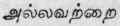 then the meaning would be altogether altered, and it would mean, there being no copy of Kural before us at all, we fancy there is a copy of Kural before us. In the former case, the reality of the objects before us is not questioned. In the latter case, the reality of the object presented before us is denied. In the familiar example of shell and silver, both objects and ideas are real, and we can never have these conceptions, unless both were real and different. The delusion arises from the fact that we mistake one thing shell, for the silver which is not, and this arises also because on account of the resemblance which exists between these objects, shell and silver, or the two books, when there was no shell before us, the silver would present itself before us, this would illustrate the Abhava meaning, but ordinarily no such object or idea will present itself before us. This same difference will be felt throughout in the working of the two systems. One holds the world including the body and ths soul as real, but ordinarily, we often mistake the body for the soul, and minister to its wants instead of seeking the soul's salvation.
And so too, we mistake the soul for God. If we only understood the true nature of each of these, and understood the transient nature of the pleasures of the body, and gave them up for the eternal bliss of the union with God, our path would be clear. Saint Tiruvalluvar follows up this view and states in his second stanza:

"Darkness departs (with which we have been identifying ourselves before) and rapture springs to men who see the mystic vision pure, from all delusion free." In this view, no attempt is made to deny the reality of the world and sin and ourself and God, but one is asked to discriminate one thing from the other. In the other view, there is no world, no sin, no soul, and all these fantasies arise. But there is no reply to the question 'How?'
However, let it be premised that the Siddhanta writers take the negative prefix to mean not Abhava but
but
Sadrisya  and we will proceed to show how they develope their system.
"Count Tolstoy defines religion as "a certain relation established by man between his separate personality and the endless universe or its source; and morality as the perpetual guiding of life which flows from this relation." And Siddhanta writers attempt to trace alike this relation between God and man and the world, and thereby discover the means or Sadana for our guidance whereby we can get rid of all pain and sin, And the first postulate is contained in two words in the second Sutra of Sivajnanabodham.

"God is one with them, and different"
And Saint Arunandi Sivacharya adds another relation, 'one and-ditferent.' Here then is involved 'Abheda,' 'Bheda,' and 'Bhedabheda' relations. But other schools postulate one or other of these relations, and the similes used are 'gold and ornament' to denote the Abheda relation, 'darkness and light,' to denote Bheda relation, and 'word and meaning' to denote the Bhedabheda relation. And there can be no reconciliation between these views, and no meeting place between them. The Siddhanta postulates all these different relations, but by other similes, such as body and soul to denote Abheda, eye and the sun to denote Bheda, soul and the eye to denote Bhedabheda, as set forth above in the stanza quoted from Saint Umapati-Sivacharya, and yet so as not to be contradictory. There must therefore be something peculiar in this view which makes it possible to admit of all these different relationships or aspects, and yet not to be self-contradictory, and to appear as one harmonious whole. And it is this peculiar relation which cannot be easily defined or described, that is denoted by the word 'Advaita.'
And Saint Meykandan accordingly discusses this word in his first argument. "The word Advaita cannot mean one-ness or Ekam; no one can think of himself as one, and the very thought implies two things. The word simply denies the separateness of the two, Anyansti, and hence God is said to be one with the souls," that is to say, Advaita is Ananya or non-different. The relation is such, that though there be difference in substance, no separation is possible, and the word is used to emphasize* its non-different character. And he instances the case of a man and his body. Though these are different, yet man identifies himself with the body, owing to the inseparable connexion between the two, and so practically they are one or non-different. So too, the soul identifies itself with God, though God is not the soul, and the soul is not God ; and hence God is one, and not one with the soul. And in the second stanza, he develops this argument, and analyses the text 'Ekamevadvitiyam' and illustrates it.
Continue to:


My Books

