


Leukemia
Description
This section is from the book "A Manual Of Pathology", by Guthrie McConnell. Also available from Amazon: A Manual Of Pathology.
Leukemia
Leukemia is a disease of the blood-producing structures, characterized by a permanent increase in the leukocytes other than the polymorphonuclear variety, and by lesions of the bone marrow and hyperplasia of the lymphoid tissues.
The cause is unknown.
According to the type of leukocyte predominating in the blood, leukemia may be myelogenous, lymphatic or mixed, when the two varieties are present. The disease may be also either acute or chronic.
In the spleno-medullary (myelogenous) type the myelocytes are present in great numbers, constituting from 20 to 60 per cent of all leukocytes. The total number is about 300,000 per cubic millimeter as an average, but counts as high as 750,000 have been reported. The number, however, may be as low as 100,000 or even in some the count may approximate the normal. The differential count of the white cells in combination with the usual increase in number is the characteristic feature. The main form is the large mononuclear myelocyte containing neutrophilic granules. They may constitute some 35 per cent, of all the leukocytes. The nucleus is situated, as a rule, in the center and is well staining, it may be excentric, however, or poorly staining. The large cell with the pale nucleus is seldom found in any other condition than in this form of leukemia. The neutrophilic granules may be lacking entirely and the nuclei show hydropic degeneration. Occasionally small myelocytes with deeply staining nuclei may be present.
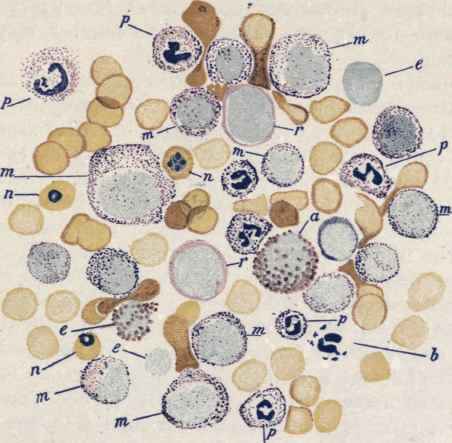
Fig. 128. - Myelogenous Leukemia (Cabot).
a, Eosinophilic myelocytes; 6, "mast-cell;" e,e, e, ordinary eosinophile; m, m, myelocytes; n, n, normoblasts; p, p, poly nuclear neutrophils; r, r, Reizungsformen (Türck) (cover-glass film stained with Ehrlich's "triacid" and drawn with camera lucida).
Continue to:


My Books

