


Chapter V. The Great Dane
Description
This section is from the book "British Dogs, Their Points, Selection, And Show Preparation", by W. D. Drury. Also available from Amazon: British Dogs: Their Points, Selection And Show Preparation.
Chapter V. The Great Dane
Right at the head of the list of giants among Domestic dogs stands the Great Dane, Boarhound, Tiger Mastiff, or German Mastiff - a dog that is unsurpassed for immense strength combined with activity and elegance of outline. Though at no period of its existence a popular variety in the ordinary sense of that term, yet it has a very decided following. In the past probably the fact that it was necessary to crop the dog acted more or less prejudicially against the breed; but this ear-cutting is now abolished, and as the variety becomes better known, and the erroneous impressions formed about it are dissipated, we may confidently look forward to an increase in its number of admirers. Unlike many breeds, the Great Dane has not been taken in hand by royalty, but it has always had a number of exalted personages amongst its followers. If we mistake not, Lord Salisbury favours the hound as a companion; while the Iron Chancellor had a Great Dane - one Tyras - as his most devoted companion.
When the First Edition of this work appeared, the variety was comparatively little known in England; but it was therein suggested that the Great Dane was a breed that was well worthy of recognition. By such eminent naturalists as Linnaeus and Buffon it was classed as a distinct variety, though none of the earlier naturalists described the breed with the detailed accuracy that leaves no doubt as to the actual conformation of the dog at the time. Buffon classed the Great Dane among those varieties that had been modified and formed by climatic influence, and asserted that it originated from the sheepdog. He also held that the small Danish dog was a modified Bulldog.
Sydenham Edwards, writing in the early part of the last century, said that the Harlequin Dane was occasionally used in England as an ornamental appendage to run with the coaches of the wealthy, instead of the smaller Dalmatian.
Richardson was evidently well acquainted with the dog, which he describes as rarely standing "less than 30m. at the shoulder, and usually more." He further describes a Great Dane named Hector, the property of the Duke of Buccleuch, that measured, when eighteen years old, and his legs had given way, 32m. at shoulder, and computed that when in his prime the dog must have measured 32½in.
Of writers and students of our own time the most consistent and also the most persistent was Mr. Frank Adcock, whose monster specimens Satan and Proserpina were dubbed by the Fancy "the Devil and his Wife." Mr. Adcock thus eulogises the breed: "Enormous in size, sensitive in nose, of great speed, unyielding in tenacity and courage, and full of intelligence, there is no variety that can so well sustain the part of the dog of the hunter of large game."
The latter part stands in need of some slight modification; for however suitable the Great Dane may be for hunting in climates akin to our own, yet in India it has not been found suitable for the plains during the hot season.
To judge by records of the past, there seems to be no doubt that the Great Dane is as old a pure breed as any that we now possess. From ancient pictures it will be seen that the Great Dane as we know him now existed hundreds of years ago. He is, moreover, one of the few dogs depicted upon coins. One such coin in particular was recently referred to by Herr Gustave Lang as being in the Museum at Munich, and is said to bear the head of a typical modern Great Dane, with square muzzle, cropped ears, and long, clean neck. This coin belongs to the fifth century B.C.
A few years ago the Badminton Magazine published a series of "Old Sporting Prints," several of which contained excellent likenesses of the modern Great Dane. Take, for example, the November number for 1895 (pp. 511 and 513). This illustrates boarhounds from an etching by Antonio Tempesta, copied by him in 1609 from an old tapestry. Again, in the February number for 1896 (p. 264) there is a picture, dated 1640, of five hounds attacking a wild boar. In fact, one black dog in particular almost exactly agrees in conformation with the dogs of our own day.
The name Boarhound (by which the Great Dane was formerly known) is said to have originated from the German word Bauer (meaning peasant), as at one time the breed was largely in the hands of such people. Far more likely, however, are they to have been called Boarhounds from the fact that they were actually employed in hunting wild boars, as must have been the case, if we may rely upon numerous old sporting pictures and writings. Occasional Great Danes must have been imported into England long before the breed was known in the show-ring. For instance, the writer knows of an oil painting from life that depicts a most typical fawn Great Dane that was imported about 1812, and said to stand 33m. at the shoulder. The dog has cropped ears, a short coat, and all the points of a Great Dane, but is called at the back of the picture "an Irish Wolfe Dog."
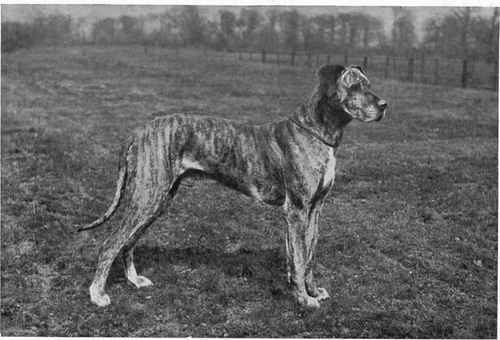
Fig. 26. - Mrs. Violet Horsfall's Great Dane Champion Viceroy of Redgrave.
Unfortunately, some of the first Great Danes that were exhibited were very bad-tempered, and this helped to give the breed a bad name. Many people fancied them savage and uncontrollable, and quite unsuitable as companions. As a matter of fact, of all the larger breeds the Great Dane is the most suitable as a house dog, especially if he always lives indoors and has to act as guard and companion as well as pet. His smooth, sleek, short coat is so easy to keep clean and free from "doggy" smells. He is, as a rule (if properly trained and not treated as a savage brute), most docile and good-tempered, and easily taught anything; while his courage and determination as a guard are unequalled. From his earliest puppyhood his devotion to his master or his mistress is remarkable, and he will not go trotting off after strangers, as so many puppies of other breeds have the annoying habit of doing at an early age.
Continue to:


My Books

