


Chapter XXXIX. The Scottish Terrier
Description
This section is from the book "British Dogs, Their Points, Selection, And Show Preparation", by W. D. Drury. Also available from Amazon: British Dogs: Their Points, Selection And Show Preparation.
Chapter XXXIX. The Scottish Terrier
Scotland is prolific in Terriers, and for the most part these are long-backed and short-legged dogs. Such are the Dandie Dinmont, the Skye, and the Aberdeen Terriers, the last now merged in the class recognised at our shows as the Scottish, or Scotch, Terrier; but the old hard and short-haired "Terry" of the West of Scotland was much nearer in shape to a modern Fox-terrier, though with a shorter and rounder head, the colour of his hard, wiry coat mostly sandy, the face free from long hair, although some show a beard, and the small ears carried in most instances semi-erect, in some pricked.
The descriptions given by Youatt, Richardson, and "Stonehenge" are in practical agreement, and apply to the kind of Terrier spoken of. There has, however, been of late years a rearrangement of classes of Terriers, and it is with those now recognised by the several clubs and show authorities that we have to deal.
The dogs now recognised as Scotch Terriers are closely allied to the Skye Terrier, and by a number of gentlemen of Skye and the South-west Highlands were at one time called Skye Terriers. It was suggested that, as they presented sufficiently distinctive characteristics, they might form a separate class at our shows, under the name of Highland Terriers. The idea, but not the name, was adopted; indeed, the name has given rise to some discussion. Cairn Terrier was suggested, but not generally adopted; they have also been called the "Die-hards."
"Whinstone" insisted on the breed being called the Scottish Terrier. Under the words "Scots" and "Scottish" Dr. Ogilvie refers those who consult this dictionary to "Scotch," which, he says, "is the established word." As long as we get Scotch collops from Scotch bullocks, and Scotch whiskey from Scotch barley, to aid the digestion of the collops, we may surely have Scotch Terriers ; and, at all events, the Terrier under any name will bite as sore.
Mr. J. Gordon Murray, in the First Edition of "British Dogs," described three strains of these Terriers, according to the localities in which they were reared, and, as will be seen, differing only in minor points. Of these he says: -
"The Mogstad Skyes were of a dark greyish colour, with wiry hair from 3 in. to 3½ in. long, with body low but long, and measuring well in girth; legs stout and short, and well provided with very strong claws; the greater part prick-eared, and all of them excellent workers.
The Drynocks are another very splendid breed of the original pure Skyes, closely resembling the common Scotch seal in colour, short, wiry hair, with body of a medium size, a good deal like the Mogstads, and all of them first-rate workers.
The Camusennaries are another famous breed of the very real and pure Skye Terriers, and derive their name from a wild and mountainous tract of land in Skye, extending from Coirnisk on the west to the Spar Cave on the east. The breed was originally reared there by a Lieut. Macmillan, long passed away; the whole of them short, wiry-haired, like the afore-named breeds; colour almost always dark all over, middle part of hair in many instances grey, but again dark next the skin, no white on feet or chest; a thin, medium-sized prick ear, and very pointed ; and in every third or fourth litter a reddish-yellow one."
Among Scottish fanciers Captain Mackie did a great deal towards improving the breed, though his first love was for a dog of a type not now recognised - namely, the long, low, bat-eared Skye form. He was a man of remarkable force and energy, and, as is often the case with such men, of a singularly frank and generous disposition. On the subject of this Terrier he was an enthusiast, and undertook voyages among the Hebrides, and long and arduous journeys through the Western Highlands, collecting information, and purchasing the best specimens of the breed procurable, from the oldest known strains. The story of at least one of these journeys of discovery is excellently told in the "Dogs of Scotland," to which we refer readers for details. The result was that Captain Mackie soon got together a kennel of these Highland Terriers of acknowledged superiority.
As companion dogs of the Terrier group, the Scottish Terriers possess qualities that recommend them to many. They are hardy and plucky, will stand any weather, and are good for any amount of sport. Disposed to be impetuous and self-willed, they often require more than ordinary care in training; but that is well repaid, for the material is good to work upon. Another advantage to many people is that - the coat being of a length and quality that does not long hold wet and dirt - these dogs may be allowed a place on the hearth-rug or the door-mat; and those who want a dog, of whatever breed, to be really obedient, lovable, and well-behaved, cannot have the animal too much with them.
With regard to the popularity of the Scottish Terrier (Fig. 97) in this country, no better proof can be adduced than that afforded by the entries at shows of the present day, or by the number of registrations that are recorded at the Kennel Club. One has but to carry one's mind back twenty years to fully recognise the headway the compact little Terrier has made in the Fancy. Though in this respect, of course, not to be compared with the Fox-terrier and one or two other breeds that might be instanced, yet he has made a bold bid for the favour of the dog-fancying public, and the measure of success attained could hardly have been anticipated by even the dog's warmest admirers. As indicating the possibilities there are in breeding the Scottish Terrier, it is worthy of record that at least £ 250 has been paid for a first-class specimen.
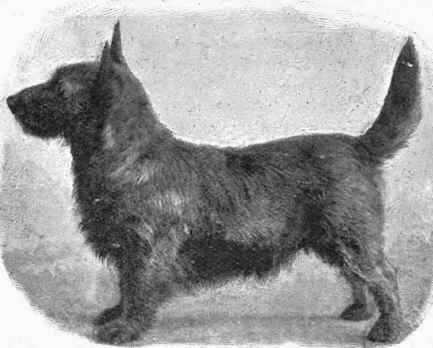
Fig. 97. - Mrs. Hannay's Scottish Terrier Champion Villain.
To what, then, it may be asked, is this popularity due? Mainly, it may be said, to the exertions of a few ardent souls, foremost among whom were Mr. J. A. Adamson and Mr. H. J. Ludlow, both of whom were breeding, showing, and winning prizes a quarter of a century ago, and working with a will to make known, by every legitimate means, the game and hardy Terrier whose cause they had espoused. Later on we find Mr. Ludlow, in conjunction with Messrs. Blomfield, Hammond, and Spelman, rendering still further service to the breed by bestirring themselves to establish a Club, which was accomplished in 1887, and now lives and flourishes exceedingly. It was about this time that Scotchmen woke up to the fact that there was money in the breed, and that, moreover, they were passionately fond of their native Terrier. Whether this is so or not matters but little; for henceforth the admirers of the Scottish Terrier steadily increased, until it now boasts a strong phalanx of supporters on both sides of the Border, while even across St. George's its merits have duly been recognised.
Continue to:


My Books

