


The Irish Water Spaniel. Part 3
Description
This section is from the book "British Dogs, Their Points, Selection, And Show Preparation", by W. D. Drury. Also available from Amazon: British Dogs: Their Points, Selection And Show Preparation.
The Irish Water Spaniel. Part 3
The tail is, like the face, a sure indication of the breeding; and, at the risk of repeating myself, I assert that no other breed of dog exists with a smooth tail which carries as much hair elsewhere as does the Irish Spaniel. These characteristics - viz. tail, face, and topknot - stamp him, in my opinion, as the purest of pure-bred dogs. The tail is shorter than in most other dogs, thick at the root, and tapering to a sting at the point. For about 3m. from the body it is covered with small curls, the remaining portion being smooth.
The coat should consist of innumerable hard, short curls, free from woolliness. These curls get felted, or daggled, before moulting time. A woolly coat shows the Poodle cross, which may also be detected in the head. A silky coat, with an inclination to waviness instead of curl, indicates a cross with Land Spaniel or Setter; this cross also shows itself in the quality of the leg-feather. The colour is that dark shade of liver called puce, having a rich plum-coloured hue when seen in the sun. The best-coloured dog of the breed I ever saw was my old Champion Duck, when she was in the prime of life. A patch or star of white is often seen on the chest, and should not be regarded as fatal to a dog's winning, as it is met with in the best strains; in fact, in a litter of puppies, if there is one with more white on than the rest, it, as a rule, is the largest. Whether white is a sign of strength or not I am not prepared to say.
In respect to symmetry - by which I mean the general appearance of the dog, his carriage, style, etc. - he should be judged as you would judge a cob. Many of the dogs of the present day are too leggy. A leggy Spaniel, of any breed, I dislike. The best dogs we have seen of late years of this breed have been : Doctor and Rake, bred by Mr. Robson, Hull; Pilot and Sailor, breeder Rev. A. L. Willett; Blarneystone and Chance, bred by Mr. Salisbury; Mr. P. J. D. Lindoe's Blarney, Mr. Engelbach's Pat, Mr. Fletcher's Young Doctor, Mr. Morton's Paddy and Shamrock, Mr. C. Pilgrim's Barney, and Bridget and Patsey, all bred by myself."
The Irish Water Spaniel, like many another breed, doubtless originally resulted from a cross, although it seems impossible to trace his history farther back than M'Carthy's strain, no information apparently being available earlier than the last forty or fifty years; and it is very doubtful if the Irish Water Spaniels of even that period much resembled those of to-day.
Their pedigrees that are registered show, by the scantiness of detail, that little care was taken in the compiling of such records before dog shows were instituted. Even Mr. M'Carthy, who is so constantly referred to in terms almost suggestive of the idea that he originated the breed, was silent as to their origin and genealogy; and, indeed, he says nothing of the pedigree of his own famous dog Boatswain, contenting himself with saying that "the true breed has become very scarce" - a phrase used so often, and in reference to so many breeds, that the general public might be excused for suspecting that in reality there exists no longer a "true breed" of any dog at all.
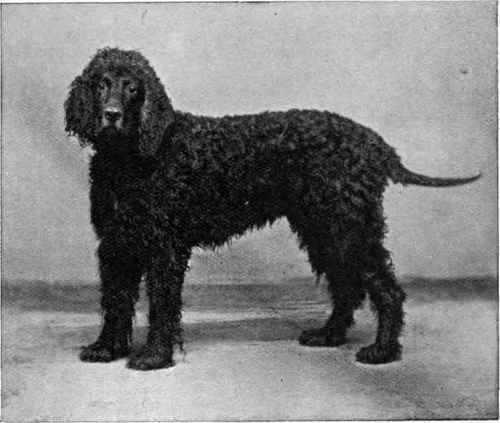
Fig. 71. - Mr. J. W. Jelly Dudley's Irish Water Spaniel Shamus O'Flynn.
There is a point on which Mr. Skidmore lays great stress - namely, the smooth tail; but Colonel Hutchinson, in his work, "Training Dogs," depicts the Irish Water Spaniel with a tail as bushy or well fringed as a Setter.
Mr. Skidmore is also emphatic about the necessity of the eye being "a deep, rich brown," and he expresses his horror of a "gooseberry" eye; and yet an eminent modern authority is found to advocate this yellow tint under the title of a "sparrow-hawk" eye - certainly an unfortunate simile, as the hawk is the exemplar of wildness and ferocity. The writer is surprised that no mention is made, either by Mr. Skidmore or by any of the other authorities, of the characteristic gait of the Irish Water Spaniel, a sort of lounging swing or slight roll, which he shares not only with other aquatic dogs, but also with the men claimed by the same element.
Here is the description of the Irish Water Spaniel published by the Sporting Spaniel Society: -
Skull
Rather capacious, forehead prominent.
Jaws
Of medium length, and square, with a fair lip.
Eyes
Medium sized, by no means prominent, of a clear brown shade.
Ears
Set low, long, and well feathered, measuring from 24m. to 26in. from tip to tip.
Neck
Of good length and muscular.
Shoulders
Strong, but lengthy and sloping.
Fore Legs
Rather long, big boned, and straight, covered with little ringlets.
Body
Strong and well ribbed, chest deep and moderately broad.
Loin
Rather long, strong, and slightly arched.
Hindquarters
Long and muscular, the stifle moderately bent.
Feet
Large, round, and hairy.
Stern
Thick at the root and tapering to a fine point, shortish, carried quite stiff and straight. It should be covered with short smooth hair, for while no approach to feather underneath is tolerable, it must not owe its whip-like appearance to congenital eczema.
Coat
Oily, and on the body composed of small, crisp curls. On the head a well-marked topknot of long ringlets, commencing at the occiput and coming down in a peak on the forehead, leaving the face smooth.
Colour
A pure deep liver without any white.
Fig. 71 shows Mr. J. W. Jelly Dudley's Shamus O'Flynn, a beautiful specimen that looks capable of undertaking all the duties of his race.
Continue to:


My Books

