


The Otter-Hound. Continued
Description
This section is from the book "British Dogs, Their Points, Selection, And Show Preparation", by W. D. Drury. Also available from Amazon: British Dogs: Their Points, Selection And Show Preparation.
The Otter-Hound. Continued
At length one of the searchers lifts his head, yet still in silence, to call the attention of the huntsman, who immediately hastens to the spot, where on his knees he carefully examines that to which his notice has been drawn, and, after a few moments, raising himself from his prostrate position, winds his horn merrily. Immediately the whole pack gathers to his side, and as they rise the bank a beautiful chorus fills the air, they having once more touched the trail, the sign that had been found being the 'spur' of the otter where it had left the river. Then the hunt proceeds in all its excitement, but the certainty of a kill is always as improbable as it is probable, and in this is the beauty of the chase. Should, however, the luck be with the pack and the hunt terminate with a good kill, the huntsman brings the now dead otter on the bank, and here he carries out the offices attached to the matter. First the 'pads' (feet) are dismembered from the legs and the 'mask' (head) is severed from the body. Then the 'pole' (tail) is cut off at the root, and now the 'pelt' (skin) is stripped from the carcase, which is then cast as a reward among the longing and excited pack. These trophies are distributed among the field of followers, the ladies, who often grace an otter-hunt with their presence, receiving their full share."
A breed of dogs selected and kept to this game, even if originally of the identical stock of our modern Bloodhounds, would naturally diverge in some characteristics, and the wet-resisting coat, so necessary to a dog so much in the water, would be developed; whereas, on the contrary, the treatment to which the companion Bloodhound is subjected tends to fine and soften his coat: or there may have been rough-coated hounds of the Bloodhound type from which the Otter-hound has sprung; and, according to both Caius and Turberville, Bloodhounds were used for this sport. But whether either of these suppositions is correct or not, he is in shape and voice and style so truly a hound that one cannot think he is indebted to a strain of either Spaniel, Terrier, or Deer-hound blood for his rough and wet-resisting coat.
Mr. Buckley says: "I have tried a cross with the Bloodhound, but it was a failure, as the progeny were much too tender. I think the probable origin was the Southern Hound, Water Spaniel, and old Harrier blood. This, however, is only my individual opinion, derived from ten years' breeding; but it is difficult to say, as there are at least two distinct types."
In general appearance - always excepting the coat - the Otterhound much resembles the Bloodhound; he should be perfect in symmetry, strongly built, hard and enduring, with unfailing powers of scent, and a natural antipathy to the game he is bred to pursue. The head should be large, broader in proportion than the Bloodhound's, the forehead high, the muzzle a fair length, and the nostrils wide; the ears long, thin, and pendulous, fringed with hair; the neck not naturally long, and looking shorter than it really is, from the abundance of hair on it. The shoulders should slope well, the legs be straight, and the feet a good size (with as much webbing between the toes as possible, as this assists him to swim), but compact; the back strong and wide; the ribs, and particularly the back ribs, well let down; the thighs big and firm, and the hocks well let down; the stern well and thickly covered with hair, and carried well up, but not curled. The colours are generally grizzle or sandy, with black and tan more or less clearly defined, or black and tan with a slight tinge of grizzle.
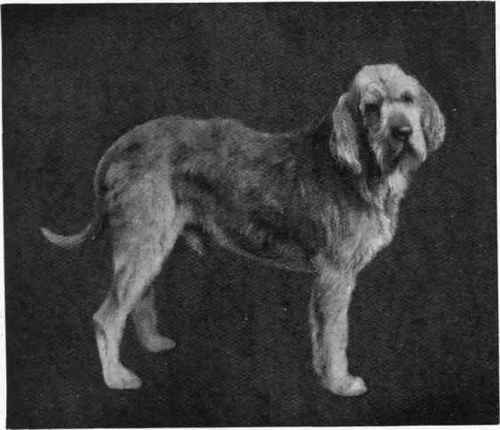
Fig. 47. - Mr. E. Buckley's Otter-Hound Mawddwy Stanley.
The Otter-hound is one of the few varieties of the Domestic dog that is puzzling to the novice. True, the breed is occasionally represented at shows in winter and late autumn; but it is only at the more important gatherings, like those of the Kennel Club, Birmingham, and Cruft's, that a classification is provided. There one finds represented the Dumfriesshire packs, or those associated with the names of Mr. Uthwatt or Mr. Buckley. To the latter gentleman we are indebted for the following measurements and weight of a well-known show-bench winner and worker in his Mawddwy Stanley (fig. 47): Age, 4¾ years; weight, 901b.; height at shoulders, 26m.; length from nose to set-on of tail, 45in.; length of tail, 17in.; girth of chest, 31in.; girth of loin, 27in.; girth of head, 19½in.; girth of fore arm, 7½in.; length of head from occiput to tip of nose, 11in.; girth of muzzle, midway between eyes and tip of nose, 11½in.; ear, 9in.
Continue to:


My Books

