


Prairie Chicken
Description
This section is from the book "How To Train Dogs And Cats", by Frederick H. Erb, Jr. Also available from Amazon: How To Train Dogs And Cats.
Prairie Chicken
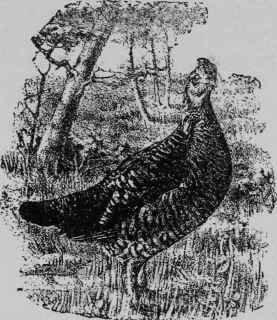
The prairie chicken is a bird that has been hunted until in many states it is nearly exterminated. While young the birds are very easy to kill, as they don't seem to have much sense of danger. They are found in the short stubble or grass and can be found very easily, as their scent is so strong that a dog can readily scent them. When they get up after being shot at, they don't fly far and if you don't find them, go away and wait awhile and they will soon come back and hunt their mother. If you have killed her, it is a sure thing you will get the whole flock, as they haven't sense enough to take care of themselves. They will whistle for one another when lost, and I have killed many a one by calling it up to me while lying down in the grass.
During this time, that is, from August I to October I, you can kick them up and with a good dog to point, have all open shooting.
Rut after November I, look out. The tables are turned hard they will be found in the corn and will not lay for the dog very well. They will fly a mile at a time and none but the expert hunter can hope to have any luck in killing them. They go in large flocks and have to be hunted on the quiet and always down wind. When two men are hunting, they must hunt by signs with the hands to go either to the right or left, for speak one loud word and good by hunter. With the wind and a little sunshine they can be killed, but a good dog is needed that is well trained and under good command to "stay heel," and not go out till ordered to get the dead and retrieve it.
For pheasant, woodcock, quail, snipe and young prairie chickens use No. 9 shot, if the shooting is in the thick brush or corn, as it must be quick shooting in the close cover and the small shot will make a big circle and will not tear the birds to pieces as the larger shot under these conditions would. In the open, where there will be more time for a shot and consequently a longer range, use No. 7 or No. 8.
Continue to:


My Books

