


The Toboggan
Description
This section is from the book "The Scientific American Boy", by A. Russell Bond. Also available from Amazon: The Scientific American Boy.
The Toboggan
The toboggan was made of light flexible hickory boards, 1/4 of an inch thick, 6 inches wide and 8-1/2 feet long. Three of these boards were used, and they were fastened together with cross sticks or battens, about 3 inches wide and 1/2 an inch thick. There were six of these battens spaced about 15 inches apart, and secured to the floor boards with flathead screws introduced from the under side and countersunk so that the heads would not project below the bottom of the toboggan. At the forward end we screwed on a head piece of oak, 3/4 of an inch thick, 1-1/2 inches wide and 20 inches long. The head piece was fastened to the under side of the boards, so that when they were curved up into a hood it would lie on top. The ends of the head piece, which projected 1 inch each side of the boards, were notched to hold the rope, which was tied fast after the boards had been steamed. The boards were steamed by wrapping them in burlap for a distance of 2 feet from the forward end, and pouring boiling water over them, as was done with the snow shoes (page 39). Before bending the boards we had fixed screw eyes in the ends of each batten, except the forward one; a rope had been strung through these screw eyes and the ends were now tied to the head piece and drawn tight so as to bend the boards into a graceful curve. In this way the ropes were of service not only for curving the front end into a hood, but also for side rails, to hold on by when shooting swiftly around curves.
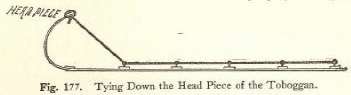
Fig. 177. Tying Down the Head Piece of the Toboggan.

Fig. 178. The Toboggan.
Continue to:


My Books

