


Tie Blocks
Description
This section is from the book "The Scientific American Boy", by A. Russell Bond. Also available from Amazon: The Scientific American Boy.
Tie Blocks
These were made of wood 1/2 inch thick, 1 inch wide and each measured 3 inches long. A hole was drilled into the block at each end and through these holes the rope was threaded. A knot in the rope then held the end from slipping out.
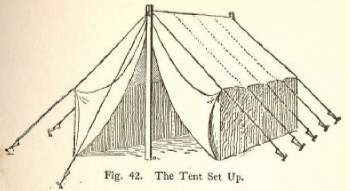
Fig. 42. The Tent Set Up.
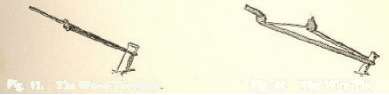
Fig. 43. The Wood Tie Block.
Fig. 44. The Wire Tie.
The loop between the two holes, or the bight, as sailors would call it, was now slipped over the stake, and the rope hauled tight by drawing up the tie block, as shown in Fig. 43. A still later improvement consisted in making ties of stout galvanized iron wire, bent to the form shown in Fig. 44. The wooden ties were apt to swell and split open when exposed to the weather, while the wire ties could always be relied upon.
The walls of the tent were held down along the bottom by railway spikes hooked through the tent loops and driven into the ground. Wooden pegs with notches to catch the loops would have served as well, but Dutchy happened to find a number of the spikes along the track and in his usual convincing manner argued that they were far better than pegs because their weight would hold the cloth down even if they were not firmly embedded in the ground.
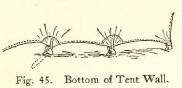
Fig. 45. Bottom of Tent Wall.
Continue to:


My Books

