


Apparatus For Washing Large Photographic Prints
Description
This section is from the book "Cassell's Cyclopaedia Of Mechanics", by Paul N. Hasluck. Also available from Amazon: Cassell's Cyclopaedia Of Mechanics.
Apparatus For Washing Large Photographic Prints
Large prints are not generally washed in the mechanical manner adopted for small prints, because of the difficulty of keeping the prints from clinging together, and the impossibility of changing the water with sufficient frequency. Unless some such arrangement as described below is used, each print should be washed by itself. The accompanying sketches show two torms of washing machines for large prints. In Fig. 1 four trays are shown placed in a rack; each tray is in turn tilted to a slight angle to allow the water to run into the tray beneath. The trays may be of enamelled zinc or of wood coated with paraffin wax; they rest on four rails (not shown) supported by vertical posts.
Fig. 2 shows an arrangement for washing unusually large prints. In this case the developing tank, being deep and long, may be used as a washing trough. The washing machine consists of two circular discs of wood (the ends of tubs), bored in the centre to receive an axle (a broomstick), at each end of which a disc is fixed, thus forming the framework of a skeleton cylinder, the ribs of which are laths stretching from one disc to the other, and nailed at each end. Around this cylinder the print is fastened with wooden clips. At one end of the cylinder sufficient space is left for a small water-wheel, which may be driven by water from the tap above it. The outflow is regulated by a plug, thus keeping the water in the trough always at the same height.

Fig. 2.

Fig. 3.
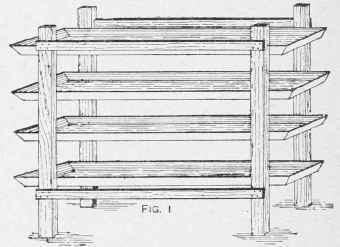

Fig. 2. Apparatus for Washing Large Photographic Prints.
Continue to:


My Books

