


Plumbing Work Aboard A Troopship
Description
This section is from the book "Cassell's Cyclopaedia Of Mechanics", by Paul N. Hasluck. Also available from Amazon: Cassell's Cyclopaedia Of Mechanics.
Plumbing Work Aboard A Troopship
The old-fashioned troopship is now practically abolished, and troops are carried in hired transports, which have to be specially fitted tip. The sanitary arrangements for the troops are here briefly described. Great cleanliness is especially necessary among troops who are packed aboard a ship. Every sanitary appliance is thoroughly flushed by a ship's hose several times a day. Fig. 1 shows a section of a latrine, A A indicating water supply in lead pipes, the size of the pipe (from 3/4 in. to l 1/2 in.) depending on the size of the latrine and urinal to be supplied. B indicates the latrine, which is covered inside with sheet lead in the same way as a sink or cistern, and is usually about 18in. wide and 18in. deep; the length depending on the number of troops to be accommodated. C C indicate lead wastes of 4 in. and 2 in. diameter respectively; I) D, taps to regulate the water supply; E, urinal made of sheet lead, same as latrine. Fig. 2 shows a section of a washhouse, FF indicating a tipping chamber made of sheet lead; G G. tin-plate tipping bowls; H H, cam-action taps for water supply; J J, 2-in. waste pipes of lead. Fig. 3 shows a slop shoot. There are usually four of these, two fore and two aft. They are covered with sheet lead, tacked and soldered as shown. They are placed at the side of the ship, so that all slops may be shot overboard. The latrines and wash-houses are placed on the upper deck above water level, and the wastes empty into the sea. They are temporary timber structures, the roof being covered with canvas to keep it water-tight.
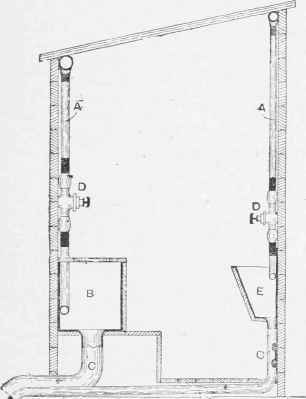
Fig. I.
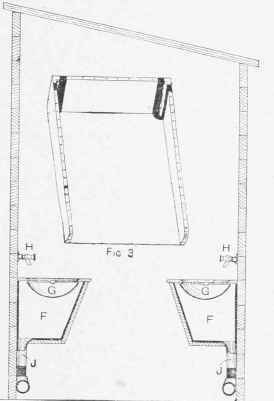
Fig. 2. Plumbing Work Aboard a Troopship.
Continue to:


My Books

