


24. The Law Of Diminishing Utility
Description
This section is from the book "Introduction To Economics", by Frank O'Hara. Also available from Amazon: Introduction To Economics.
24. The Law Of Diminishing Utility
If we make an examination of our various wants we shall find as a general thing that they follow the principle illustrated by the case of the boy with the five apples. Any one of our earthly desires is capable of being completely satisfied for the time being if we can only get possession of a sufficient quantity of the appropriate goods with which to satisfy it. If now we should divide this total amount into five equal parts, we should find as a general thing, in spite of the fact that the five parts are all equal and similar, that the first part which is consumed gratifies a more intense want than the second, that the second part gratifies a more intense want than the third, and so on for the five.
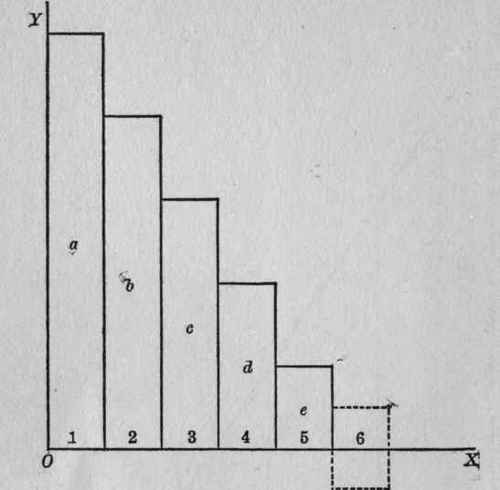
Figure I. - Diminishing Utility.
There are some apparent exceptions to this general principle. For example, many persons have no appetite for olives, but after they have eaten a certain amount of them a taste for them develops and they eat them with great relish. In cases of this kind the second or the third unit of the good might give more intense gratification than the first. This, however, is only an apparent exception to the general principle for the reason that it is not the original want which has been gratified by the later units of the good, but a new and more intense want.
These facts are summed up in the law of diminishing utility which states that in the satisfaction of a want, each additional unit of the good consumed gives less gratification and hence possesses less utility than the previous unit consumed, assuming that the units are all equal in quantity and quality and that the character of the want does not change in the meantime.
Continue to:


My Books

