


Efforts To Prevent Speculation. Nature Of These Efforts. Part 3
Description
This section is from the "Investment And Speculation" book, by Louis Guenther. Also see Amazon: Investment And Speculation.
Efforts To Prevent Speculation. Nature Of These Efforts. Part 3
Evils In Speculation
The evil in speculation is not in speculation itself. Where it arises most is through ignorance of conditions. Unscrupulous brokers and mercenary "tipsters" are to a large degree responsible for the odium so frequently heaped upon speculation. They tempt people into the whirlpool, where the most acute judgment must be exercised. These dupes have no knowledge of the principles of speculation, but the operator drags them in by appealing to their greed and cupidity. They are told what great fortunes are made on a few hundreds or thousands. They are induced to over-extend themselves until the movement of a few points against them completely wipes them out. The most festering sores on speculation have been the bucket-shops. Their gain lies in the losses suffered by their patrons. The more they can shake out, the greater the profits; therefore it was at all times to their interest to tempt their customers to operate on slim margins. Fortunately, these concerns, which were no more than gambling shops as they very seldom bought securities outright, and in which speculation was reduced to guessing on the day-to-day fluctuations and not infrequently from hour to hour, have now been driven out of business by most of the states. Of late the United States Government also has taken a hand in extinguishing them, as it can well do since their existence depends upon transacting most of their business through the mails.
However, equally mendacious is the "tipster," the advertising tipster, who brazenly proclaims in large type that he is in a position to tell beforehand certain movements in securities. These charlatans succeed in garnering a harvest of ignorant and greedy victims who, with a childlike faith, swallow their statements in absolute confidence and plunge blindly into buying the stocks recommended to them as about to jump many points, only in the end to lose all their money. It is paradoxical that some people will believe such stories coming from strangers, but, when it comes to business transactions with which they are familiar, are as shrewd in their bartering as the chief character in "David Harum." A notorious tipster's advertisement is reproduced in Figure 5.
The average person does not stop to think that if these tipsters were so certain of success even in a tithe of their supposed information, they could make in a night a fortune large enough to place them above want for the rest of their natural lives.
These impostors of the financial centers have contributed largely to the disrepute which speculation occasionally falls into in this country through the laxity of the authorities, who, it seems, might find some way to drive them out of business.
There are also the so-called "financial geniuses" who have devised a system of reducing speculation to an accurate science, who by charts or other devices, claim that they can accurately gauge the fluctuation in prices so that there is no risk whatever. Scheme after scheme of this character has been launched, each one finding some 'following, at times large, at other times but a beggar's guard of embryonic speculators. Some have been put forth by sincere fools; others by outright crooks who know only too well how to attune their plans to the credulity of the public. But none ever succeed. One by one they go to pieces, leaving in their wake a train of victims. It is true that some of the better and more recent barometric charts are at least valuable records of past conditions, and to this extent are useful in enabling intelligent investors to form their conclusions regarding probable future conditions. But in general it may be said that speculation cannot be harnessed to comply with any man-made laws. Keen insight into conditions, a thorough familiarity with the earnings of certain properties, or the conditions of the crops, if this is the commodity in which a speculation is concerned, and a clear knowledge of the tendencies and trend, are abilities making for successful speculation, and they are individualistic, not mechanical. One might as well try to break the Bank of Monte Carlo, or any other game of chance, on a system, as to attempt to reduce speculation to a science. It cannot be done, for there are too many elements of uncertainty. Life itself consists of uncertainties.
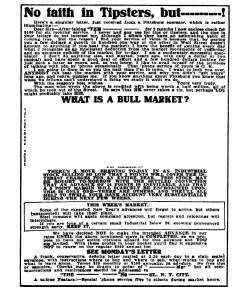
Fig. 5. A Notorious Tipster's Advertisement.
Speculation Irrepressible
Withal, intelligent speculation is absolutely necessary to the material progress of a nation. Risks must be taken to make headway in business as well as in the purchase of securities or commodities. The country as a whole has spent all the proceeds of a harvest in anticipation of it, long before it gets to the markets, and immediately starts upon contracting liabilities, expecting to meet them out of the next harvest. When it overdoes this and is disappointed, the country pays the penalty by a business depression. We discount the future, and in this, speculation plays the largest part. It is impossible to deny this fact.
None of our railroads, nor any of our largest corporations, could have ever attained their prominence or magnitude had there not been an army of optimists confident of their growth, willing to take chances on the enhancement of the value of their securities when they were low. Where would these properties have raised their necessary capital without these speculators ?
When we consider that, as a result, many millions of persons find employment,'we can see one of the great benefits arising from speculation.
Speculation in itself is vitally necessary. Its abuses are what we should strive to control. Many of them can be done away with by the spread of intelligence regarding its operations.
Efforts To Prevent Speculation. Test Questions
1. Prove by examples that speculation is not confined to America alone.
2. Explain the attempt once made in Germany to stop speculation in grain. What were, the results?
3. Explain some of the everyday affairs in which nearly everyone speculates at one time or another.
4. Give some illustrations of buying on a margin not connected with speculation on the exchanges.
5. How does a bucket shop operate?
6. What is meant by a "tipster" advertisement?
7. Why is speculation irrepressible?
Continue to:


My Books

