


268. Glycine Rubicunda. Dingy-Flowered Glycine
Description
This section is from the book "The Botanical Magazine; Or, Flower-Garden Displayed", by William Curtis. Also available from Amazon: The Botanical Magazine; or, Flower-Garden Displayed, Volume I.
268. Glycine Rubicunda. Dingy-Flowered Glycine
Glycine Rubicunda. Dingy-Flowered Glycine
Class and Order:
Diadelphia Decandria.
Generic Character:
Cal. 2-labiatus. Corollae carina apice vexillum reflectens.
Specific Character:
GLYCINE rubicunda caule perenni volubili, foliis ternatis, foliolis subovalibus integerrimis, pedunculis subtrifloris.
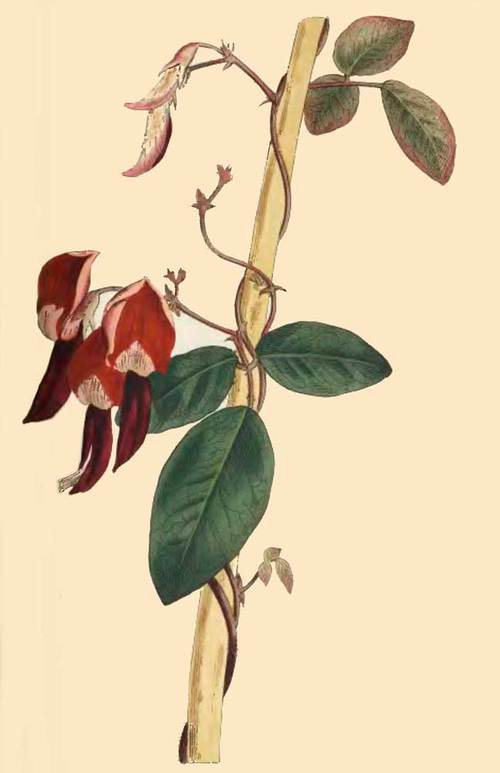
No. 268.
The plant here figured, and very generally known to the Nurserymen, in the neighbourhood of London, by the name of Glycine rubicunda, is a native of New South-Wales, and was introduced to this country about the same time as the Glycine bimaculata already figured.
It is a shrubby, twining plant, running up to the height of five, six, or more feet, producing blossoms abundantly from April to June, which are usually succeeded by seed-vessels which ripen their seeds with us.
The flowers though large and shewy, have a kind of dingy or lurid appearance, which greatly diminishes their beauty. We have observed the blossoms of some plants more brilliant than those of others, and we think it highly probable, that, at some future period, seminal varieties may be obtained with flowers highly improved in colour.
This species is readily raised from seeds, is of quick growth, and may be regarded as one of our more hardy green-house plants: probably it may succeed in the open air, if planted in a warm situation, and sheltered in inclement seasons.
Continue to:


My Books

