


Dicentra. Squirrel-Corn. Dicentra Canadensis. Bicuculla Canadensis
Description
This section is from the book "Our Early Wild Flowers", by Harriet Louise Keeler. See also: Newcomb's Wildflower Guide.
Dicentra. Squirrel-Corn. Dicentra Canadensis. Bicuculla Canadensis
Low, stemless perennial. Rich open woods, especially northward. Nova Scotia to Minnesota and Washington, southward to North Carolina. Abundant in the ravines of northern Ohio. April, May.
Roots
Subterranean shoots bear scattered grain-like tubers resembling yellow peas.
Scape
Five to ten inches high, bearing a simple raceme of flowers.
Leaves
Delicate, grayish green, thrice compound, finely cut, borne on long, slender stems which rise from the root.
Flowers
Borne in a nodding raceme on a scape five to ten inches high, irregular, white, tipped with greenish rose color, and slightly fragrant.
Calyx
Of two small, scale-like sepals.
Corolla
Four petals in two pairs, somewhat cohering into a flattened, heart-shaped, irregular flower; the outer pair of petals extended into two short and rounded spurs; the crested inner petals project conspicuously and protect the slightly protruding stamens.
Stamens
Six, in two sets; filaments of each set slightly united.
Pistil
One; style slender; stigma two-lobed.
Fruit
Long, slender pod; ten to twenty seeds.
Pollinated by bumblebees and bee-like flies. Nectar-bearing. Anthers mature before the stigmas.
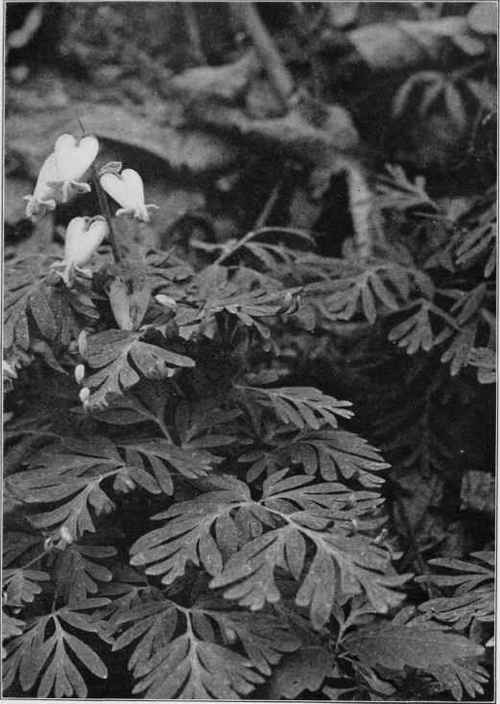
Squirrel-Corn at Home. Dicentra Canadensis
Squirrel-Corn is very like its blood-brother Dicentra cucullaria. The plants are similar in general habit and appearance; the flowers of Dicentra Canadensis have more rounded spurs and possess a faint fragrance. The common name emphasizes the little round tubers found at the root. Both are plants of exquisite beauty, native to northern woodlands, but the destruction of our forests seals their fate, for they are wildlings and disappear before the advance of civilization.
Continue to:


My Books

