


Oxalidaceae - Wood-Sorrel Family. Yellow Wood-Sorrel. Oxalis Stricta. Oxalis Comiculdta, Var. Stricta
Description
This section is from the book "Our Early Wild Flowers", by Harriet Louise Keeler. See also: Newcomb's Wildflower Guide.
Oxalidaceae - Wood-Sorrel Family. Yellow Wood-Sorrel. Oxalis Stricta. Oxalis Comiculdta, Var. Stricta
Name from oxus, sour, in allusion to the taste of the foliage.
Annual or perennial by subterranean shoots. Naturalized from Europe. Roadsides, fence corners, and waste places. Everywhere. May-October.
Root
Fibrous, sending out underground stolons which run to a considerable distance and throw up new plants.
Stem
Pale green, at first erect, leafy, branching, finally spreading or prostrate, six to twelve inches high.
Leaves
Compound, of three heart-shaped leaflets meeting at the point.
Flowers
Bright yellow, in a three to five-flowered, loose cluster at the head of the stalk, open only in sunlight.
Calyx
Sepals five, lanceolate, persistent.
Corolla
Petals five, bright yellow, commonly reddish at the base, spreading, longer than the sepals.
Stamens
Ten; filaments broad, somewhat united at the base.
Pistil
Ovary five-celled; styles five.
Fruit
Capsule, five-celled, slender; seeds many.
This is one of our most persistent bloomers. It begins in May and never stops until late September; often continues well into October. The plant is everywhere, always coming up in flower-beds. The branching stem frequently gets more than a foot high, is leafy, and the foliage a pleasant acid to the taste.
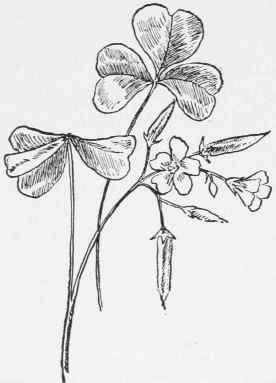
Yellow Wood-Sorrel. Oxalis stricta
The leaf is compounded of three broad, heart-shaped leaflets with their points united at the tip of the slender leaf-stem. These droop and fold together at night or when it rains. The bright golden flowers rise with the sun and set with it. They are happy only in sunshine. The plant is variable.
Continue to:


My Books

