


Chicory. Succory - Cichorium Intybus. Composite Family (P.13)
Description
This section is from the book "How To Know The Wild Flowers", by Frances Theodora (William Starr Dana). Also available from Amazon: How To Know The Wild Flowers.
Chicory. Succory - Cichorium Intybus. Composite Family (P.13)
Stems. - Branching: Leaves. - The lower oblong or lance-shaped, partly clasping, sometimes sharply incised, the floral ones minute. Flower-heads. - Blue, set close to the stem, composed entirely of strap-shaped flowers; opening at different times.
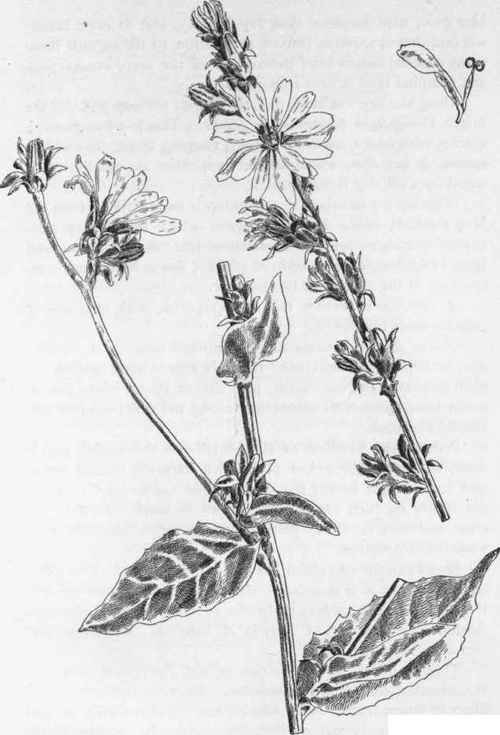
Plate XCVIII. Single flower. - Chicory. - C. Intybus
Oh, not in Ladies gardens,
My peasant posy !
Smile thy dear blue eyes,
Nor only - nearer to the skies In upland pastures, dim and sweet, But by the dusty road
Where tired feet
Toil to and fro;
Where flaunting Sin
May see thy heavenly hue,
Or weary Sorrow look from thee
Toward a more tender blue! *
This roadside weed blossoms in late summer. It is extensively cultivated in France, where the leaves are blanched and used in a salad which is called "Barbe des Capucins." The roots are roasted and mixed with coffee both there and in England.
Horace mentions its leaves as part of his frugal fare, and Pliny remarks upon the importance of the plant to the Egyptians, who formerly used it in great quantities, and of whose diet it is still a staple article.
Continue to:


My Books

