


Cake Frostings. Part 3
Description
This section is from the book "The Boston Cooking-School Cook Book", by Fannie Merritt Farmer. Also available from Amazon: Original 1896 Boston Cooking-School Cook Book.
Cake Frostings. Part 3
Opera Caramel Frosting
1 1/2 cups brown sugar
3/4 cup thin cream
1/2 tablespoon butter
Boil ingredients together in a smooth granite saucepan until a ball can be formed when mixture is tried in cold water. It takes about forty minutes for boiling. Beat until of right consistency to spread.
Chocolate Fudge Frosting
1 1/2 tablespoons butter
1/3 cup unsweetened powdered cocoa
1 1/4 cups confectioners' sugar
Few grains salt
1/4 cup milk
1/2 teaspoon vanilla
Melt butter, add cocoa, sugar, salt, and milk. Heat to boiling-point, and boil about eight minutes. Remove from fire and beat until creamy. Add vanilla and pour over cake.
Mocha Frosting
1/3 cup butter
1 1/2 cups confectioners' sugar
1 tablespoon breakfast cocoa Coffee infusion
Cream butter, and add sugar gradually, continuing the beating; then add cocoa and coffee infusion, drop by drop, until of right consistency to spread or force through a pastry bag and tube.
Fondant Icing
The mixture in which small cakes are dipped for icing is fondant, the recipe for which may be found in chapter on Confections. Cakes for dipping must first be glazed.
To Glaze Cakes. Beat white of one egg slightly, and add one tablespoon powdered sugar. Apply with a brush to top and sides of cakes. After glazing, cakes should stand over night before dipping.
To Dip Cakes. Melt fondant over hot water, and color and flavor as desired. Stir, to prevent crust from forming on top. Take cake to be dipped on a three-tined fork and lower in fondant three-fourths the depth of cake. Remove from fondant, invert, and slip from fork to a board. Decorate with ornamental frosting and nut meat, candied cherries, angelica, or candied violets. For small ornamented cakes, pound cake mixture is baked a little more than one inch thick in shallow pans, and when cool cut in squares, diamonds, triangles, circles, crescents, etc.
Marshmallow Frosting
Melt one cup white fondant; add the white of one egg beaten until stiff, and stir over the fire two minutes. Remove from range, and beat until of right consistency to spread. Flavor with one-fourth teaspoon water white vanilla.
This is a most delicious frosting for chocolate cake, but will never spread perfectly smooth.
Ornamental Frosting I
2 cups suger 1 cup water
Whites 3 eggs
1/4 teaspoon tartaric acid
Boil sugar and water until syrup when dropped from tip of spoon forms a long thread. Pour syrup gradually on beaten whites of eggs, beating constantly; then add acid and continue beating. When stiff enough to spread, put a thin coating over cake. Beat remaining frosting until cold and stiff enough to keep in shape after being forced through a pastry tube. After first coating on cake has hardened, cover with a thicker layer, and crease for cutting. If frosting is too stiff to spread smoothly, thin with a few drops of water. With a pastry bag and variety of tubes, cake may be ornamented as desired.
Ornamental Frosting II
Whites 3 eggs
1 tablespoon lemon juice
Confectioners' sugar, sifted
Put eggs in a large bowl, add two tablespoons sugar, and beat three minutes, using a perforated wooden spoon. Repeat until one and one-half cups sugar are used. Add lemon juice gradually, as mixture thickens. Continue adding sugar by spoonfuls, and beating until frosting is stiff enough to spread. This may be determined by taking up some of mixture on back of spoon, and with a case knife making a cut through mixture; if knife makes a clean cut and frosting remains parted, it is of right consistency. Spread cake thinly with frosting; when this has hardened, put on a thicker layer, having mixture somewhat stiffer than first coating, and then crease for cutting. To remaining frosting add enough more sugar, that frosting may keep in shape after being forced through a pastry bag and tube.
With a pastry bag and variety of tubes, cake may be ornamented as desired.
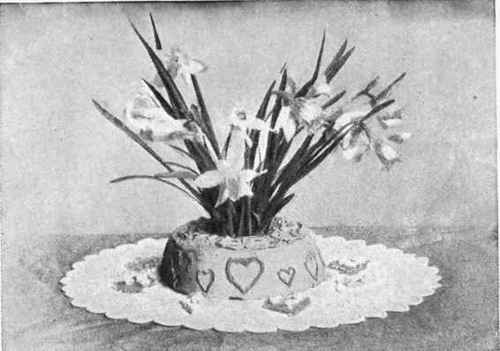
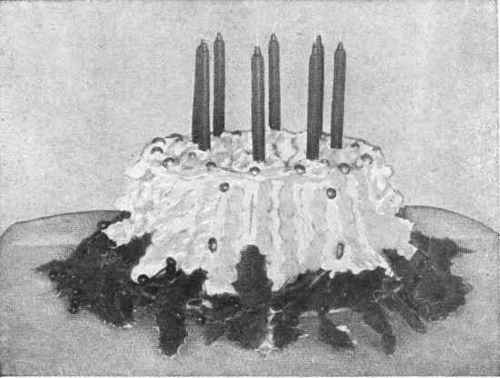
Ornamental Frosted Cake. - Page 532.
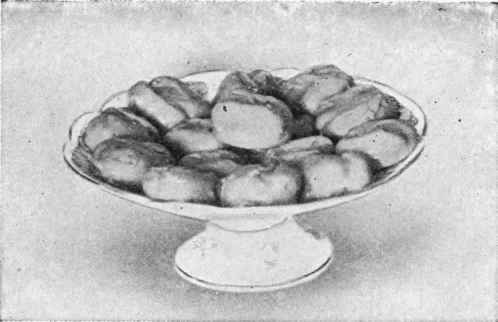
Dipped Walnuts. - Page 546.
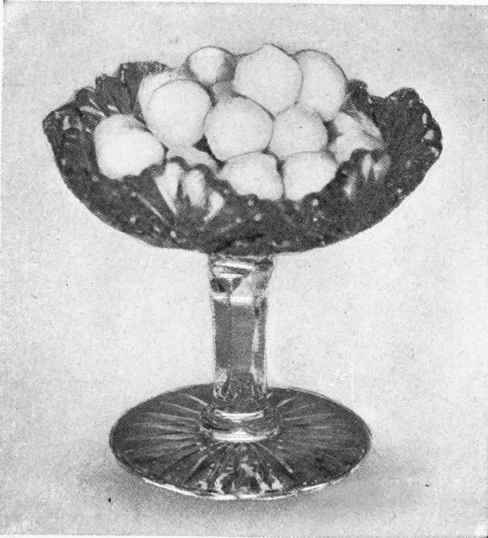
Bonbons. - Page 545.
Continue to:


My Books

