


(60). How To Prepare And Make Forcemeats And To Rectify Them (Pour Preparer Et Faire Les Farces Et Les Rectifier)
Description
This section is from the book "The Epicurean", by Charles Ranhofer. Also available from Amazon: The Epicurean, a Complete Treatise of Analytical and Practical Studies on the Culinary Art.
(60). How To Prepare And Make Forcemeats And To Rectify Them (Pour Preparer Et Faire Les Farces Et Les Rectifier)
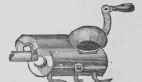
Fig. 47.
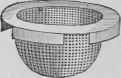
Fig. 48.
Chicken
Use only the lean and well pared meats of poultry or game, .some panada, fresh butter, or cooked and cold veal udder, raw egg-yolks or else the whites, or sometimes whole eggs, salt and spices, also cold sauces or else raw cream. Pass the meat once or twice through a machine to remove the nerves (Fig. 47); afterward pound it to a pulp so it can readily pass through a metal sieve fitting on to the mortar (Fig. 48); pound the meat once more, then add the panada, the butter or udder, continuing to pound all the lime, and then add the eggs singly without ceasing to pound and the seasonings; pass through a strong hair sieve. Put this into a thin tin vessel, set it on ice and stir for a few moments with a spoon in order to have it perfectly smooth, keep in a cool place until needed.
Game
To make game quenelle forcemeat, proceed the same as for the chicken; to have it delicate, use brown sauce or melted meat glaze, and pass the meat once more after all the ingredients are mixed in. For this it requires a strong hair sieve, or one of fine tinned wire; stand this sieve on a round dish, slightly larger than itself, so it can receive the forcemeat as it falls through ; put only a small quantity on the sieve at the time; press it forcibly with a large wooden spoon to have it pass through rapidly, and when all is finished, place it in a tin vessel and stir it for a few moments with a spoon to render it smooth and keep it in a cool place until needed.
How To Rectify Forcemeats
Try a little piece, formed into a half inch ball, in boiling water or in the oven, and if too consistent add some cream or veloute, for white forcemeats, and espagnole or melted glaze for brown game. If too weak, a little pounded panada is to be added, mixing it in gradually with some egg-yolks, whites or whole eggs.
(59). Remarks On Forcemeats (Observations Sur Les Farces)
Forcemeats are indispensable for performing fine work and are liked by good livers: they are principally used for hors-d'oeuvre, garnishings, removes and entrees; for stuffing breasts or shoulders of veal, poultry, game and fish. They are also necessary to form borders, for holding the garnishing and for large timbales; they must always be prepared in advance with the very freshest meats, otherwise they are likely to be of little good and liable to spoil, this being of the greatest importance to observe, and be sure to keep them on ice until needed. Always be careful when composing a menu, not to have too many dishes containing forcemeats, for they will detract from the simplicity and natural plainness of a dinner.
Continue to:


My Books

