


Molds (Les Moules)
Description
This section is from the book "The Epicurean", by Charles Ranhofer. Also available from Amazon: The Epicurean, a Complete Treatise of Analytical and Practical Studies on the Culinary Art.
Molds (Les Moules)
The Figs. 144 and 145 represent two fancy jelly molds; they are cylindrical shaped, having a cover of the same size, hollow on top so that it can hold chopped ice. Many dessert molds are to be found in the market unprovided with covers, thereby making them useless and inconvenient. The Fig. 14(5 shows the cover of the mold seen upside down having a small piece adjusted to the center which tits into the cylinder of the mold.

Fig 144.

Fig 145.

Fig. 146.
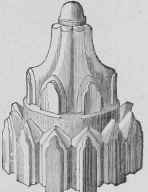
Fig. 14r.
Fig. 147 is a copper macedoine mold with a tinned double copper bottom. This double bottom is movable and is kept at an even distance from the sides and bottom of the mold by three catches attached to it. If the double bottom be removed it then can be used for aspics of foies gras, unmokling it on to a jelly border having a support placed in the center.
Juice Press (Presse Sucs)
These presses are for extracting all the liquid parts of fruits needed for preparing syrups and fruit jellies, such as currants, raspberries, blackberries, strawberries and barberries, in fact all fruits. This utensil should be made of wood for all red fruits lose their natural color when brought in contact with any metal.
Cream Molds (Moules A Creme)
Made of tin or copper; they are fancy and cylindrical. Used for molding cold creams, pains of fruits, blane manges, etc. (Fig. 148).
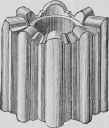
Fig. 148.

Fig. 149.
Jelly And Baba Molds (Moules A Gelee Et Moules A Baba)
Jelly molds are made both of copper, tinned in the inside, fancy and cylindrical, and are used for thick creams, blanc manges, flamris, etc. Three or four are not too many to have in a kitchen. Baba molds are of copper, tin and earthen-ware ; they are cylindrical shaped and generally have deep furrows in them, but can be of any shape (Fig. 149).
"Pain" And Pudding Cylindrical Molds (Modes Cylindriques A Pain Et A Pouding)
These are cylindrical shaped, tinned on the inside. Generally puddings are cooked in these molds, but they can also be used for rice or fruit pains, besides they are very useful in a kitchen either for hot entrees or else molding hot or cold sweet dishes. Dome shaped molds can also be used to poach pains and puddings (Fig. 150).

Fig. 150.

Fig. 151.

Fig. 152.
Fig. 151 is a copper mold, tinned inside and outside, the double bottom is removable and is kept at an even distance from the edges and bottom by three catches fastened to it. It can be used for col«l dessert creams; the same mold without the double bottom, but having a cover fitted on the outside can be utilized for hot or cold puddings.
Fig. 152 represents a tin mold for making paste croustades and can also be used for molding rice or hominy.
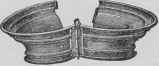
Fig. 153.
Pie Molds (Modes A Pate)
Hot pie molds are shallow and round; for cold pies they are round, oval or oblong; made of tin or copper, but the tin ones answer the purpose. The round or oval ones are hinged (Fig. 153).
Continue to:


My Books

