


How To Carve Poultry
Description
This section is from the book "The Illustrated London Cookery Book", by Frederick Bishop. See also: How to Cook Everything.
How To Carve Poultry
Poultry requires skilful carving; the requisites are grace of manner, ease in the performance, a perfect knowledge of the position of the joints, and the most complete mode of dissecting, so as to obtain the largest quantity of meat. In no case is this ability more demanded than in carving a Roast Turkey. Unless this is done well, there is not only much waste, but the appearance of the turkey is spoiled. You will commence by carving slices from each side of the breast, in the same directions as the lines marked in the engraving, cutting from a to b. Now remove the legs, dividing the thighs from the drumsticks, and here an instrument termed a disjointer will be found serviceable, for unless the turkey be very young, and the union of the joints very accurately taken, dislocation becomes difficult': the disjointer effects the separation at once, and it possesses also the advantages of enabling the carver to divide a thigh into two, thus permitting a less bulky portion of a part much esteemed to be served. The pinions and that portion of the body removed with it, are always a delicacy, and care should be taken to carve them nicely; the joint of the pinion will be found at b.
The stuffing, whether truffles or whatever it may be made of, you will obtain by making an opening at c.
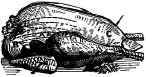
Roast Turkey.
Boiled Turkey
Boiled Turkey is trussed in a dif-ferent fashion to the roast, but the same directions given for the first applies to the second. The legs in the boiled turkey being drawn into the body may cause some little difficulty at first in their separation, but a little practice will soon surmount it. Turkey Poults. Refer to directions for carving pheasants.
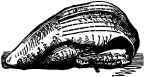
Boiled Turkey.
Roast Fowl
This Operation is a nice and skilful one to perform, it requires both observation and practice. Insert the knife between the legs and the side, press back the leg with the blade of the knife, and the joint will disclose itself: if young it will part, but at best, if judiciously managed, will require but a nick where the joints unite. Remove your wing from d to b, cut through and lay it back as with the leg, separating the joint with the edge of your knife, remove the merrythought and neck bones next, this you will accomplish by inserting the knife and forcing it under the bones, raise it and it will readily separate from the breast. You will divide the breast from the body by cutting through the small ribs down to the vent, turn the back uppermost, now put your knife into about the centre between the neck and rump, raise the lower part firmly yet gently, it will easily separate, turn the neck or rump from you, take off the side bones and the fowl is carved.
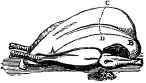
Roast Fowl.
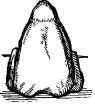
Boiled Fowl (breast).

Boiled Fowl (back).
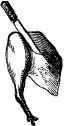
In separating the thigh from the drumstick, you must insert the knife exactly at the joint as we have indicated in the engraving, this however will be found to require practice, for the joint must be accurately hit, or else much difficulty will be experienced in getting the parts asunder. There is no dif ference in carving roast and boiled fowls if full grown; but in a very young fowl when roasted, the breast is served whole.
The wings and breast are in the highest favour, but the leg of a young fowl is an excellent part. Capons when very fine and roasted, should have slices carved from the breast.
Continue to:


My Books

