


Cochlearia
Description
This section is from the book "The Standard Cyclopedia Of Horticulture Vol2", by L. H. Bailey. See also: Western Garden Book: More than 8,000 Plants - The Right Plants for Your Climate - Tips from Western Garden Experts.
Cochlearia
(Greek, cochlear, a spoon; referring to the leaves). Cruciferae. More or less fleshy seaside small herbs, including scurvy-grass and related things; scarcely cultivated.
Annual or perennial: leaves simple: flowers small, white, yellowish or purplish, in racemes: fruit an inflated silicle, with very convex valves, the seeds several in each cell and usually 2-rowed. - About 15 species in Eu. and N. Amer. Formerly the horse-radish was referred here, but it is now placed by some in Radicula, by others in Roripa, and by still others in Nasturtium.
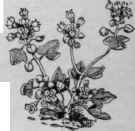
Fig. 1010. Cochlearia danica.
Officinalis
Linn. Scurvy-Grass. Hardy biennial, 2-12 in. high, but cult, as an annual: root-leaves petioled, cordate; stem - leaves oblong, more or less toothed and sometimes with a short-winged petiole: flowers early spring; calyx-lobes erect. Arctic regions. - Prop, by seed, which is small, oval, slightly angular, rough-skinned, reddish brown. The germinating power lasts 4 years. The green parts of the plant are strongly acrid, and have a tarry flavor. The seed is sown in a cool, shady position, where the plants are to stand. The leaves are rarely eaten as salad, but the plant is mostly grown for its anti-scorbutic properties. Not to be confounded with water-cress.
Danica
Linn. Fig. 1010. Annual, scarcely 6-8 in. high: leaves rounded, kidney-shaped, scarcely 1 in. long in large specimens, usually much smaller. North temperate and arctic regions. L.B.C. 15:1482. - It is covered in early summer with a profusion of small white flowers A valuable plant for ornament northward.
N. Taylor.†
Continue to:


My Books

