


Editorial Notes. The Curl In The Peach
Description
This section is from the book "The Gardener's Monthly And Horticulturist V27", by Thomas Meehan. See also: Four-Season Harvest: Organic Vegetables from Your Home Garden All Year Long.
Editorial Notes. The Curl In The Peach
In the report of the Botanist to the New York agricultural experiment station (we shall soon have to have a reform in these long names, as well as in the names of fruits) Prof. Arthur says the "curl " in the peach leaf is caused by a small fungus, Exoascus deformans; and that "it is a common error to ascribe the attacks of fungous diseases to the influence of of the weather, not considering that each fungus has its appointed season of development the same as a higher plant".
" In fact there is no more reason to suppose that it is wholly a matter of temperature and moisture that causes the curl to ripen its spores, and complete its yearly growth before the heats of midsummer arrive, than that the same cause regulates the appearance of the peach blossoms. It is rather the hereditary habit which even the weather is rarely able to alter".
All: who have watched the development of fungous plants must agree with Prof. Arthur to this extent, that these little plants cannot grow till the season of development has come; but on the other hand, they will not grow then, unless the conditions be favorable. A peach tree may have within its tissues the spores or mycelium of the curl fungus in a sort of hereditary condition, but it will not develop under a high temperature. We believe it to be conceded that no one ever saw a case of curl in a peach tree grown under glass. It is also very curious to note how the same fungus operates differently in different plants. The curl attacking the leaves of the peach, does not, we believe, infest the leaves of the plum, but will the plum fruit. We know of a tree of the American wild plum, Prunus Americana, that never bears a perfect fruit. They are nothing but hollow green bladders, as in the cut annexed.
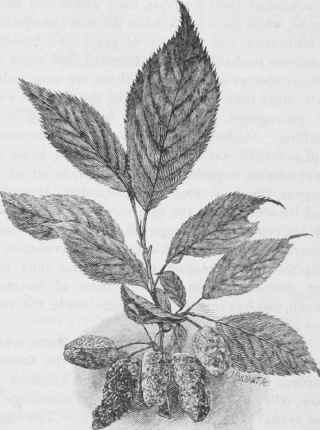
Plum Bladders.
As we understand, this result comes from the attack of precisely the same fungus as produces the curl in the leaf of the peach. It may be hereditary in this pbnt, for it always appears in this tree, at least we have known it five years in succession; and we have little doubt if grafts were taken from this tree to one free from the disease, branches from these grafts would contrive to produce plum bladders instead of plum fruit. We could give other instances proving the correctness of Prof. Arthur's position, that the curl fungus when it once gets possession of a tree, becomes an inseparable part of it through all subsequent propagation, though it may not develop into active life unless the climatal conditions are favorable.
Continue to:


My Books

