


21. Eucalyptus alpina
Description
This section is from the book "A Research On The Eucalypts Especially In Regard To Their Essential Oils", by Richard T. Baker, Henry G. Smith. Also available from Amazon: A Research On The Eucalypts And Their Essential Oils.
21. Eucalyptus alpina
(Lindl. Mitch., Three Exp., II, 175, 1838.)
Systematic. - A stunted tree or shrub ; branchlets stout, rugose. Normal leaves on thick petiole, from broad oblong lanceolate to roundish, thick, coriaceous; intramarginal vein well removed from the edge; venation oblique. Oil glands not prominent. Flowers sessile in the axils, from one to five together. Buds about 5 lines long, warty-rough; operculum irregularly semi-ovate, or semi-globular. Calyx tube nearly hemispherical, as long or slightly longer than the lid.
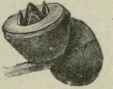
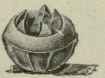
Fruits. - Broad, almost hemispherical, comparatively large when full grown (as shown in accompanying plate), sometimes ribbed; rim broad, convex, highly domed, slightly concave or truncate; valves well exserted, prominent; from 5 to 9 lines in diameter.
Perhaps the nearest Eucalyptus fruits to these in shape are those of E. globulus and E. cosmophylla.
Habitat. - The Grampians, Victoria.
REMARKS.-This Alpine Eucalyptus does not present much difficulty in systematic placing. The leaves are thick and leathery, and the buds roughly warted, like those of E. globulus. Maiden is inclined to regard it as a variety of E. capitellata, "Critical Revision" Vol. I, p. 260. Morphologically and chemically, however, it is not at all closely connected with either of those species.
ESSENTIAL OIL. - We are indebted to Mr. C. W. D'Alton, of Hall's Gap, Grampians, Vic., through Mr. Audas, F.L.S., for the material for chemical investigation. The leaves, with terminal branchlets, collected from trees 12 to 30 feet high, showed the presence of a considerable number of oil glands, but these must have been largely empty, judging from the yield of oil, as this was only 0.36 per cent.
The crude 'oil was thin and mobile, had a terpene-like odour, suggesting turpentine. Phellandrene was not detected, and cineol only present in small amount. The solid paraffin peculiar to some Eucalyptus oils (Proc Roy. Soc... N.S.W., July, 1913) was also detected.
The analysis shows this oil to consist largely of pinene, the laevo-rotatory form slightly predominating. Although belonging to the group of Eucalypts producing a cineol-pinene oil, yet the species has no commercial value as an oil-producing plant, the yield being much too small, while the oil itself is deficient in oxygen-bearing constituents.
The crude oil had specific gravity at 15o C. = 0.8973; rotation aD - 2.8°; refractive index at 20o = 1.4756, and was insoluble in 10 volumes 80 per cent. alcohol. The saponification number for the esters and free acid was 2.6.
On rectification the usual amount of acid water and volatile aldehydes came over below 155o C. (corr.). Between 155-163o, 66 per cent. distilled between 163-215o, 16 per cent. came over (14 per cent. below 180o); between 215-285o only 1 per cent. distilled, leaving 16 per cent. in the still boiling above the latter temperature. Besides some paraffin this residue probably consisted largely of polyterpenes. The first two fractions gave the following results :-
First fraction, sp. gr. at 15o C. | = | 0.8669; rotation aD - 3.9°; refractive index at 20o = 1.4655. | |||
Second | " | " | " | = | 0.8783; rotation aD - 3.2°; refractive index at 200 = 1.4657. |
The first traction had an odour resembling turpentine, and gave the characteristic nitrosochloride for pinene, thus showing this fraction to consist largely of that terpene. The cineol was determined by the resorcinol method in the portion distilling below 190o. When calculated for the crude oil, the result was 10 per cent.
The results of this investigation were published by us in Jour. Roy. Soc, Victoria, 27 (N.S.), pt. 11, 1914.
Continue to:


My Books

