


Diagnosis And Treatment Of Sprains
Description
This section is from the book "Lectures On The Use Of Massage", by William H. Bennett. Also available from Amazon: Lectures On The Use Of Massage.
Diagnosis And Treatment Of Sprains
The first essential in all cases of sprain is to determine whether fracture co-exists, which can readily be done by the x-rays when they are available; it should, indeed, be an accepted practice that, when possible, every sprain, especially those near joints, should be examined by the x-rays. In the event of the x-rays being unobtainable, it is wise to regard any case in which the symptoms of sprain near a joint are unduly exaggerated as being complicated by fracture, especially if the parts concerned be the phalanges of the fingers or the metacarpal region. Plates VI, VII and VIII are from x-ray photographs of cases of so-called sprain in which the bone lesion had been undetected until revealed by the x-rays some time after the injuries had occurred.
The frequent overlooking of bone lesions in so-called sprains seems to be greatly due to the fixed idea on the part of many people that crepitus is a necessary symptom of fracture, and that absence of crepitus means absence of fracture: a sadly mistaken belief, inasmuch as, it need hardly be said, fracture often occurs in circumstances in which the detection of crepitus is impossible. On the other hand, crepitus after injury, especially if near a joint, may be elicited when no fracture is present. I have seen several cases of injury near joints in which fracture has been either diagnosed or strongly suspected on the strength of crepitus resulting from osteo-arthritis in the adjacent articulation.
The next desideratum is to eliminate the existence of gross nerve lesion. Speaking generally, the pain in cases of sprain is referred to the seat of injury. Should it be referred to a distant part, to the side of the foot, for example, in a case of sprain of the knee, definite nerve lesion is indicated. In all cases of sprain, especially of the knee, elbow and shoulder regions, the distal parts should be examined for numbness, a much commoner condition than it is usually supposed to be, and one which is frequently, when it does exist, at first unnoticed by the patient. This numbness, which may be exceedingly limited in area, if due merely to nerve shock disappears in a few hours; if, however, it persists for more than twelve hours a gross lesion of the nerve branch concerned is pretty certain.
Plate VI.

Fig. I.-- A very exaggerated case of undetected fracture of the finger, showing deformity arising as in Fig. 12. The case came under observation about six months after the injury, as the appearance and character of the swelling around the part suggested tuberculosis.
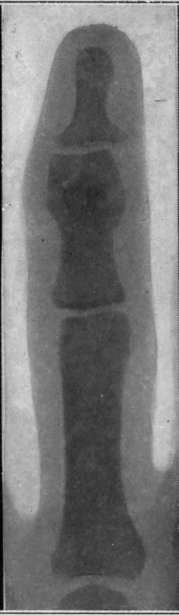
Fig. II - Fracture of head of phalanx of finger shown by x-rays after two months' treatment for sprain.

Fig. III. - Fracture of base of proximal phalanx of thumb after six months' treatment for sprain. Acute pain was the symptom complained of, which rendered the hand quite useless. Removal of the ununited fragment effected a cure.
Continue to:


My Books

