


Wines And Spirits. Part 3
Description
This section is from the book "The Beverages of the Chinese; Kung-fu or Tauist Medical Gymnastics; the Population of China; A Modern Chinese Anatomist and A Chapter in Chinese Surgery.", by John Dudgeon. Also available from Amazon: Kung Fu, or Taoist Medical Gymnastics.
Wines And Spirits. Part 3
People with blood diseases, if they do not give up spirits, medicine has no effect upon them; and, if the bones be fractured and the flesh contused, and the man drink spirits, he is lost. If pregnant women drink spirits, their progeny break out with small-pox, and the children are few. If a man has sons and grandsons and still drinks, his posterity will rapidly disappear. If three generations drink, posterity becomes defunct. The author has known several tens of families who have been given up to drinking, like one falling into water. Why do not such take their fingers and reckon up their near relations who have died or are still alive, and thus awake to the injury produced? In the book Erh Piau Chi it is related of the Wu-chiang
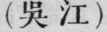 magistrate, Chow Wei
 by name, that he loved to drink, and was daily fuddled and muddled; everything with him was topsy-turvy, and everything forgotten. After a few years he died, and was put in his coffin; spirits as usual were offered at his grave, the coffin took fire, the mourners sought to save his body from the flames, - but alas! both coffin and body were consumed. Was this not a reproof from Heaven for his drinking? And was this not a necessary punishment?
Grape Wine. - The Pen Tsao says grape wine was first made in the Hsi Yii  * The book Liang Ssu Kung Tse Chi
 Chronicle of the Four Worthies of the Liang Dynasty, by Chang Yuch
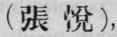 667-730 A.D., speaks of the country of Kao-chang
 + sending+ Kao-chang, the country of the Uigurs, is identified with Turfan.
*By Hsi Yii is meant Central or Western Asia, - the region of the Caspian Sea, which is acknowledged by botanists and continued by historical testimony to have been the original country of the vine.
tribute of frozen raisin wine, obtained by placing the wine in a cool cave where a cool wind prevailed, and which kept good for a year. Yeh Tse-ch'i in the book Ts'ao Muh Tse
 says: - In the Yuen dynasty, in the district of Chi-ning
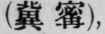 they preserve grape wine
 and although it is extremely cold, sufficient to freeze it, there is a centre piece which remains unfrozen; this is its essence. If this is drunk, the cold goes to the arm-pits, and the person dies. Again, he says: - Wine of two or three years' standing contracts great poison. Here he says what is quite true, in speaking generally of the grape. Wine is made of all sorts of grain; a year after, the strength in increased; the older, the stronger. In drinking it at first, one is not intoxicated; but, if one goes to the door and exposes himself to the air, the irrepressible power of the wine is developed, and a person cannot control it. (The North wind is tolerable, the South one is unbearable). Some thus intoxicated die; others contract illness; the sick in no case must drink wine.
In the Shih Chi in the description of the nations of Central Asia, there is the Ta Yuen Lieh Chwen
 or Account of Fergana, in which it is said that the custom of the people of Wu-sun
 a country on the Western borders near the Hiung-nu
 name of the Turkic tribes during the Ts'in and Han dynasties, is to drink wine and use the grape
 with which to make it. The wealthy people store over ten thousand piculs, which may be kept good for scores of years How is it that in this case it is not poisonous, after being preserved so long? It is because of the climate, which gives these people immunity from the poisonous effects of the wine. Therefore, this must not be taken as proof of its innocuousness. In the book Yin Shan Cheng Yao (already quoted), the grape wine is said to be of various sorts. One sort termed Ha-so-hwo
 is the most dangerous. The wine from Hsi-fan
 (Thibetans residing near the source of the Yellow River and North-west of Szechuan) is less so. That from Ping-yang and Tai-yuen, in Shansi, is still less so. In the manufacture of this wine, although leaven is used, it has not the taste of grain. Whether new or old, the sick must not drink of it. He says, further: - If the grape be long preserved, it does not require the chii; it will of itself produce wine. The wine is very ,aromatic, sweet, and strong. The book KweiSin Tsa Chih
 by Chou Mi
 latter half of the 13th and beginning of the 14th century, says: - Fears if kept for a time do not require chu, and yet produce good wine. The Shu Ching says: - If you make wine, you must have chu. How is it that, without the yeast, wine is made? How comes it that it is so violent? The reason of this can not be understood. All sorts of fruits can be used in making wine. In the Yuen dynasty, there is a poem in which occurs the expression: - "In the Spring, the colour of the Tung-ting is priceless; great multitudes of oranges are planted, to provide the materials for wine-making."
Continue to:


My Books

