


Electricity
Description
This section is from the book "A Treatise On The Materia Medica And Therapeutics Of The Skin", by Henry G. Piffard. Also available from Amazon: A Treatise On The Materia Medica And Therapeutics Of The Skin.
Electricity
In 1870 the writer commenced a course of systematic experimentation with a view to ascertain what, if any, influence electricity would have on the relief of cutaneous diseases.* The early observations were sufficiently encouraging to warrant frequent recourse to this agent as a therapeutic measure. Before speaking of its special applications, a few words must be said about the agent itself. It is known that there are three principal forms of electricity: the static, or franklinic; the induced, or faradic; and the constant, or galvanic. Of the last I will speak first. This agent is capable of four distinct applications in connection with cutaneous affections. These are to produce catalysis, to produce electrolysis, to produce coagulation, and to produce an intense heat.
By catalysis, we here mean certain changes which result in a modification of the circulation and nutrition of the part. Thus if the current from a galvanic battery, composed of a number of cells properly joined, be passed by means of sponge-covered rheophores, we may in one instance, by stimulating the nervous system or the circulation, exalt the vitality of parts in which it is depressed; in another instance we may subdue pain; in another remove pruritus; in a fourth, hasten the resolution of an inflammation; and in a fifth, reduce infiltration. These are all affected by modifications of the local nutritive processes, whereby absorption is rendered more active, and normal action supplants the pathological. By electrolysis we mean the direct destruction by chemical decomposition of the tissue-elements and of the fluids which surround them. The simplest illustration of the electrolytic effects of the galvanic current is the decomposition of a saline solution, as, for instance, that of iodide of potassium. If the current be passed through such a solution, the salt and also the water is separated into their component elements. Oxygen, acid, and similar bodies collect in the neighborhood of the positive pole, while hydrogen, alkalies, and basic bodies collect around the negative. If, now, instead of dipping the poles into a saline solution the current is introduced into the tissues by means of needles, similar phenomena may be observed. The result is dissociation of the elements of the tissue, and if albuminous substances are present they will tend to coagulate around the positive needle.
* 190, Feb. 11, '71, 144; The Doctor, May and Aug., '71; 143, Mar. 11, '76.
The fourth application of galvanic electricity is the production of heat. If a strong current be passed through a thick copper wire, connecting the poles of a battery, there will be but slight resistance to its passage, and but little effect on the wire will be noticed. If, however, a piece of fine platinum wire be introduced into the circuit the free passage of the electricity will be hindered, and the platinum will become hot, the degree of heat depending on the force of the current and the size of the wire. Such an arrangement constitutes the galvano-cautery, of which mention will be made later.
In the faradic current the quantity or volume of electricity employed is very much less than in the galvanic, but its intensity* is far greater. This is developed to the highest extent in the Ruhmkorff coil.
In static or franklinic electricity the tension is still greater; but I am not aware that it has been much employed in cutaneous affections.
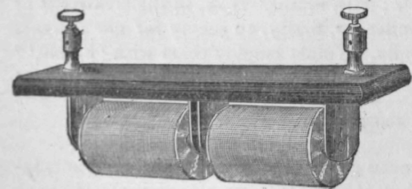
Fig. 1. - The author's double-current rolling rheophore.
* Intensity is used as the equivalent of tension, i.e., the power of overcoming resistance.
In applying the constant or the induced current to the skin the ordinary appliances of the shops will answer most purposes. I have found, however, a rolling double-current rheophore sometimes very convenient
This instrument is especially useful when we wish to use labile currents and confine the effects of the electricity, as much as possible, to the skin itself. It may be made of different sizes.
The special applications of the different forms of electricity will be referred to in connection with the diseases in which they have been useful.
Continue to:


My Books

