


The Historical Tradition. Part 4
Description
This section is from the book "The Decoration Of Houses", by Edith Wharton, Ogden Codman Jr. Also available from Amazon: The Decoration of Houses.
The Historical Tradition. Part 4
In other words, decoration is always subservient to proportion; and a room, whatever its decoration may be, must represent the style to which its proportions belong. The less cannot include the greater. Unfortunately it is usually by ornamental details, rather than by proportion, that people distinguish one style from another. To many persons, garlands, bow-knots, quivers, and a great deal of gilding represent the Louis XVI style; if they object to these, they condemn the style. To an architect familiar with the subject the same style means something absolutely different He knows that a Louis XVI room may exist without any. of these or similar characteristics; and he often deprecates their use as representing the cheaper and more trivial effects of the period, and those that have most helped to vulgarize it. In fact, in nine cases out of ten his use of them is a concession to the client who, having asked for a Louis XVI room, would not know he had got it were these details left out1
Another thing which has perhaps contributed to make people distrustful of "styles" is the garbled form in which they are presented by some architects. After a period of eclecticism that has lasted long enough to make architects and decorators lose their traditional habits of design, there has arisen a sudden demand for "style." It necessarily follows that only the most competent are ready to respond to this unexpected summons. Much has to be relearned, still more to be unlearned. The essence of the great styles lay in proportion and the science of proportion is not to be acquired in a day. In fact, in such matters the cultivated layman, whether or not he has any special familiarity with the different schools of architecture, is often a better judge than the half-educated architect. It is no wonder that people of taste are disconcerted by the so-called "colonial" houses where stair-rails are used as roof-balustrades and mantelfriezes as exterior entablatures, or by Louis XV rooms where the wavy movement which, in the best rococo, was always an ornamental incident and never broke up the main lines of the design, is suffered to run riot through the whole treatment of the walls, so that the bewildered eye seeks in vain for a straight line amid the whirl of incoherent curves.
1 It must not be forgotten that the so-called "styles" of Louis XIV, Louis XV and Louis XVI were, in fact, only the gradual development of one organic style, and hence differed only in the superficial use of ornament.
To conform to a style, then, is to accept those rules of proportion which the artistic experience of centuries has established as the best, while within those limits allowing free scope to the individual requirements which must inevitably modify every house or room adapted to the use and convenience of its occupants.
There is one thing more to be said in defence of conformity to style; and that is, the difficulty of getting rid of style. Strive as we may for originality, we are hampered at every turn by an artistic tradition of over two thousand years. Does any but the most inexperienced architect really think that he can ever rid himself of such an inheritance ? He may mutilate or misapply the component parts of his design, but he cannot originate a whole new architectural alphabet. The chances are that he will not find it easy to invent one wholly new moulding.
The styles especially suited to modern life have already been roughly indicated as those prevailing in Italy since 1500, in France from the time of Louis XIV, and in England since the introduction of the Italian manner by Inigo Jones; and as the French and Eng- lish styles are perhaps more familiar to the general reader, the examples given will usually be drawn from these. Supposing the argument in favor of these styles to have been accepted, at least as a working hypothesis, it must be explained why, in each room, the decoration and furniture should harmonize. Most people will admit the necessity of harmonizing the colors in a room, because a feeling for color is more general than a feeling for form; but in reality the latter is the more important in decoration, and it is the feeling for form, and not any archaeological affectation, which makes the best decorators insist upon the necessity of keeping to the same style of furniture and decoration. Thus the massive dimensions and heavy panelling of a seventeenth-century room would dwarf a set of eighteenth-century furniture; and the wavy, capricious movement of Louis XV decoration would make the austere yet delicate lines of Adam furniture look stiff and mean.
Many persons object not only to any attempt at uniformity of style, but to the use of any recognized style in the decoration of a room. They characterize it, according to their individual views, as "servile," "formal," or "pretentious".
It has already been suggested that to conform within rational limits to a given style is no more servile than to pay one's taxes or to write according to the rules of grammar. As to the accusations of formality and pretentiousness (which are more often made in America than elsewhere), they may probably be explained by the fact that most Americans necessarily form their idea of the great European styles from public buildings and palaces. Certainly, if an architect were to propose to his client to decorate a room in a moderate-sized house in the Louis XIV style, and if the client had formed his idea of that style from the state apartments in the palace at Versailles, he would be justified in rejecting the pro-posed treatment as absolutely unsuitable to modern private life; whereas the architect who had gone somewhat more deeply into the subject might have singled out the style as eminently suitable, having in mind one of the simple panelled rooms, with tall windows, a dignified fireplace, large tables and comfortable arm-chairs, which were to be found in the private houses of the same period (see Plate V). It is the old story of the two knights fighting about the color of the shield. Both architect and client would be right, but they would be looking at the different sides of the question.
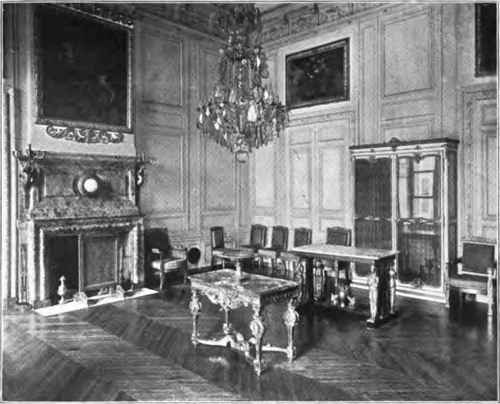
PLATE V. ROOM IN THE GRAND TRIANON, VERSAILLES.
(EXAMPLE OF SIMPLE LOUIS XIV DECORATION).
Continue to:


My Books

