


XVI. Bric-A-Brac
Description
This section is from the book "The Decoration Of Houses", by Edith Wharton, Ogden Codman Jr. Also available from Amazon: The Decoration of Houses.
XVI. Bric-A-Brac
IT is perhaps not uninstructive to note that we have no English word to describe the class of household ornaments which French speech has provided with at least three designations, each indicating a delicate and almost imperceptible gradation of quality. In place of bric-a-brac, bibelots, objets d'art, we have only knick-knacks - defined by Stormonth as "articles of small value".
This definition of the knick-knack fairly indicates the general level of our artistic competence. It has already been said that cheapness is not necessarily synonymous with trashiness; but hitherto this assertion has been made with regard to furniture and to the other necessary appointments of the house. With knick-knacks the case is different. An artistic age will of course produce any number of inexpensive trifles fit to become, like the Tanagra figurines, the museum treasures of later centuries; but it is hardly necessary to point out that modern shop-windows are not overflowing with such immortal toys. The few objects of art produced in the present day are the work of distinguished artists. Even allowing for what Symonds calls the "vicissitudes of taste," it seems improbable that our commercial knick-knack will ever be classed as a work of art.
It is clear that the weary man must have a chair to sit on, the hungry man a table to dine at; nor would the most sensitive judgment condemn him for buying ugly ones, were no others to be had; but objects of art are a counsel of perfection. It is quite possible to go without them; and the proof is that many do go without them who honestly think to possess them in abundance. This is said, not with any intention of turning to ridicule the natural desire to "make a room look pretty," but merely with the purpose of inquiring whether such an object is ever furthered by the indiscriminate amassing of "ornaments." Decorators know how much the simplicity and dignity of a good room are diminished by crowding it with useless trifles. Their absence improves even bad rooms, or makes them at least less multitudinously bad. It is surprising to note how the removal of an accumulation of knick-knacks will free the architectural lines and restore the furniture to its rightful relation with the walls.
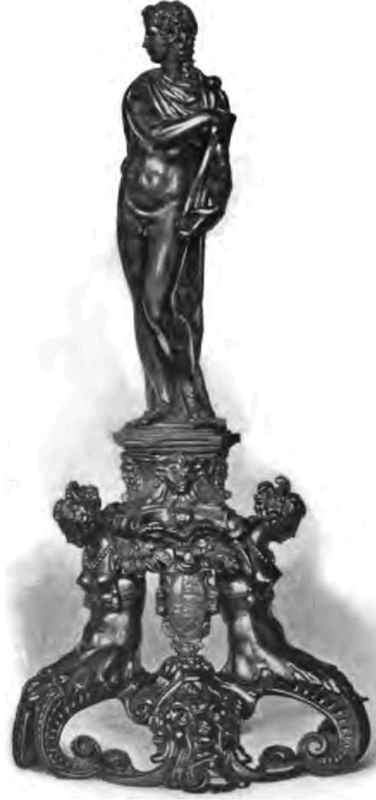
PLATE LVI. BRONZE ANDIRON. VENETIAN SCHOOL. XVI CENTURY.
Though a room must depend for its main beauty on design and furniture, it is obvious that there are many details of luxurious living not included in these essentials. In what, then, shall the ornamentation of rooms consist ? Supposing walls and furniture to be satisfactory, how put the minor touches that give to a room the charm of completeness ? To arrive at an answer, one must first consider the different kinds of minor embellishment. These may be divided into two classes: the object of art per se, such as the bust, the picture, or the vase; and, on the other hand, those articles, useful in themselves, - lamps, clocks, fire-screens, bookbindings, candelabra, - which art has only to « touch to make them the best ornaments any room can contain.
In past times such articles took the place of bibelots. Few purely ornamental objects were to be seen, save in the cabinets of collectors ; but when Botticelli decorated the panels of linen chests, and Cellini chiselled book-clasps and drinking-cups, there could be no thought of the vicious distinction between the useful and the beautiful One of the first obligations of art is to make all useful things beautiful: were this neglected principle applied to the manufacture of household accessories, the modern room would have no need of knick-knacks.
Before proceeding further, it is necessary to know what constitutes an object of art It was said at the outset that, though cheapness and trashiness are not always synonymous, they are apt to be so in the case of the modern knick-knack. To buy, and even to make, it may cost a great deal of money; but artistically it is cheap, if not worthless; and too often its artistic value is in inverse ratio to its price. The one-dollar china pug is less harmful than an expensive onyx lamp-stand with moulded bronze mountings dipped in liquid gilding. It is one of the misfortunes of the present time that the most preposterously bad things often possess the powerful allurement of being expensive. One might think it an advantage that they are not within every one's reach; but, as a matter of fact, it is their very unattainable-ness which, by making them more desirable, leads to the production of that worst curse of modern civilization - cheap copies of costly horrors.
An ornament is of course not an object of art because it is expensive - though it must be owned that objects of art are seldom cheap. Good workmanship, as distinct from designing, almost always commands a higher price than bad; and good artistic workmanship having become so rare that there is practically no increase in the existing quantity of objects of art, it is evident that these are more likely to grow than to diminish in value. Still, as has been said, costliness is no test of merit in an age when large prices are paid for bad things. Perhaps the most convenient way of defining the real object of art is to describe it as any ornamental object which adequately expresses an artistic conception. This definition at least clears the ground of the mass of showy rubbish forming the stock-in-trade of the average "antiquity" dealer.
Good objects of art give to a room its crowning touch of distinction. Their intrinsic beauty is hardly more valuable than their suggestion of a mellower civilization - of days when rich men were patrons of " the arts of elegance." and when collecting beautiful objects was one of the obligations of a noble leisure. The qualities implied in the ownership of such bibelots are the mark of their unattainableness. The man who wishes to possess objects of art must have not only the means to acquire them, but the skill to choose them - a skill made up of cultivation and judgment, combined with that feeling for beauty that no amount of study can give, but that study alone can quicken and render profitable.
Continue to:


My Books

