


Chapter XIV. Ornament
Description
This section is from the book "The Principles Of Interior Decoration", by Bernard C. Jakway. Also available from Amazon: The Principles of Interior Decoration.
Chapter XIV. Ornament
ORNAMENT is that which adorns and embellishes. It gives variety and richness to the ornamented surfaces, and is, no less than plainness, essential to beauty in the decoration of houses. Without ornament a room would inevitably be monotonous and uninteresting. It must, however, be good ornament, and there must not be too much of it.
Ornament exists to enrich and beautify constructional forms, and it is good ornament only when it appears to be not a fortuitous and unrelated addition to those forms, but an integral, organic part of them; as much a matter of growth as the markings of a butterfly or the plumage of a bird. In an accurate sense ornament can have no independent existence. It is always a decoration or embellishment, and it is significant only in association with some useful or constructional form that it is fitted to adorn. The ornament employed in the design of the chair shown in Figure 10 is good ornament because it embellishes and emphasizes artistically the constructional lines of the back and legs. When on the contrary ornament, instead of being content to adorn, seeks to substitute itself for structural forms, as in the Barocco chair shown in Figure 49, it becomes bad ornament and infinitely worse than none at all.
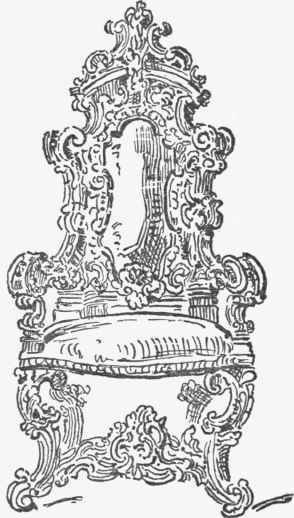
Figure 49. - Ornament substituted for or exalted at the expense of structure makes beauty impossible.
All ornament, whatever its character, can be traced to an origin in either natural or geometrical forms. The earliest ornament was almost wholly geometrical, and consisted chiefly in simple arrangements of straight, curved and zigzag lines, or rhythmically repeated circles, scrolls, squares and triangles. With advancing culture and increasing technical skill primitive man learned to look to nature for his ornament. Animal and plant forms were drawn from the natural world, and more and more employed in the embellishment of arms, vessels and wall surfaces.
Natural forms employed as the basis of ornamental design may be used by the designer in either of two ways. When such a form is accurately copied, so that both its details and its peculiar order of growth or development are imitated, the ornament is said to be naturalistic. When the ornament simply reproduces the typical form of the natural object, changing its details and coloring and disregarding its natural order of growth, it is said to be conventional. The wall papers pictured in Plate XIV show ornament drawn from nature, in varying degrees of conventionalization. The Greek honeysuckle or anthemion is purely conventional ornament. In the great ornamental styles the details have for the most part been taken from nature, but treated conventionally. There may be a fairly close imitation of natural forms in the parts of an ornamental design, but never of the natural order of growth; for it is in the nature of good ornament to fit the structural form of the object it adorns, and this is possible only when the natural order of growth is disregarded.

Plate XIV. - Wall papers illustrating varying degrees of conventionalization in ornament.
Courtesy of Arthur Sanderson & Sons, Ltd.. London.
However, the person of uncultivated taste has a marked predilection for the mere imitation of natural forms, and in all periods of poor taste naturalistic ornament is very common. Forty years ago, in what might be called the iron stag age of American home-making, we were graining wood and wall paper to imitate marble, hanging hair wreaths and wax flowers, glass-encased, on our walls, and weaving the images of cats and dogs, to say nothing of roses and hollyhocks, into our rugs. In England and Germany things were as bad or worse; and even in France naturalistic roses were woven into the Aubusson and Savonnerie carpets of the old regime, while it remained for a Frenchman of a later date to design a porte-cure-dents, or toothpick holder, carved or cast in the form of a turkey gobbler, with the toothpicks tastefully disposed fan-wise to form the tail. To-day naturalistic ornament is largely confined to floor coverings, wall papers, drapery stuffs and hand-painted china, and while a lot of it is to be seen in the shops, and more of it in the homes of unsophisticated folk, no one is compelled to buy it; for so notable has been the progress of American manufacturers during the past ten or fifteen years that it is possible to find properly conventionalized ornament in any field, and at any price.
The fondness for naturalistic ornament is no doubt due primarily to the instinct of imitation, which inclines us to like what we have seen before and can recognize without difficulty. That this fondness is so persistent is due to our failure to distinguish between the functions of pictorial and decorative art. It is the proper function of a picture to set forth an appearance of nature, whereas it is the sole function of ornament to adorn useful forms, and to make them as agreeable as possible to the eye. To do this ornament must, as we have seen, become an integral part of these forms, adapted to their structural peculiarities, and without any independent character of its own. Thus the rose in a carpet, wall paper or drapery stuff is not in any proper sense a picture of a natural rose. It is simply a means of adorning or embellishing a textile surface, and as such it shares in the nature of the textile and becomes a part of it. In the degree that the rose is designed to copy nature accurately, and to reveal a separate existence apart from the textile, it ceases to be good ornament and becomes a poor picture, and is just as objectionable as any other poor picture would be if it were repeated every few inches. Ornamental forms are used not only for their purely esthetic value as an ornament or enrichment of structural forms, but also, in many schools of ornament, as symbols, or signs employed to represent and suggest an idea. Thus the trefoil was used in Gothic art not only to embellish structure, but also as the symbol of the Trinity, as the lotus was used in ancient Egypt and throughout the East as the symbol of fecundity and ever-renewing life. Historic ornament is sometimes symbolic, like that of Egypt; sometimes esthetic, like that of Greece; sometimes both esthetic and symbolic, like that of Persia. Primitive art is largely symbolic, while as man advances in intelligence and culture he has less need for a symbolism as such, and is more and more concerned with the esthetic value of all ornamental forms. Thus even when through the influence of religious ideas ornament retains a markedly symbolic character it is more and more expressed in modes based upon symmetry of form and harmony of color, and thus designed to appeal to the sense of the beautiful as well as to the understanding.
Continue to:


My Books

