


Number XXVI. Footstool Legs
Description
This section is from the "Elementary Turning" book, by Frank Henry Selden. Also available from Amazon: Elementary Turning.
Number XXVI. Footstool Legs
In designing footstool legs as in all other designing, try to have a fair idea of the form which you wish to make before commencing to shape the material.
You should, if possible, have a sufficiently definite idea of the design you are to make to allow of first outlining the piece, as
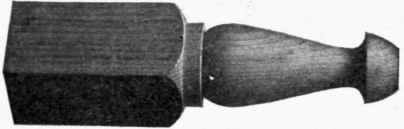
Fig. 248. Footstool Leg. Size of stock 1 3/4 inches square by 8 inches long.
shown in Fig. 249.
The next step is to turn each end as shown in Fig. 250. This method will help you to proportion the various parts. Finish by turning the long curve, completing the design, as shown in Fig. 248.
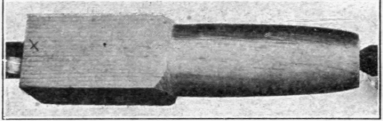
Fig. 249. First Step in Turning Footstool Leg.
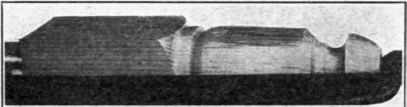
Fig. 250. Second Step in Turning Footstool Leg.
Do not attempt to copy any of them, but study carefully each one, and then work out a design of your own. Remember that good designs are usually simple, and that a few elements properly combined are far better than many carelessly brought together.
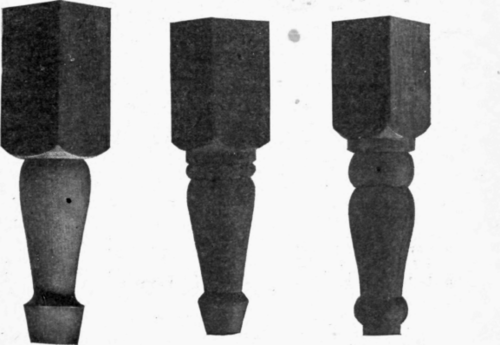
Fig. 251. Fig. 252. Fig. 253.
Footstool Legs.
One of the facts most difficult to realize in turning is, that a very slight change in a curve, or in the proportion of parts will change a piece from ugliness to beauty. In working out a design at first use a wood easily turned. Pine or basswood is probably the best wood to use. You can usually begin at the end nearest the live-center and make this end the top end of the leg.
Unless there is some good reason for doing differently, follow the general plan described in turning Fig. 248.
Unless you are more successful than most turners, you will need to try several times before making a good original design. All designing of similar shaped pieces follows this general plan. After you have completed the design and know exactly what shape you wish, you can plan such an order in the use of tools as will result in the greatest speed.
Continue to:


My Books

