


The Vanishing Point
Description
This section is from the "Handicraft For Boys" book, by A. Frederick Collins. Amazon: Handicraft for boys.
The Vanishing Point
So when you draw a box or any other object in perspective the lines will meet if you draw them out far enough and then vanish, and hence this is called the vanishing point.
To find the vanishing point of the surface of an object, such as the top of a box, hold a pencil out in front of yourself at arm's length and shut one eye, as shown at B; then tilt the pencil until it follows the side line that you are going to draw; now open your eye and you will see that the line of the box that seemed at first to be straight is really slanting.
Draw a line on your paper at this slant, or angle as it is called, and do the same with the other line and draw it, when the two lines will meet and this is the vanishing point. You can draw in now the front and back lines of the top.
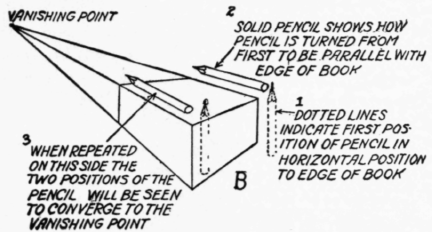
Fig. 45B. How To Find The Vanishing Point
Houses and all other objects should be drawn with vanishing points if they are to conform to the first principles of art, but for certain kinds of mechanical drawing art is sacrificed for the sake of showing the sizes of the object and an abnormal picture results which is called an isometric perspective.
But houses and all other large objects should be drawn with vanishing points or they will not look real. A barn drawn in this way is shown at C, and you will see that the roof looks perfectly natural since the lines forming it run to vanishing points.
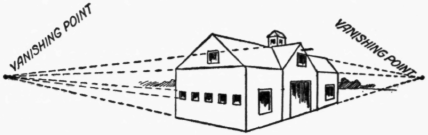
Fig. 45C. The Vanishing Points Put To Use
How to Shade a Drawing
When you do a drawing from an object you will see that the light falling on certain parts of it seems white, or high lights, as they are called, and on other parts where it does not fall it is dark.
To shade your drawing so that it will show the lights and shadows exactly as the object does, you should study the latter, and put the shading, as it is called, on the former just as nearly like it as you can. But in shading a drawing there must be no sharp lines to show where the light leaves off and the shadow begins, but you must make them merge gradually one into the other, as shown at A in Fig. 45.
Continue to:


My Books

