


Clamping
Description
This section is from the book "Woodwork Joints", by William Fairham. Also available from Amazon: Woodwork joints.
Clamping
Fig. 172 shows the method of tenoning drawing boards, desk tops and secretaire falls. This is commonly called clamping. The method is used to prevent wide surfaces from winding. A variation of the joint is shown at the left-hand side, the corners in thisexample not being mitred. Fig. 173 shows the tenoning of a wide to a narrow rail when the joint is at an angle.
Inserted Tenons ( Fig. 174 ). - Where two pieces of timber run together at an acute angle it becomes necessary to use inserted tenons. Both pieces of the timber are mortised and the inserted tenons are secured into the widest piece. On the left is shown the inserted tenon, secured by the method known as fox-wedging; on the right the inserted tenon has been let into the wide rail from the edge. The narrow rail is secured by wedging the tenons from the outside edge in the ordinary manner.
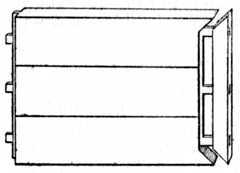
Fig. 172. - Clamping.
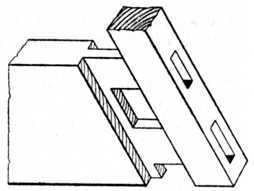
Fig. 173. - Tenoning Narrow Rail.
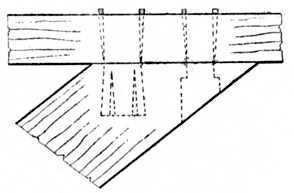
Fig. 174. - Inserted Tenons.
Continue to:


My Books

