


113. An Indirect Object
Description
This section is from the book "Lessons In English", by Chestine Gowdy, Lora M. Dexheimer. Also available from Amazon: Lessons in English.
113. An Indirect Object
An Indirect Object is a noun or pronoun which is used adverbially and which represents what is indirectly affected by the act expressed in the predicate. It generally represents that which receives the thing represented by the direct object.
Exercise 129
Select the direct and indirect objects.
1. She has sent me her address.
2. Have you lent Mary the book?
3. Write your mother a long letter.
4. The government has granted him a pension.
5. Show the children the picture.
6. When did you sell Mr. Brown the house?
7. He brought the sick man some beautiful flowers.
Exercise 130
Select essential elements.
Describe the nouns and pronouns used as adjuncts.
1. All day the mother watched her sick child.
2. This book, a gift from a friend, I value highly.
3. The clock is an hour fast.
4. She took the poor woman a basket of food.
5. This iron bar weighs ten pounds.
6. Charles I, king of England, was beheaded nearly two centuries ago.
7. The castle wall was battered down.
8. Bring me my scissors.
0. The sun that brief December day. Rose cheerless over hills of gray.
10. We have a dog ten years old.
11. Robinson Crusoe's servant, Friday, was his only companion.
12. The fire engine was called out last night.
13. Alice's mother has gone East.
14. Owners of automobiles have taught farmers one valuable lesson, at least, - easy grades.
Exercise 131. Review
1. Show by sentences that nouns, pronouns, adjectives, verbs, and verbals may be used as predicate attributes.
2. What do nouns used as predicate attributes usually show?
3. What are some of the kinds of attributes expressed by adjectives?
4. Show that either nouns or adjectives may be used as predicate attributes of the object.
5. Make a list of seven uses of the noun. Illustrate each.
6. Show that doubt in the mind of the speaker may be shown by the form of the copula. By an adverb.
Exercise 132. Composition
A grammar school boy wrote this sentence as the introduction to a composition :
"We all like to hear our grandparents tell about the good old days when they were young; but if all they say is true, I believe I had rather live now than then."
The body of the composition was to be a comparison of a certain journey as taken some sixty years ago by the boy's grandfather and the same journey as the boy might take it to-day.
Write a similar composition, or vary the introduction and write a composition to fit your sentence. You might change the words now than then to then than now. If you do, what conjunction must you change also? Why?
If your parents or grandparents once lived in some other country than the United States, you might contrast their life there with yours in America. In any case make your story and introduction fit, and write a suitable conclusion of a sentence or two.
Topics For Compositions
1. Our Field Day.
I. Introduction
(a) When it came.
(b) Interest in it.
II. Body
(a) Preparation for the day.
(b) The kind of weather'we had.
(c) The crowd.
(d) How the exercises were conducted, (c) The different events.
III. How We Felt When It Was Over
2. A detailed account of some one event of Field Day exercises.
3. Girls have better times than boys. Explain.
4. Boys have better times than girls. Explain.
5. Feeding some kind of stock. Explain.
6. An ideal kitchen. What qualities must it have? How can they be secured?
7. How to test corn or some other seed for planting.
8. How to transplant a tree.
9. How to fight flies.
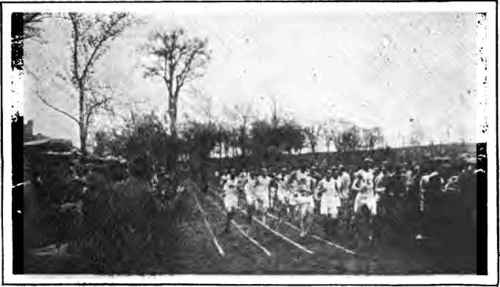
The Running Race. A. J. Swanson.
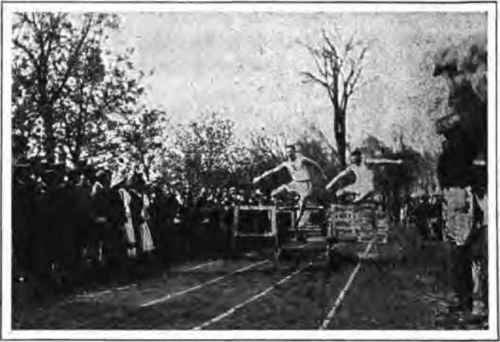
The Hurdle Race. A. J. Swanson.
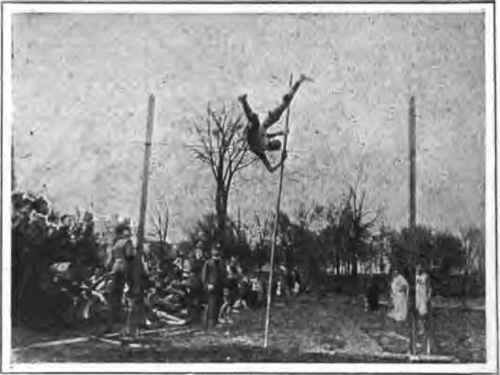
The Pole Vault. A. J. Swanson.
Continue to:


My Books

