


A Lecture By Francis Murphy, The Temperance Orator
Description
This section is from the book "Haven's Complete Manual Of Practical Phonography", by Curtis Haven.
A Lecture By Francis Murphy, The Temperance Orator
This portion of the book would scarcely be complete without an illustration of the speed which Practical Phonography is capable of when highest speed may be needed. To this end we give below a verbatim report of a six minutes' speech of Mr. Francis Murphy, the temperance orator, delivered on the evening of May 8, 1877, in the Third Street M. E. Church, of Camden, N. J., on which occasion the author was engaged by the Daily Post of that city, in which paper the transcription below appeared the next day, filling two columns of the paper. Mr. Murphy was only one of the speakers of the evening, and the reason the number of minutes he spoke was known, was because he was timed by the chairman, in order that he might be sure to catch the ferry boat which would take him across the river to Philadelphia in time for him to speak at two meetings there. As the ferry boats then made trips only once every half hour, it will be understood how necessary it was for the proper boat to be caught and for the chairman to time the speaker.
By counting the words in the speech, it will be seen that the last three minutes a rate of 230 words a minute was made, and by the first three minutes 288 words a minute,or an average of 259 words a minute for the six minutes, a speed of writing seldom attained by any other system of shorthand than that represented in this book.
Mr. Chairman and my friends: I am very glad to do myself the honor of coming to your city and speaking a few words upon a subject that I know is deeply interesting to you - the subject of total abstinence from intoxicating liquor. I have only a few moments to be with you, for I am going across the river to speak at two meetings there I am obliged to catch the quarter of eight boat, and what can I say to you in the few moments that are allotted to me? Simply this: This work that we are now engaged in is a work of malice towards none and charity for all; for the liquor seller and for the liquor drinker especially, If these men who are engaged in the business, and those men who die intemperate, were made to believe that those who do not drink are their friends, a great trouble would be overcome and the cause of total abstinence benefitted. But we act coldly, and many of that class of men that we are desirous of reaching we have driven away from us. We have so talked about the liquor seller that we could not - did not say "come and be one of us." Now, if we gain success in this kind of work, we must invite all, plead with all. You need not try to compel a man to be sober. You must persuade. Appeal to his honor, his integrity; to his home, to his country, and to his God.
Our work, so far, has been signally blest of God - signally blest. Men who have been the victims of intoxicating liquor have signed the pledge; men who have been engaged in the sale of it have given up their business, and are now within the ranks of total abstinence. They are working with us with a zeal, with a patience, and with a cheer that shows in themselves the beauty and grandeur of this reform. A great fault with the Christians is, we have allowed the cause of total abstinence to be established out of the church. I say this for a truth, and there are many things that testify to this fact. We allow ourselves to grow indifferent about it. We do not feel deeply about it, and so make no attempt to do good in this direction.
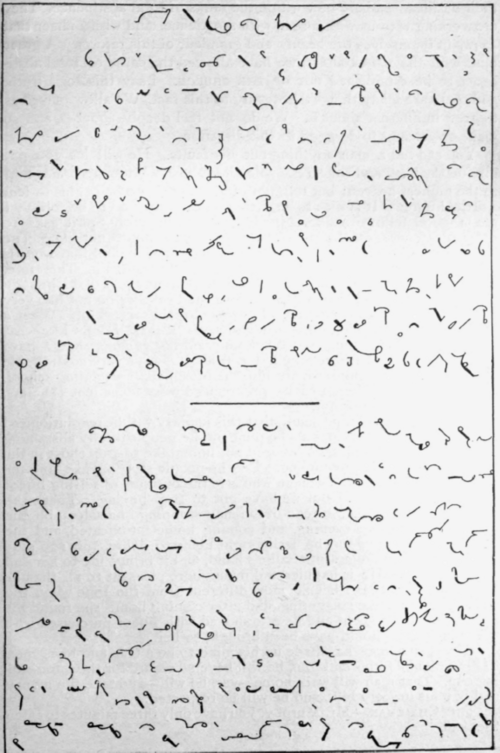
You can tell a man anything but his faults. He will let you pat him on the back and say he is a splendid fellow. You may praise him to the highest heaven; but tell him of his faults, and he begins to feel a little different. It is nice to be patted on the back and to be told you are a good fellow - a fine lady; but when the Holy Spirit asks to show you all things, he shows you views that you do not like. The peace of God comes to us by doing the will of God, and that work is accomplished by the heart yielding obedience to the truth. Therefore, I say to you that the strangest thing in the present age is that Christian people make a claim of being exceptional, and yet they do not like very much to be told of their faults. I confess to that same fault. When a good brother takes me by the arm and says: "Frank, I don't like what you said a moment ago," or "What you said last evening should have been left unsaid," I feel rebuked. But it is not always very comfortable to me. I declare I think we are like the little people attending school. They like - all of them - to be pronounced very excellent scholars, whether they are so or not.
I believe, withal, my friends, that this country will be revolutionized by this reform, but it can only be done by the people totally abstaining from intoxicating liquors. You need not undertake to stop those in the business from selling or buying. Let the people stop buying and the work is accomplished. The man who is in the business of selling liquor will be unable to sell. But we have got to stop buying. That's the thing! Then, you see, instead of the man stopping in a saloon on the way home Saturday evening, and coming home intoxicated, and the most of his money gone, he walks right home to Sallie Ann and puts his ten or fifteen dollars into Sallie's hand, and it brings joy to her and the little ones. He is happier and much more pleasant to all than he would otherwise have been. How different from the time when the husband came home staggering, and after coming home she found his money had been spent and he intoxicated with liquor purchased with the money that should have been brought to her.
But when a man has made up his mind to be a true and loyal man to his wife and to his children, he will have no regard for the intoxicating cup. That man will walk home - yes, he will - and take the money and pay his grocery bill; and he will be respected.
Continue to:


My Books

