


Introduction
Description
This section is from the book "The Laws Of Scientific Hand Reading", by William G. Benham. Also available from Amazon: The Laws of Scientific Hand Reading.
Introduction
THERE has never been conceived or made by man any instrument, machine, or contrivance, capable of such a diversity of usefulness as the human hand. Nothing has ever existed with such infinite adaptability to various needs, or capable of being trained to such degrees of dexterity and versatility. Nor is it likely that as perfect a machine will ever be produced by human skill, for the only thing the human hand cannot do is to create an instrument as perfect as itself. There is no possible question but that the fineness or coarseness of a human hand indicates whether it can better do fine or coarse work, nor is there a doubt but that other markings on it show for what lines of work it is best adapted. The delicate hand of a lady cannot perform the same hard labor as the large, strong hand of a blacksmith, nor can the blacksmith do the fine embroidery so deftly wrought by the lady's hand. Neither has the blacksmith's brain the little embroideries of the mind. His brain is of heavier construction, hers more delicately built. His hand, like his brain, is heavy: her hand is fine like her brain. Never was there a hand that did not exactly reflect the brain that directs it, and this is the basis from which a scientific study of the hand must begin.
To get at the secrets of the mind embodies the effort toward which scientific hand-reading aspires, for mind is the guiding force in life. Upon that hypothesis are based the teachings of this book.
Personalities
My special interest in the hand began at thirteen years of age, when by chance I fell in with an old gypsy who taught me what she knew of Gypsy chiromancy. This was not.
Illustrious Illustrators
The illustrations in the following pages are made from the hands of people located in all parts of the United States. The collection comprises hands of the most famous men and women of the age - those who have made history and ruled nations. The leaders of every profession and walk in life, politics, war, business, art, society, letters, or crime, are gathered here. As the subjects from whose hands these photographs, prints, or casts were taken, live in every part of this country, it has been the work of many years to collect them. Their value lies in the fact that they represent typical lives of typical people, with typical hands. Several reasons make it unwise to give names of the persons from whose hands illustrations have been secured, even though their well-known qualities would make the illustrations more convincing. In the first place, the largest number could not have been obtained except upon the pledge that no undue prominence would be given the original. Second, some hands illustrate markings which indicate undesirable qualities, with which it would not be wise or proper to identify living subjects.
Requests And Advice
The first thing that I wish you to do in approaching the study of Palmistry is to fix in your minds the definite plan on which it is based, as outlined in Chapter I., and to realize that it will require study and practice for you to become a proficient palmist. I make the request that you will constantly examine hands, but that you will not do so, posing as an expert, but with the explanation that you are a student gaining practice. I ask that you will never predict the death of anyone nor its date, that you will use great care and tact never to alarm a nervous subject, and that you will never read hands in a crowd for the amusement of the bystanders. I ask you to feel, with every hand you examine, that you wish to benefit the subject by pointing out ways to strengthen weak places, and I hope you will never be willing to humiliate or discourage anyone. Always remember that if you fail to verify indications, you have not judged the case correctly. The fault is not with the science but with your application of it. For this reason use great care in expressing your opinion; never do so without careful thought, and after a minute examination of the hand in its entirety.
Remember that the whole worth of Palmistry will be judged from your standard of proficiency by the subject whose hand you are reading, and that if your work is careless, and you speak without a full knowledge of what you are saying, it will be damaging. In answer to the question often asked, "Am I adapted to the study? there is but one answer. The more intellect, refinement, tact, and facility of expression you have, the more you can accomplish. The greater your knowledge of life in all its phases, the more skilful you will be. All can acquire by study a certain degree of proficiency; those who are best endowed mentally, and are also the best reasoners, will become the best practitioners.
No index has been prepared for this book. Hand reading as treated here is so entirely a matter of combination that no index which would be of value could be compiled. It is for this reason that it is omitted.
W. G. B.
Columbus, Ohio, December, 1900.

WM. DEAN HOWELLS, AMERICAN AUTHOR.

FREDERICK WARDE, AMERICAN TRAGEDIAN.
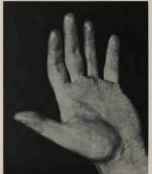
HERR MORIZ ROSENTHAL, THE HUNGARIAN PIANO VIRTUOSO.

ROBERT F1TZSIMMONS, WELL-KNOWN PUGILIST.

Who built a steel cage, transported it to the African jungle., and lived there (or four months, studying the language of the Apes.
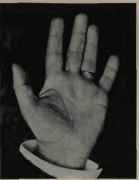
LOUIS JAMES, THE AMERICAN ACTOR.

KATHRYN KIDDER, AMERICAN ACTRESS.

MARTINUS SIEVEKING. THE HOLLAND PIANIST The largest band since Liazt.
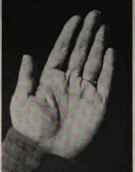
NAT.C. GOODWIN,AMERICAN COMEDIAN.

WILLIAM JENNINGS BRYAN, PRESIDENTIAL CANDIDATE, 1896 - 1900.

DAVID BISPHAM, OPERATIC BARITONE.

SAMUEL HARDEN CHURCH. AMERICAN HISTORIAN AND NOVELIST.

MARK HAMBOURG, THE RUSSIAN PIANIST.
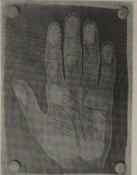
DR. X. LAMOTTE SAGE. A.M., LL.D,, HYPNOTIST.

HENRY G. STARR.
Starr rode into Bcntonville, Art., robbed the bank of $11,000, killed a United States Marshall and departed. He held up trains and terrorized the neighborhood of Fort Smith for four years. It is said that he has committed innumerable murders. Twenty-seven indictments are now pending against him. Starr is a model prisoner, and says he is through "sowing his wild oats."

IRA MARLATT.
Thc "Prison Demon," serving a lift sentence for murder. He is very cunning, and. soon after his incarceration, procured weapons of various sorts with which he attacked and nearly succeeded in killing a number of guards. Nothing could be done to tame him, and finally a steel cage was built with no opening but a wall door, in front of which a guard was constantly stationed. He seemed able is some mysterious way to procure wire, which he sharpened on the sides of his steel cell, with which terrible weapons be assaulted all who came near him. Kindness. and avery conceivable means of punishment, has failed to subdue him. He has been fitly named the " Prison Demon." Marlalt has been the subject of great investination by experts on insanity, who pronounce him sane. The day I secured this impression he came out of his cage, said he would do no violence, and kept his word. The guard with bis gun stood near, however.

ALBERT J. FRANTZ.

"FRENCHY" wing.
One of the most noted pickpockets in the annals of criminal history. He is fifty years old, and has spent thirty four years in penitentiaries all over the United States. He is very intelligent, writes well, speaks every known language, and has travelled, much. His profession is picking pockets; he makes no denial of the fact calls it "taking up a collection," and says he does not do half the harm nor steal as much as thousands of high -toned thieves who, are called "able financiers.
Says he only steals enough to support him, that his wants are few, he has no desire" to be rich , and he does not think that he taxes the community heavily. He thinks it time he was let alone, as he has been punished a great deal, and thinks the police should go after some of the big thives instead of him. He says they have only to hand him into court, when he will be sentenced on his reputation. The following is his record in the United States; Blackwell's Island , N.Y., two sentences of six months each; Kings County, N. Y , penitentiary, one year'; New Orleans Parish Prison, one year; Baton Rouge, Miss, one year; Joliet, III, four years; Sing Sing. N. Y., two and a half years, Alhany, N.Y. two years, Auburn, N.Y. four years;; Havana, Cuba, two years and four months; Ohio Penitentiary, three years and seven years; Hudson City N. J . six months; Bridewell Jail, Chicago, one year.
This latter sentence was served in 1893. "Frenchy" having been caught at the opening of the big show and kept locked up during its continuance. Besides these he has served terms in Alexandria, (Egypt), Constantinople (Turkey), Trieste (Austria), and Havana (Cuba). The displacement of his Head Line is the typical criminal marking.


CHITTENDEN HOTEL SUICIDE.
In November, 1898, a well-dressed, fine-looking woman came to the Chittenden Hotel, engaged a room for a few days, absolutely destroyed every clue to her identity, and killed herself. She took an enormous dose of morphine, supposedly to deaden the pain of the carbolic acid with which she completed her destruction. Her only request was for a respectable burial, to pay for which left $ 150 in her purse. She lay for ten days at the morgue, her picture was printed all over the United States, but she was never identified. The pictures of her hands were taken the day before her burial. The Life Line shows a most remarkable confirmation of her death. The hand also shows the diseases which produce the mental condition necessary for the act.
Continue to:


My Books

