


1. Planning The Short-Term Camp
Description
This section is from the book "Handbook For Scoutmasters. Volume 1 & 2", by Boy Scouts of America. Also available from Amazon: Handbook For Scoutmasters.
1. Planning The Short-Term Camp
For the planning we shall apply again the simple formula:
What?
In considering the "What?" it will readily be found that planning the activities of the short-term camp is considerably simpler than planning for the Troop hike.
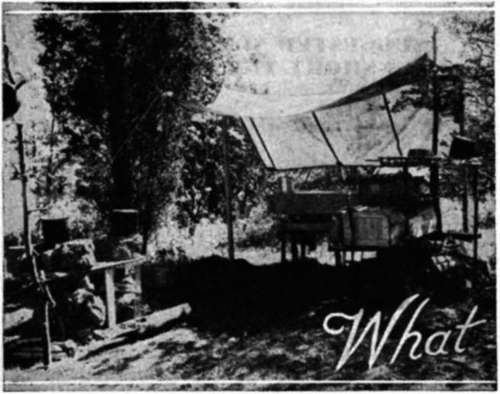
What fun they'll have. What things they'll do. What gadgets they'll make. All these will lure Scouts to the short-term camp.
For the hike, one special purpose out of a great many must be decided upon, while camping is purpose in itself. Scoutcraft must be introduced in the hike, while the camp itself is practice in Scoutcraft. Such subjects as tracking, signaling, first aid and the like may be practiced in camp as time permits, but short-term camping is, first of all, training in camping, and the practical use of proficiencies already rehearsed.
Its contents are:
APPLICATION of things that may be learned through outdoor living, using such contests as may foster the purpose, providing the RECREATION of
Suggested Schedule For Short-Term Camp
First Day (afternoon and evening)
2:00—Troop meets. Patrol Leaders account for their Patrols. Inspection of packs.
2:15—Start of trip to camp site.
3:15—Arrival at camp site. Choosing of Patrol locations for tents and Patrol kitchens.
3:30—Making camp, followed by Scoutcraft or other activity.
4:45—Start preparing evening meal. 6:00—Supper. Clean-up. 7:00—Recreational games. 8:30—Camp fire.
9:30—Taps around fire. Extinguish fire. Turn in. 10:00—Lights out. Silence.
Second Day (morning and afternoon)
7:30—Time to get up. Start of breakfast. Airing blankets, cleaning tents. 8:15—Breakfast. Clean up. 8:45—Putting the tents in order. 9:15—Inspection of camp by Troop Leaders' Council and Assistant Scoutmaster. 9:30—Exploration. Nature Lore. Scoutcraft games and contests. Special instruction. (Church, if this is Sunday.) 11:00—Starting dinner. 12:30—Dinner. Clean up. 1:30—Rest period. 2:00—Start striking the camp. 3:00—Check up of camp site by Troop Leaders'
Council. 3:30—Start home trip. 4:30—Dismissal.

Remember that sloping meadow near the lake, the woods behind and that good safe spring you.located on your last hikel That's wherel games, songs and yells, and the INSPIRATION of outdoor ceremonies and camp fires.
Working Out The Schedule
To complete the plans, an approximate hour-by-hour schedule should be worked out for the full time of the short-term camp. Without it, the experience may be marred by too many delays and too much misunderstanding. Such a schedule should be in the hands of every Patrol Leader and should be kept as faithfully as conditions permit. The following is developed for an overnight short-term camp. If the camp contains a full camping day, this may be occupied by a program as described in the Chat on Long-Term Camping.
Where?
In numerous instances, suitable camp sites are available through the Local Council. Some of these may be Council-owned, while others may be private property placed at the disposal of the Council for its Troops. So get in touch with your Local Council Office to find out where these camp sites are and on what conditions they may be used.
But besides, the Troop should try to locate a couple of sites of its own. It is well for the Troop to keep its eyes open when on hikes to discover spots for possible future use. The Patrols likewise should be told to be on the lookout.
For what? The ideal camp site, of course!
The Ideal Camp Site
The ideal site is a high, dry open spot, on the edge of timber, with natural drainage. Grass-covered, sand or gravel soil is most desirable. Avoid rich vegetation that indicates water-filled, damp ground, and loose sand which will get into everything you have. Clay soil, too, is also at times unsuited, particularly in wet weather.
The ideal spot is near woods—in the outskirts of a forest or in a forest glade, but not directly under trees. The woods will provide fuel for your fires, material for camp gadgets, wind-break in storm and cool refreshing shade in hot weather. The spot for the tents should be sheltered against the prevailing storm winds of the vicinity, but with the sun beaming down upon it during the early hours of the day.
Pure water for drinking and cooking should be within easy reach. And by pure is meant water certified by the State or County Board of Health. Otherwise the water must be treated as described in the preceding Chat, before it is used for drinking purposes. Water suitable for swimming enhances the value of the site, but is not a necessity for a short-term camp.

When? Well, you know your climate as well as any one else. You've got a whole year of Saturday and Sunday week-ends. Say when.
Your camp site should further have beauty and privacy, and yet not be so far removed from your homes that it is not easily accessible without too much time and too much money spent on travel.
Altogether, a hard bill to fill.
The ideal camp site is difficult to find—granted! Some people insist that it exists only in the imagination. But you may come across it on one of your many hikes. Then, when you have found it, or one that is nearly ideal, get the owner's permission to camp on it and to make such improvements as may be necessary. And then be sure to follow any restrictions he may place upon its use, so that it may remain an "ideal" camp site.
When?
The "When?" for a short-term camp depends—as for the hike—primarily upon the availability of leadership and upon the available time of the Scouts themselves. Usually a week-end from Saturday afternoon to Sunday afternoon is the only time available. On the other hand, if the Scouts have had sufficient camp training they may be permitted to start out Friday after school under the leadership of a capable junior leader, to be joined by Scoutmaster and Assistant Scoutmasters the following day. It must be understood that the Scoutmaster (whether present or absent) is responsible.
If the camp includes Sunday, opportunity must be provided for the boys to fulfill their religious obligations as described in the preceding Chat. The parents and church leaders of the Scouts should be consulted in the making of plans.
How?
All arrangements for the Scouts' participation, personal and Patrol equipment, and commissary should be left entirely to the Patrols themselves, with the guidance of the Scoutmaster and his assistants. If the Patrol Leaders have been properly trained on camping trips with the Green Bar Patrol, they will know what equipment is needed and will be able to work out suitable menus.
They are, of course, privileged to approach the Troop Leaders for help and guidance. In most instances, a reference to the Handbook for Patrol

This Handbook for Scoutmasters, the Patrol Leaders Handbook and the "How" Book will answer questions you might want to ask.
Leaders or the Handbook for Boys will not only solve the immediate problem, but will accustom the boy leaders to turn to the manuals whenever they are in doubt as to what to do.
As far as the Troop Leaders are concerned, they should camp with the Patrols, but should have their
Suggested Personal Equipment
The following equipment list should be varied to meet specific conditions that exist during the varying seasons and in the different sections of the country, etc. On this page are listed the Scout's personal items. It is understood that each Scout will carry also his fair share of the "Patrol" equipment suggested on the opposite page.
Complete Scout Uniform Blankets or Sleeping bag Browse bag (straw tick)
Clothes Bag containing: Change of underwear Sweater or lumberjack Extra pair of stockings
Mess Kit containing:
Flat plate Knife, Fork
Soup bowl Dish Towel Cup
Toilet Bag containing: Soap in container Toothbrush in container Toothpaste or powder
Shoe Bag containing: Extra shoes or sneakers
Repair Bag containing: Needles and thread Safety pins
Pack sack
Groundcloth or poncho Raincoat or poncho
Pajamas
Swimming trunks Handkerchiefs
Tablespoon Teaspoon
Metal mirror
Comb
Towel
Shoe strings Buttons
Carry in Outside Pocket of Packsack or in some Uniform Pocket: Pocket First Aid Kit, properly loaded Matches in waterproof container Strong cord or thin wire
Knife Notebook and pencil
Flashlight
Other Equipment as Desired:
Scoutcraft supplies
Compass
Musical instruments
Maps
Handbook for Boys
Camera
Field glasses
Canteen
Blanket pins
Hatchet
Suggested Patrol Equipment
The following maximum list of Patrol equipment includes things that may be carried by the Patrol for use on a more or less communal basis. Each Scout carries his fair share of these items, which are grouped here in two lists depending on their functions.
A. "Tenting" Group
Four Tents, each with room for two boys Necessary Tent Poles and Pegs (if they cannot be improvised at camp site)
Four Lanterns with Hard Candles
Four Ground Sheets (unless each Scout carries his own)
Boot Cleaning Bag containing:
Repair Bag containing:
Canvas Pieces Carborundum Sharpening Stone Safety Pins Needles and Thread
Thin Wire String or Strong Cord
One Trench Shovel One Axe
Two Guard Ropes One First Aid Kit Polish, Brush, Rag
B. "Cooking" Group
Two Cooking Sets (two 6-quart pots with lids, two 4-quart pots, two frying pans. Nesting in two bags) One First Aid Kit Two Canvas Water Basins
One Axe One Canvas Water Pail
One Trench Shovel One Piece of Oil-Cloth
(One Dining Tarp) (table cover)
Kitchen Bag containing:
Carving Knife Large Fork Ladle Wooden Spoon Two Dish Mops Salt Shaker Steel Wool Can Opener Pepper Shaker
Two Bread Bags
Six or eight Waterproof Provision Bags for flour, sugar, salt, oatmeal, cereal, dried fruits, beans, rice.
Three or four Waterproof and Fatproof Provision Bags for fresh meat, smoked meat, fish.
Two or three screw-top containers or round paraffined cardboard "oyster" boxes for butter or jam.
Own tents. Likewise they will eat with the Patrols, rotating and sharing in the cost. Of course they bring their own personal eating utensils.
Equipment
The Troop First Aid Pouch should be carried by a responsible adult, but each Scout should have a pocket First Aid Kit so that necessary materials may be quickly available wherever a Scout may be when an injury or emergency occurs.
As stated above, arrangements for personal and Patrol equipment should be left to the Patrols themselves. And for a short-term camp all of the equipment taken is personal and Patrol equipment. The equipment lists on the two preceding pages include recommended items.
Continue to:


My Books

