


Recipes. Part 5
Description
This section is from the book "Handbook For Scoutmasters. Volume 1 & 2", by Boy Scouts of America. Also available from Amazon: Handbook For Scoutmasters.
Recipes. Part 5
(52) Peaches—Dried—Peeled
Handle in the same manner as prunes in Recipe 51.
(53) Peaches—Canned—Baked
Drain halves of large canned peaches from the syrup, place in a bake pan, pit side up, pour over them a small quantity of melted butter, add a pinch of salt. Bake in the reflector oven until peaches are hot through and lightly browned. Serve hot.
(54) Peaches—Canned
Serve direct from the can with the syrup.
(55) Potatoes—Browned
These are to be cooked with the roast beef or lamb. Select two potatoes per camper about the size of eggs, or if larger, split to about that size. Peel and wash. Place around the roast in the same pan about 40 to 50 minutes before time for the roast to be done.
(56) Potatoes—Boiled In Jackets
Select two medium sized smooth potatoes per camper and wash clean. Put in salted boiling water sufficient to cover, and boil from 30 to 40 minutes and serve hot with jackets on.
(57) Potatoes—Pan Fried
Peel and wash potatoes (IV2 to a camper) and dice them. Have fry pan with hot grease ready, and put in potatoes, salting them. Keep stirring until golden brown and soft. Serve hot.
(58) Potatoes—Mashed
Peel, wash and boil, with enough water to cover, until soft enough to mash (about 20 minutes). Do not let them stand in the water. Drain at once, and hang high over a fire for a few minutes to dry out, leave lid off. Mash them, put in plenty of butter, a little milk and beat them with a fork or spoon. The more you beat them the better they are.
(59) Potatoes—Baked
Do not get too large potatoes, about twice the size of an egg. Wash skins, butter them and place in reflector oven. Turn them about every fifteen minutes. They will take about an hour to cook.
Another method is to wrap them in tough clay and roll them into a bed of coals. Takes about one hour.
Still another method is to bury them in a big bed of hot ashes. Be sure the bed is ashes and not coals.
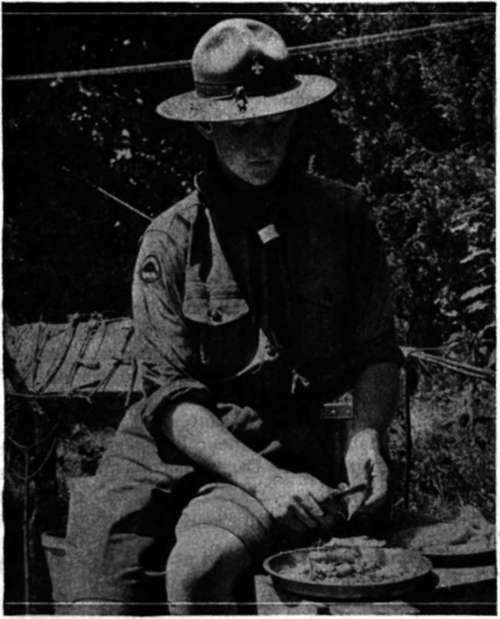
Cleanliness and care in the preparation of food are part of the Troop Camping routine. They learn how to get along in the open.
(60) Potato And Egg Salad
Pice 20 cold boiled potatoes, mix with mayonnaise dressing, slice 5 cold hard boiled eggs over the top.
(61) Lemonade—Orangeade
Allow one lemon, one glass of water and one tablespoon of sugar (scant) to each camper. Squeeze lemons, add sugar and stir thoroughly. Then add water and if possible a large piece of ice. Stir until sugar is dissolved and let stand as long as possible before serving. Lemonade is improved by making a syrup of the sugar and water.
Orangeade can be made in the same way, allowing one orange to each camper and about half as much sugar, or none at all. Add water to taste. Some like plain orange juice.
(62) Creamed Carrots
Remove tops, scrub carrots well, scrape—or, boil in skins and slip skins off after cooking. According to size, cut in halves or quarters lengthwise. Time to cook about one-half hour for medium carrots, old carrots longer. If cut in dices, 20 minutes. When tender drain off water, add lump of butter and a cup of milk in which a tablespoon of flour has been dissolved. Bring to a boil and serve. Canned carrots may be used.
(63) Rice Pudding (For 10 Campers)
1 1/4 cups uncooked rice 1 cup sugar 1/4 tsp. nutmeg or cinnamon
1 qt. milk 1 1/2 tsp. salt 1 lb. raisins
Wash the rice, feed rice and raisins into 5 quarts boiling water and keep stirring, cooking for twenty minutes. Immediately drain off the water. Heat the milk with the other ingredients (don't scorch), mix with rice, set in oven for ten minutes or in warm place by fire. Mix in the other ingredients and if you have time, set in the reflector oven for five or ten minutes.
(64) Rice—Steamed
Use rice, salt and water in same proportions as in 63. Wash the rice. Place your cook pot over the fire and when water is boiling furiously, feed in the rice, cooking for twenty minutes—not longer. Drain and hang high above fire for ten minutes to dry thoroughly. Serve with milk and sugar, or with chicken gravy.
(65) Bread Crumbs
Stale bread can be rolled into crumbs when dry with a rolling pin or bottle. This is not usually available in camp so it is recommended that dry bread crumbs be purchased in packages.
(66) Sausages And Onions
Place sausages in hot fry pan without grease, frying and turning until a nice brown. When about half done, cut up a half onion per camper and smother the sausages with them. It helps to put a lid or plate over the fry pan when they are about done and pour in about 1/4 cup of water.
(67) Sausages
Cook same as 66 leaving out onions.
(68) Tomato Sauce
Use canned tomato soup, adding a little butter and a tablespoon of cream or evaporated milk.
(69) Scalloped Tomatoes
Use one fresh tomato per camper, wash, remove the stem ends, cut in half, place in the baking pans, which should be well greased, cover with buttered bread crumbs, season with salt, pepper and sugar. Add a little water to keep the tomatoes from sticking to the pan. Bake in front of a moderate fire for thirty minutes or until the tomatoes are tender and the crumbs are brown. (Amounts—same as for stewed tomatoes.) (Canned may be used instead of fresh tomatoes.)
(70) Tomatoes—Stewed
Use one tomato per camper, 3 tablespoons sugar, 2 teaspoonfuls of salt, 3A teaspoon of pepper, 12 teaspoons of butter or other fat. Simmer the tomatoes for twenty to twenty-five minutes, season with salt, pepper, sugar and butter.
(71) Vanilla Sauce
4 tbs. butter
4 tbs. flour or 3 of corn starch 1/8 tsp. salt
6 tbs. sugar 4 cups milk 2 tsp. vanilla
Melt butter in cook pot (do not brown the butter); when melted, remove from fire and stir in flour until smooth, add milk, salt and sugar, and return to the fire. Stir gradually until mixture boils and begins to thicken. Allow to actually boil (slowly) for three minutes. Remove from fire and add vanilla.
(72) Salmon
Divide salmon in portions and serve with juice from the can. Sliced lemon may be added. It may also be served with a hot white sauce.
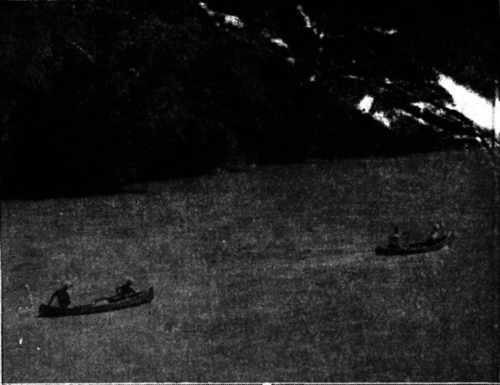
For long canoe trips where every ounce counts food must be light and yet contain ail necessary elements.
Lightweight Food for Pack and Canoe Trips
When your Scouts have to pack it on their backs over long woods and mountain trails or over canoe portages, they will wonder (between meals) why grub is necessary anyhow. The more they have to tote the more fatigued they will become and, as a result, will eat more food, which will do them less good than a smaller quantity would have had the labor not been as great.
As an aid in avoiding unnecessary packing, it is recommended that for trips of short duration (one week or less) an attempt be made to use dry foods as much as possible, to avoid the weight and bulk of tin cans and the extra weight of fluid that they con-
Lightweight Food For Pack And Canoe Trips
Vegetables:
Small solid heads of Cabbage Parched Corn Small Onions
Cereals:
Prepared Flour. If prepared flour is not preferred, then plain Flour and Baking Powder
Corn Meal
Oat Meal
Bran
Tapioca
Sago
Rice
Barley
Finlander Hardtack Rye and Wheat Crisp
Condiments: Pepper Salt Spices
Sweets: Sugar Chocolate Hard Candy Maple Sugar
Dried Fruits: Apples Apricots Prunes Raisins Dates Figs Nuts Peaches
Canned Goods: Butter Shortening Tomato Paste
Beverages: Cocoa
Coffee substitutes (with
Caffein extracted) Lemon Powder Powdered Milk tain. If given thought, a very satisfactory diet can be worked out with the material shown below and on next page. In season, it will be possible to supplement this somewhat with berries and fresh vegetables and fruit, which can be purchased along the line of travel. The only canned foods listed are canned butter, shortening and tomato paste.
There are on the market certain dehydrated vegetables that are palatable and many others that are not. If food of this kind is to be carried it should be carefully tried out in advance.
Meat and Meat Substitutes: Ham, bacon, dried fish, pemmican, summer sausage (beans, peas, lentils, dried eggs), cheese. Bacon and smoked ham may be safely carried except in extremely hot weather, but should be used up by the end of the second day unless unusually favorable conditions prevail. If dried beef is taken along it should be only in sealed tin cans. In glass jars it often becomes rancid.
Continue to:


My Books

