


Uniform For Scouts. Continued
Description
This section is from the book "Handbook For Scoutmasters. Volume 1 & 2", by Boy Scouts of America. Also available from Amazon: Handbook For Scoutmasters.
Uniform For Scouts. Continued
Which Shall It Be?
By establishing the tradition that of course you appear in Uniform always, this Tradition will soon become the Troop's-"Troop Three in Uniform!"-and all the boys will want to follow it as soon as possible.
The Scoutmaster's example counts most. After that comes his constant encouragement to the boys to get their Uniforms, part after part. Check with them from time to time, pat them on the back, confer with them and suggest ways and means to them.
Helping The Boy
"But," you may say, "my boys cannot afford the Scout Uniform." Very possibly they can't-this very minute. But if they set out determinedly it will not be long before they will have the necessary amount accumulated.

The service Uniform is tough, useful, long wearing. The hat sheds rain, snow and sleet. Shorts and wool shirt make an all weather costume.
Some time ago, two Scoutmasters started two Troops in South Brooklyn, New York, one of the poorest districts of that great metropolis. One had the attitude: "These boys are too poor to get the Uniform." He found that sentiment echoed in the Troop. The attitude of the other was: "We want to get the Uniform, don't we?" and the unanimous answer of his boys was "Yeah!" After one year the first Scoutmaster had a Troop without a single boy in Uniform, while the other after one-half year had his Troop completely uniformed.
It can be done-provided you help! There is not a boy in our Movement who is not able to earn and save enough money to secure his Uniform, if he sets out with a will. And earning and saving, by the way, is the method recommended for every Scout, be he poor or rich.
In many cases, boys have to contribute their earnings to the family treasury, and these boys may justly feel that individual earning for a Uniform is out of the question. But still they may earn their Uniforms, as has been done frequently, through Troop or Patrol joint-earning projects that do not interfere with the boys' contributions to their family budgets. These joint-earning projects have a value beyond the securing of the Uniforms-the value of giving to every boy in the Patrol a feeling that he "belongs," that he has a part in the work of the "team."
Suggestions For Uniforming
Get your Patrol Leaders sold on wanting their Patrols completely uniformed, and discuss in the Troop Leaders' Council how the objective may be reached.
The following ideas have been used with success in other Troops:
1. Provide The Boy At His Tenderfoot Investiture with a part of his Uniform, purchased by the Troop Budget Fund. In many Troops the boy is given his Tenderfoot Badge at this occasion. Fine! But make it the embroidered badge rather than the metal one. The reason? He can pin the metal one on anything from a sweater to a skull cap. The embroidered badge, on the other hand, belongs definitely on one spot only: on the left pocket of the Scout shirt which you want to encourage him to get. Some Troops present the new boy with the Troop neckerchief, and even with the Troop numeral, community strip, and Patrol medallion as well. Of course, this is more expensive, but also more effective toward getting the boy uniformed.
2. Suggest To The Boys Methods Of Earning Money, Such As
Make and sell handicraft articles. Handle a paper route. Weed gardens.
Take care of furnace and remove ashes. Wash automobiles.
Take care of pet animals when owners are away. Cut and pile wood. Caddy for golfers.
Do part-time work in office or store. Sell greeting cards.
Help janitor in church, school or other building. Shovel snow. Clean windows.
Cleaning, painting, whitewashing.
Pick fruits and berries, or gather nuts.
Raise and sell farm animals.
Can and preserve farm products for sale.
Conduct a roadside vegetable or fruit market.
Keep bee hives.
Beat rugs and carpets.
Wash dogs.
Deliver packages and run errands.
Mow lawns and rake leaves.
Collect and sell old metal, papers, and bottles.
Conduct a hobby exchange, stamps, etc.
Take care of children and invalids.
Put on a BOYS' LIFE Subscription Campaign.
3. Have the Troop Committee investigate money earning possibilities of the community and secure small jobs for the boys. It is definitely a responsibility of the Troop Committee to "cooperate with the Scoutmaster in developing opportunities whereby members of the Troop may earn money to secure the Uniform." (See Chat 10.) Securing such jobs must not involve depriving somebody else from earning a living.
4. At parents' meetings get the fathers and mothers to think in terms of the Uniform. Boys have birthdays, and Christmas comes around once a year. If parents and relatives are aware of the boys' burning desire for the Uniform, they will help them get it.
5. Establish a Troop Uniform Savings Bank in which the boys deposit their dimes and quarters, as earned or saved. This project involves bookkeeping and should not be undertaken unless a responsible person is available to keep adequate records.
6. Some Troops have established a Troop Uniform Fund, in which is placed money earned from entertainments and special Troop projects. This fund matches the pennies of each boy toward his Uniform. Whenever a boy brings in a nickel, a dime is credited toward his Uniform account. Active Troops have made a success of this procedure.
In no case, however, is it wise for a Troop to buy Uniforms for all its Scouts with the idea that the boys will gain full ownership through an installment plan arrangement. A Scout should learn the wisdom of paying as he goes.

"That Badge is for Camping." "This one is for Firemanship." Some day this sub-Cub will follow the Merit Badge trail of his Scout hero.
7. Many Troops secure continued uniforming through a Uniform Exchange. Whenever a boy outgrows his Uniform or ceases to be a Scout the outfit is appraised. If it is in sufficiently good condition it is purchased by the Troop for resale to one of its Scouts.
8. And finally, keep the boys Uniform-conscious at all times, through regular inspections at Troop meetings, through insisting that Badges and Insignia be worn correctly, through making attendance in Uniform count heavily in Patrol ratings.
Provide Opportunities
The opportunity should be provided constantly for boys to wear their Uniforms when they appear in public. Arrange for them to participate in civic service- such as taking a traffic count, helping distribute Red Cross posters or Community Chest signs and literature -in order that other boys may see that Scouts are the ones selected and recognized for these various duties. Also arrange for the boys to participate in local, county, and state fairs, expositions and conventions, farmer picnics, and conduct First Aid tents at the Firemen's Picnic or at the community picnic grove.
All of these activities.heighten the boys' appreciation of Scouting and of the Uniform as an essential factor. And in addition, other boys are stimulated to become Scouts when they see Scouts participating in these events.
Badges And Insignia
The Badges and Insignia are a part of the Official Scout Uniform and just as much care should be taken to see that they are worn correctly as in the case of any other part of the Uniform. It is important that the boy wears all the Badges to which his advancement, leadership and service record entitle him. It is not only an encouragement to the boy, but an incentive to other Scouts; also the Scoutmaster should follow this same principle himself. Above all see that the Badges are correctly placed.
In order to help Scout Leaders make a check on the correct wearing of the Uniform and Insignia, there has been prepared an official manual, "Uniform Badges and Insignia," which is made available at a price within the means of every Troop. On the following pages we give you some of the general rules that govern the placing of Insignia and illustrations of the more commonly encountered Badges and Insignia. This will serve as a starter, but as the Scouts progress in rank your Troop should secure a copy of the manual on "Uniform, Badges and Insignia."
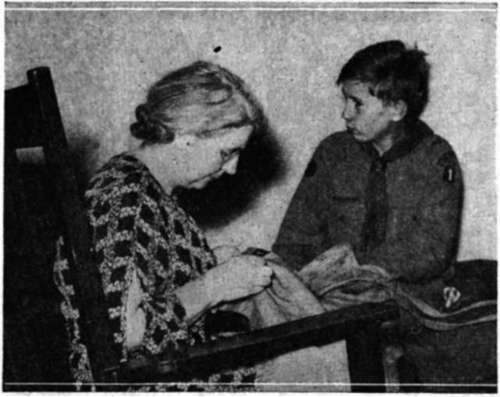
Like a "maverick" in the old wild west days an unmarked piece of clothing or equipment is hard to identify. Put a "brand" on everything.
General Rules Governing Correct Position Of Badges. For Scouts
Badges of Rank. Metal badge of highest rank worn on hat. Embroidered badge of highest rank centered on left pocket of shirt. If metal badge of rank is worn on shirt, it is centered on left pocket, covering embroidered badge if worn. (Exception: Metal Eagle Badge on shirt above left pocket).
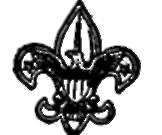
Tenderfoot

First Class

Star scout
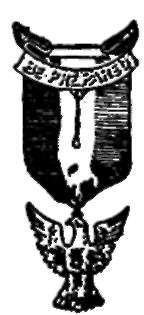
Eagle Scout
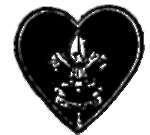
Life Scoot
Second Class

Patrol Medallion

Community Strip

Troop Numeral

Servico Star
Thirty Year Veteran

Twenty-five Year Veteran

Twenty Year Veteran

Fifteen Year Veteran

Ten Year Veteran

Five Year Veteran

Junior Patrol Leader

Patrol Leader

Senior Patrol Leader

Honor Medal for Life Saving
Life Guard

Achievement Scout

Press Club Member
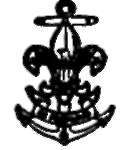
See Scout
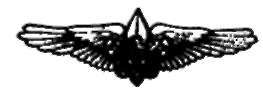
Air Scout

Explorer Scout

Explorer Scout. Badges And Insignia

Badges of Offices. Worn on shirt only-not on coat or hat (except Senior Patrol Leader's and Junior Assistant Scoutmaster's metal hat badges). Embroidered (all Patrol Leader, Junior Assistant Scoutmaster, Scribe, Quartermaster, and Bugler Badges), worn on left sleeve, top of badge four inches below shoulder seam. If more than one Badge of Office is worn, top of major badge is four inches from shoulder seam; top of minor badge six inches from shoulder seam.
Badges of Membership. Troop Numeral left sleeve, top of badge two inches below shoulder seam. Patrol Medallion, right sleeve, top of badge two inches below shoulder seam.
Embroidered Veteran Insignia. Centered on right cuff. (Metal badge worn with civilian clothes only.)
Service Stars. Worn on left breast three-eighth inch above pocket flap. If several decorations are worn on left breast the line of Service Stars is placed higher than three-eighth inch as may be necessary. No Badges or Insignia worn above Service Stars.
Temporary Insignia. World Jamboree, National
Jamboree, Local Council Rallies, Training Schools or Conferences, Camp Emblems. Centered right breast pocket.
Community Strip. Worn on left shirt sleeve at shoulder seam.
Merit Badges. May be worn right sleeve of shirt, rows of two, not more than three rows, bottom row parallel with edge of cuff, three inches above it. Or may be worn on Merit Badge sash, in which case none on sleeve.
Senior Scout Badges
Explorer-Right sleeve of Scout Shirt in place designated for Patrol Medallions. (If Explorer desires to wear Patrol Emblem also, the Explorer Insignia worn four inches below shoulder seam.)
Rover-Right sleeve four inches below shoulder seam and centered on the arm.
For Scout Officials
Badges of Rank. Embroidered and metal worn as by Scouts on shirt only. Eagle may be worn on coat.
Badges of Office. Metal Badges of Office on each side of the collar, the lower edge one-quarter of an inch from each edge. This applies to all Commissioned Officials from the Assistant Scoutmaster to the Chief Scout Executive, Laymen, and Troop Committeemen. They wear no hat badges. It is optional whether the Scoutmaster, Assistant Scoutmaster and Troop Committeemen wear the felt Numerals and Community Strip on the shirt or not. They are not worn on the coat. Embroidered Badges of Office are worn on the left sleeve of the shirt same as by Scouts.
Merit Badges. Worn as by Scouts with shirt, not with coat.
Veteran Insignia. Embroidered Veteran Badge is worn sewed to the outside half of the right shirt sleeve, centered on the cuff. Officials may wear this badge on coat one and one-half inches above the end of the sleeve. The metal Veteran Insignia is for civilian use only.
Service Stars. Worn as by Scouts on shirt or coat.
Scoutmaster's Key. Scouter's Training Award. Worn pinned above the left breast pocket of coat or shirt (not on flap), to left of Eagle Badge if latter is worn. Worn as a watch charm on civilian clothes.
Temporary Insignia. Worn centered on the right breast pocket, as by Scouts.
Continue to:


My Books

