


George Psalmanazar
Description
This section is from the book "A Library Of Wonders And Curiosities Found In Nature And Art, Science And Literature", by I. Platt. Also available from Amazon: A library of wonders and curiosities.
George Psalmanazar
The next character is a noted impostor, under the assumed name of George Psalmanazar. He was a very extraordinary genius, born in France, and educated in a Jesuit's college; upon leaving which, he fell into a mean, rambling way of life At Liege, he entered into the Dutch service, and afterwards into that of Cologne. Having stolen the habit and staff of a pilgrim out of a church, he begged through several countries, in elegant Latin, and, accosting only gentlemen and clergymen, received liberal supplies, which he spent as freely. In Germany, he passed for a native of Formosa, a convert to Christianity, and a sufferer for it. At Rotterdam he lived upon raw flesh, roots, and vegetables. At Sluys he fell in with Brigadier Lauder, a Scots colonel, who introduced him to the chaplain; who, to recommend himself to the bishop of London, took him over to that city. The bishop patronised him with credulous humanity, and a large circle of his great friends considered him as a prodigy. He published a History of Formosa, and, what was most extraordinary, invented a character and language for that island, and translated the Church Catechism in to it,which was examined by learned critics, and approved. Some of the learned, however, doubted him, particularly Drs. Halley, Mead, and Woodward. He was allowed the use of the Oxford Library, and employed in compiling The Universal History. Some errors in his history first led him to be suspected as an impostor. He died in 1753 ; and in his last will confessed the imposture.
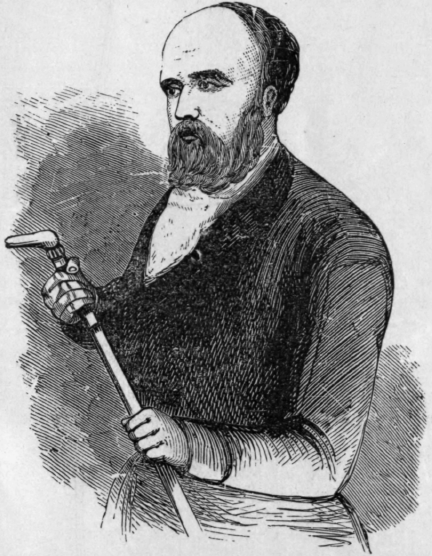
George Psalmanazar.
Continue to:


My Books

