


JACKSON 954 JACKSONVILLE
Description
This page of the book is from "The New Student's Reference Work: Volume 2" by Chandler B. Beach, Frank Morton McMurry and others.
JACKSON 954 JACKSONVILLE
William S. Jackson, and lived most of the latter part of her life at Colorado Springs, Colorado. She began to write verses about 1870 over the signature "H. H.," which soon became familiar to magazine readers. She had always been interested in the welfare of the Indians, and her book, A Century of Dishonor, made her their champion. In 1883 Mrs. Jackson was made a commissioner by the government to look into the condition of the mission Indians of California. Her last book, Ramona, which deals with Indian life, leaped at once into great popularity. She died at ' San Francisco on Aug. 12, 1885.
Jackson Thomas Jonathan, known as "Stonewall" Jackson, was born at Clarksburg, (W.) Va.. Jan. 21, 1824. The father died when Thomas was but three years old, and the mother was left with three children and no means of support. To provide for her-■ self she taught school and worked at sewing. The Ichildren were given to their uncles and aunts. Thomas went to live with Cummins Jackson, an uncle, who took a father's place, and in 1842 secured his appointment in the national military academy at West Point. His appearance when he entered has been described as follows: "A slender lad, who walked rapidly, with his head bent forward; a grave, thoughtful face, which gave him a dull look; but when anything interested him or excited him, his form became erect, his eyes flashed like steel, and his smile — sweet as a girl's — would brighten his whole face." After graduation he was sent to aid General Scott in the Mexican War. He acquitted himself so well that he returned with the rank of major. When the Civil War broke out, Jackson was settled at Lexington, Va. He sided with his state, and joined the Confederate army under Robert E. Lee. On July 3, 1861, he was made brigadier-general. In the battle of Bull Run, Jackson was supporting General Bee, with his forces ranged on a hill near by. Bee, to encourage his soldiers, pointed to the ridge and cried out: "There is Jackson standing like a stone-wall : rally behind the Virginians." A moment later Bee was killed. Soon after, Jackson's force was engaged with the enemy. His order to the men was: "Reserve your fire till they come within fifty yards; then fire and give them the bayonet; and when you charge, yell like the furies." This is said to have been the origin of the afterward
well-known "rebel ýell." He was made major-general in the spring of 1862, and in the campaign of the Shenandoah he outgeneraled McDowell. Banks and Fremont and drove them back upon the lower Shenandoah. Then, hastening by forced marches to Richmond, he turned the tide at Gaines' Mill in June and won the battle of Cedar Run in August. His troops bore the brunt of the fighting in the second battle of Manassas. In September he captured Harper's Ferry, with 13,000 prisoners and 70 cannon, and after a trying night's march joined Lee next day and probably saved him from disaster at Antietam. As lieutenant-general he commanded the right wing at Fredericksburg, and drove Hooker back at Chancellorsville, May 1, 1863. All next day Jackson was on the march, moving around the flank of the Federal army; at nightfall he fell upon its right and drove it back. Returning from a recon-noissance, his party was fired on by some of his own command, who mistook him for a Federal general, and Jackson received three wounds, from which he died on May 10, 1863. Jackson was the idol of his soldiers, who not only admired his bravery but believed in his generalship. "His loss," writes Greeley, "was the greatest yet sustained by either party in the fall of a single man." Jackson was a muscular man, fully six feet high, with a clear, pale complexion, bluish-gray eyes, an aquiline nose, prominent chin, strong jaws, large head and high forehead. He was a man of deep moral earnestness and of great natural bravery, vigor and promptness of action. See his Life by Randolph and his Journal, edited by Mrs. Jackson.
Jacksonville, a notable winter health-resort in northeastern Florida, the county seat of Duval County and the principal business town in the state, is on the St. John's River, 23 miles from its mouth. Five railroads meet there. In a direct line it lies within 15 miles west of the Atlantic, where are the coast-resorts of Mayport and Pablo Beach. Thirty miles northeast is Fernandina, and forty miles southeast is St. Augustine. The streets of Jacksonville are wide and well-shaded; there are numerous hotels, chiefly for the accommodation of invalids and winter visitors. The city has a large coast-trade, besides an active river trade. The chief exports are lumber, cotton, moss, oranges, marmalade and early vegetables. Population 57,699.
Jacksonville, 111., county-seat of Morgan County, stands in a fertile prairie region, at the junction of several railroads, 34 miles southwest of Springfield. It is noted for its schools. Here are Illinois College, Illinois Women's College, several conservatories of music and other educational institutions; and here, too, are state asylums for the blind, the deaf and
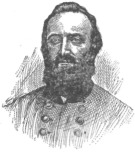
stonewall jackson


My Books

