


A. Fjord Coasts
Description
This section is from the book "An Introduction To Geology", by William B. Scott. Also available from Amazon: An Introduction to Geology.
A. Fjord Coasts
Fjord Coasts are found in the high latitudes of both hemispheres and in regions which have undergone intense glaciation; in the northern hemisphere they are limited by the 49th parallel, and in the southern hemisphere by the 41st. Alaska, British Columbia, Greenland, Scotland, Norway, the southern end of South America, and New Zealand, are typical examples of fjord coasts. The fjords are long, narrow, frequently branched, and usually very deep; the bottom is divided into several basins and the fjords are generally much deeper in the middle of their course than at the seaward end, though sometimes they are continued across the sea-floor as submarine valleys. The ridges of land which separate adjoining fjords are frequently notched by low passes, which seaward become straits, connecting the fjords and cutting up the ridges into islands, which are always very numerous along coasts of this class. The famous "inside passage" from Puget Sound to Sitka, Alaska, is a network of deep waterways among countless islands.
Fjords are not confined to any particular type of land topography, nor to any single kind of structure. In Norway, western North America and southern Chili, they pierce lofty, mountainous coasts; in Scotland the coasts are of low mountains, while in southern Sweden and Finland the fjord coasts are flat. Similarly, they occur on coasts where the lines are determined by great fault-scarps, as well as on those where the control is due to folding. The one indispensable condition is former or present glaciation, and in Norway, Greenland, and Alaska the landward extensions of many fjords are still occupied by glaciers.
Fjords are clearly glaciated valleys; whether they have been merely remodelled by glaciers, or whether they are entirely due to glacial excavation, they bear all the characteristic marks of ice-action, as these have been elsewhere enumerated (see p. 162). Glaciers have the power of overdeepening their valleys and of excavating them below sea-level, but it is not yet definitely known just how far this overdeepening may proceed. At all events, the known fjord coasts show other evidence of being much depressed and invaded by the sea, and thus a fjord coast results from the partial submergence of a glacially modelled region. The great depths of the fjords and their freedom from sedimentary deposits are explained by the fact that at the time of their submergence these valleys were occupied by the ice, which thus prevented the accumulation of sediments. Had rivers been flowing in them when the depression occurred, their mouths would first have been drowned, checking the current and causing a deposition proportionate to the load.
This has happened in the case of the Hudson River, which is a drowned canon of great depth in which are accumulated immense thicknesses of river mud, even above the Highlands. That a fjord coast is due to depression is not contradicted by the fact that many such coasts are now rising, like that of Scandinavia; the elevation is still far from compensating for the depression.
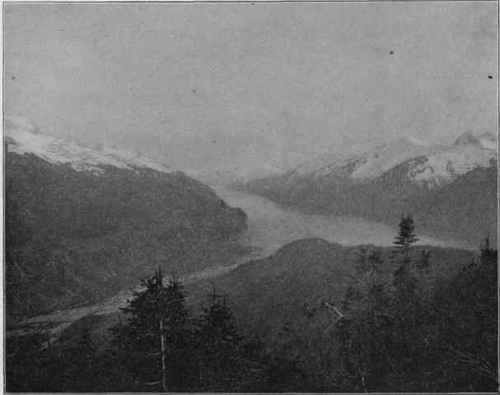
Fig. 250. - Branching fjord, Lynn Canal, Alaska. (U. S. G. S).
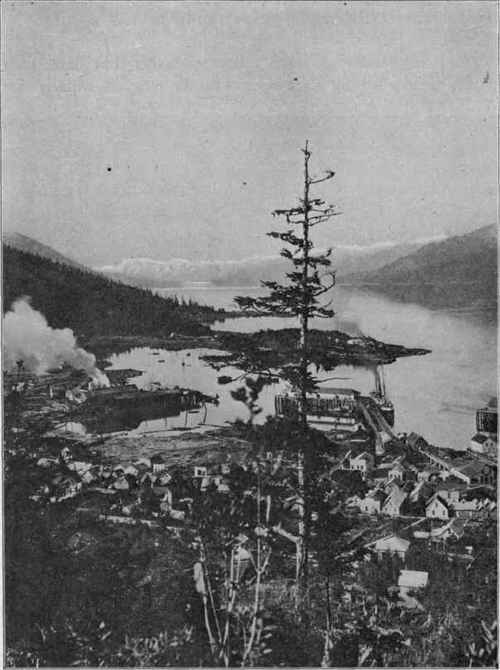
Fig. 251. - Fjord, Wrangel, Alaska. (U. S. G. S).
Continue to:


My Books

