


Approaching. Part 2
Description
This section is from the book "The Game Of Golf", by William Park, Jun.. Also available from Amazon: The Game of Golf.
Approaching. Part 2

Fig. 29. - The Approach - Addressing The Ball,.
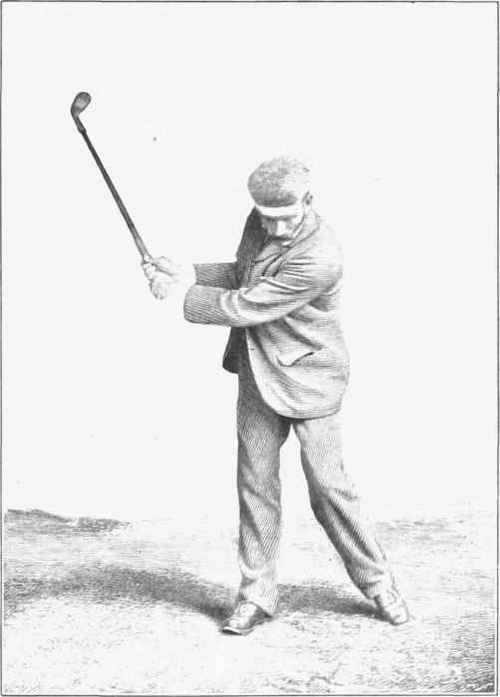
Fig. 31. - A Half Shot - The Top Of The Swing.

Fig. 80. - The Approach - Diagram Of Posltion.
Some golfers can drive a very long ball with a half swing: but the half swing used in such a case is hardly the half swing desirable for playing approaches. This half swing is more of the character of a very long sweep along the ground succeeded by a good follow-through; and although the club may not be taken so far round the shoulders as in a full swing, the distance actually traversed by the club-head will not be much less, and, being a sweep, it gives a great amount of forward propulsion to the ball.
Of wrist strokes there is an infinite variety of gradation - anything less than a half stroke falls under this definition. No further remarks on this subject require to be made, save that the ball should be nearer the player, and the feet closer together. Fig. 32 shows the top of the swing. It will be observed that both legs are slightly more bent at the knees than is the case in playing a full shot, and that the body moves very little; in fact, wrist strokes are almost entirely played with the wrists, assisted to a small extent by the arms. I would only add: - Stand firmly, and do not move the feet at all; keep the right elbow well in to the side, and play from the wrists, giving the ball a quick, sharp hit.
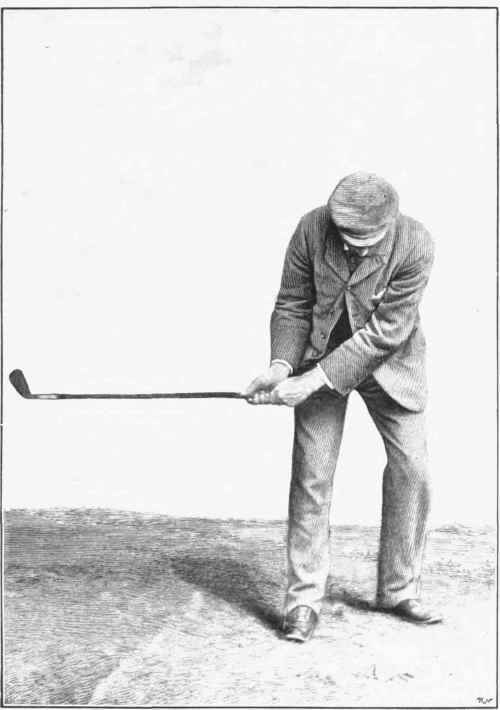
Fig. 32. - A Wrist Shot - The Top Of The Swing.
In all these strokes the club must be held firmly with both hands, to give more command over it, and to prevent its turning. It will be found of material assistance if the club be grasped further down the shaft; and the shorter the distance of the stroke to be played, the shorter a grip of the club may be taken.
In standing according to the directions above given, it will be found that while the weight of the body is supported on both legs, the right really gives the greatest amount of support. This can be easily tested by trying to lift either foot off the ground. For the above reason, this mode of playing approaches has been termed 'off the right leg,' and it is the method most usually adopted. Hereafter an alternative method, termed ' off the left leg,' will be explained.
With the view of making iron approaches fall dead, more especially those played from shorter distances, it has been advocated that they should be played with slice, or cut, as it is more frequently termed in this case. This is done, as before explained, by drawing the arms in towards the body in the act of hitting the ball, and omitting the follow-through. This probably may have the desired effect - and theoretically it is all very well, - but practically it is exceedingly difficult to do successfully; and placing the risk of failure against the advantage to be gained, I do not think that in the ordinary case it is worth attempting. I therefore recommend that all approaches be played without slice. If, however, the player has sufficient confidence in his ability to put on the cut, and is desirous of trying it, he will have to keep in view that the effect is to make the ball run to the right-hand side, and he must make allowance for this by playing, not straight on the flag, but to the left of it. Personally, I am inclined to think, from the experience I have had, that fewer golfers play approaches with cut than is generally supposed. Any player will readily show how the stroke is done, and may be unwilling to admit that he does not usually play with cut, desiring to have the credit of playing as scientific a game as his neighbours; but watch him when he is playing a match - it will be seen that his professions in this respect are hardly consistent with his practice. It is not difficult to put on cut when a ball is teed or dropped on a tine piece of turf, simply for the purpose of illustrating the stroke: but it is quite a different matter to play approaches in this manner from the multifarious lies - good, bad, and indifferent - that occur in actual play. Slice can only be safely put on in short approaches: in a long approach the effect of it might be to deflect the ball so much that it would not go near the green. In connection with this subject, it may be remarked that, under ordinary circumstances, a ball will not run very far after it lands off anything over a half cleek or a half iron shot. It may run some distance if the ground be hard, or if it shoots off a downward slope, or if the wind be with the ball. In such cases it is not possible to make the ball fall dead by any means.
With wrist shots there is more run on the ball in proportion than with any others, and it may be absolutely necessary to make a wrist shot fall dead, as, for instance, where the hole lies between two bunkers, one in front over which the ball must be pitched, and one behind into which it will certainly roll if there is much run on it. There are other expedients resorted to for this purpose besides putting on cut. One is to lay back the face of the iron. To do this the player must stand in such a position that the ball will be more in a line with his left foot. But this method is no better than using a club with a very great deal of pitch, the difficulty of which will be explained later on; it is therefore not necessary to do more than refer briefly to it in this place. There is another method, known as 'cutting the feet from it,' and this is the most effectual of all, and undoubtedly the proper way of playing the stroke. It is, however, somewhat difficult to play this stroke, and it is still more difficult to describe it. The stance and position are the same as for an ordinary iron approach, and so is the grip. The swing must, however, be much more of an up and down nature than in the ordinary approach, and played sharply. The head of the iron is slipped in between the ball and the turf (not swept over the ground), with the result that a large amount of back spin is imparted to the ball, and in the follow-through the arms are not thrown out in the line of play, but are lifted up straighter, with the object of 'whipping up' the ball. With the view of showing the stroke, two illustrations arc given, one of the top of the swing (Fig. 33), and the other of the end of it (Fig. 34). The essence of the stroke lies in hitting the ball smartly and quickly; and the more quickly the ball is hit, the more back spin is put upon it, therefore the higher will it be lofted, and the shorter distance will it travel. If the face of the iron be looked at after playing, it will be found that the mark made on it is not a round mark, such as is made, for example, in playing a full cleek shot; it is a sort of oval smear from the bottom towards the top of the blade, as if the face of the iron had forced itself under the ball before the latter had moved. This, I anticipate, is what, actually does happen; and hence, as above staled, the more quickly the stroke is played the more back spin is put on the ball. The stroke will be an utter failure unless the club-head gets well under the ball. On a soft green such a stroke can invariably be played with success; but on a hard green, and out of a bad lie, it is difficult, but not impossible. Such strokes can best be played with a lofting-iron.
Continue to:


My Books

