


Belgium. Part 12
Description
This section is from the book "Belgium - John L. Stoddard's Lectures", by John L. Stoddard. Also available from Amazon: John L. Stoddard's Lectures 13 Volume Set.
Belgium. Part 12

Antwerp Harbor.
But, alas! when did so great a treasure ever long escape the clutch of the despoiler? The Spaniards coveted this goodly city, and laid upon it the same cruel hand that proved a curse to all their colonies in the New World. In the capture of Antwerp by the Spanish army almost as many living beings were destroyed as there had been statues ruined in the memorable image breaking of ten years before. The annals of the Netherlands are illustrated by some of the most horrible pictures known to history; and one of the most revolting is that of the sack of Antwerp by the Spaniards. In three days, fully eight thousand men, women, and children were massacred, burned, or drowned, and bodies lay by hundreds in the streets. The Spanish soldiers, drunk with wine and blood, had cast off even the semblance of humanity, and played the part of fiends. The splendid city was well-nigh destroyed. Six million dollars' worth of property was burned, and five hundred marble residences were reduced to blackened ruins. The object of these terrible atrocities was gold, and to obtain it almost inconceivable cruelties were committed. To cite one out of many instances: a wedding feast was being celebrated when the Spaniards gained possession of the city. A mob of brutal soldiers rushed within the house, demanding gold and jewels. Not satisfied with what they found, they struck the bridegroom dead. The bride fell, shrieking, into her mother's arms, whence she was torn by the relentless ruffians, who immediately put the mother to death. The bride, who was of remarkable beauty, was then carried off. Maddened by this last outrage, her father tried to save her, and was killed. That night a woman, scantily clothed and trembling with fear, was found wandering through the streets among the heaps of dead and dying, looking for her husband and father. She was completely crazed; and the fair bride of a few hours before was finally put out of her misery by a mob of soldiers!
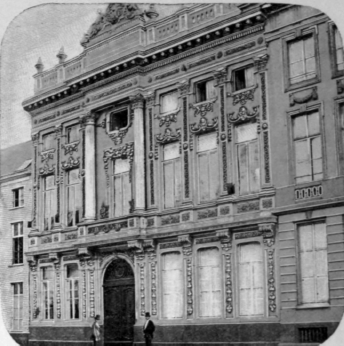
The House Of Rubens.
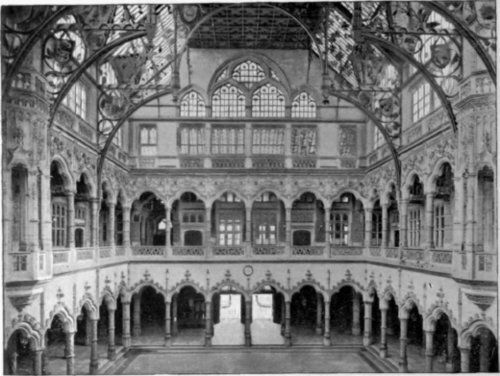
The Interior Of The Bourse.
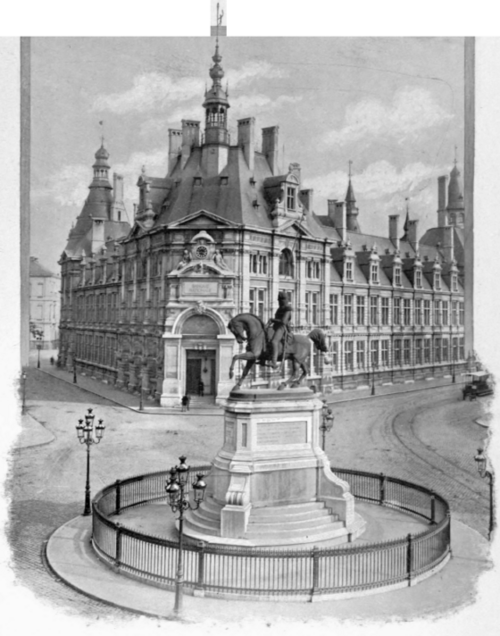
The National Bank And Leopold Monument, Antwerp.
Before the bar of History no nation has committed such atrocious crimes, or brought such evil upon millions of the world's inhabitants as Spain. Her terrible expulsion of the gifted Moors and wealthy Jews was one of the most deadly blows ever given to learning, art, and commerce, aside from its appalling cruelty and bigotry; the record of her conquests and tyrannical government in the New World has left on every foot of soil that she occupied a sickening trail of blood; and, while she ruled the Netherlands, she made the lives of its inhabitants a hell on earth, by pillaging cities, slaughtering, torturing, and burning thousands of innocent men, women, and children, and lighting every market-place with the fires of the Inquisition. In the whole history of mankind there is no sadder and more awful picture than that of the decline and wretchedness of this superbly prosperous and artistic country under the rule, of Spain. Thousands abandoned the Netherlands and fled to England, and thousands who remained were put to death by fire and sword. In 1568 Antwerp had a population of one hundred and twenty-five thousand. Twenty years later its inhabitants numbered only fifty-five thousand. Since then, till recently, a series of misfortunes, including wars, political vicissitudes, revolutions, and unfortunate maritime decrees, has kept it from recovering its former prosperity. At present, however, it is rapidly regaining its lost fortunes, and if it has half a century more of peace, under as good a government as that of Leopold II., it will take long strides toward regaining the position it once occupied, - that of the leading maritime city.
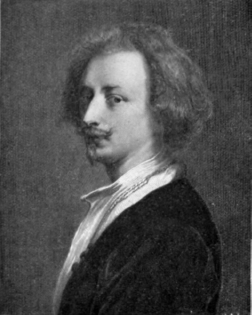
Van Dyck.
Antwerp's cathedral spire has held the admiration of the world for centuries, and well deserves the eulogy of Napoleon, who compared it to a piece of Mechlin lace. On account of the flatness of the surrounding country, it is visible at a great distance, long before the rest of the town is seen, and the impression which it makes on the approaching tourist, who, as he sails along the winding Schelde, watches this solitary shaft of stone embroidery cutting its slender silhouette upon the sky, will not be easily forgotten. Its airy pinnacles contain about one hundred bells - the smallest sixteen inches in circumference, the largest weighing eight tons - and from these there floats out upon the air a combination of melodious sounds scarcely surpassed, I think, in Europe. It is hard to realize that this graceful tower was standing, in peaceful beauty, through all the dreadful scenes of carnage which have stained the history of Antwerp, and that its chimes rang out as sweetly then as now, above the shouts of triumph and the moans of anguish in the streets below. Aside from its bell-tower, however, the cathedral of Antwerp is disappointing. Not only has the space surrounding it been invaded by a number of jmean buildings, but the effect of the interior is sadly marred by the presence of whitewashed walls and columns. Still, as the spire redeems the exterior, so the interior of the church is atoned for, and even endeared to lovers of art, by the two masterpieces of Rubens which hang on either side of the high altar: the "Elevation of the Cross," and the "Descent from the Cross."
Continue to:


My Books

