


Ireland. Part 26
Description
This section is from the book "Ireland - John L. Stoddard's Lectures", by John L. Stoddard. Also available from Amazon: John L. Stoddard's Lectures 13 Volume Set.
Ireland. Part 26
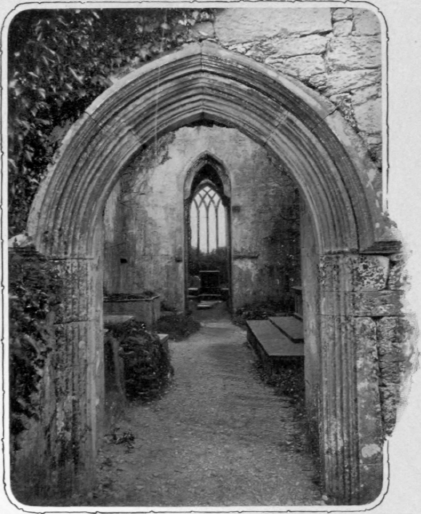
One Of The Many, Muckross Abbey.
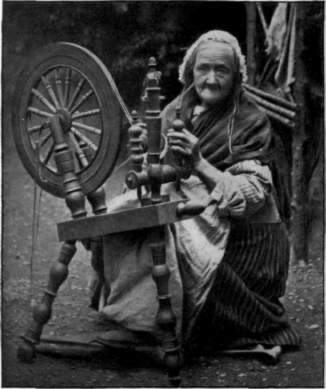
An Exile' S Mother.
"Could Love have saved, thou hadst not died."
One of the greatest charms of Ireland is that her prehistoric relics and the memorials of her Golden Age are usually to be seen, not in a desolate, abandoned waste, like that of Babylon or Baal-bee, but in the midst of some of the loveliest scenery that Earth affords. Her old gray cromlechs, stately Round Towers and ruined abbeys, environed by green turf and brilliant foliage, suggest antique Egyptian scarabs set in frames of emerald and gold. Nor are these difficult of access. Thus, when one has examined to his satisfaction the many important objects of attraction in the capital itself he can, while still continuing to reside there, make daily excursions to at least a score of charming places, scenic, ecclesiastical, literary and historical, the farthest of which can be reached in a few hours. The railway time-tables are so arranged that one can always return to Dublin from any of these trips on the same day. It is not, however, necessary to do this, for many a little inn in the vicinity of the metropolis is clean, commodious and comfortable. One instance of this fact I never can forget, so utterly did it put to flight my preconceived ideas of Ireland. Close by a lovely bit of County Wicklow, called the Glen of the Downs, nestles the little village of Delgany, through which I one day passed while making a tour of that region in a jaunting-car. It was with some misgivings, born of the universal outcry against Celtic untidiness, that I yielded to the advice of my driver, and halted for a few hours at what its sign announced as "Lawless's Hotel." My doubts and hesitation vanished, however, at the threshold. A neatly dressed and pretty maid, with hair like burnished bronze, ushered me into a cool and shaded dining-room, at sight of which I stopped involuntarily, and uttered an exclamation of surprise. The paper on the walls seemed the reflection of a sunset of pale gold, over which wandered sprays of yellow roses, which it was hard to realize were not actual, perfume-breathing flowers. In the centre stood a massive, white-draped dining-table, bright with slender glasses containing delicate ferns and scarlet blossoms. A handsome sideboard, furnished with silver and fine glass, a cottage piano, an old-fashioned mahogany sofa of generous and hospitable proportions, and a cabinet of rare Sevres china, which the maid did not need to assure me had cost " lots of money," further enriched the cozy and attractive room; while on the walls hung several good engravings and pret-tily framed photographs, among which I was amazed to see some views of classic spots in Italy, and one or two places in the Pyrenees for which I have a special fondness. Pleased with my genuine admiration of these objects, the maid inquired blushingly if I would like to see the "drawing-room." Of course I assented, and on beholding it my astonishment increased. It was a little gem of sweet domestic decoration, with dainty, chintz-covered furniture of graceful, comfortable shapes, and cabinets and tables holding bric-a-brac from many a distant corner of the world. Among these I observed a silk screen from China; brass jardinieres and trays from old Benares on the Ganges, brought home perhaps by a soldier relative; and vases from Bohemia, filled with fairy-winged sweet-pea blossoms; together with additional pictures, more rare china, and another piano, for which a plenty of good music lay upon an elegant stand. In my enthusiasm I asked to see the proprietor of this artistic inn, who presently appeared in company with his wife, both coming in directly from the garden where they had been working. Cleverer, brighter and more agreeable people than this young, happy and industrious couple I have rarely met. Thoroughly Irish by birth, education, residence, and patriotism, they had learned, even in the midst of arduous labor, to enjoy life. The pictures I had seen upon the walls had been collected by them in their travels on the Continent, and they were planning a trip to Egypt in the following winter. I gave them, therefore, the address of my old dragoman there, smiling meantime to think how totally different from the usual idea of Irish innkeepers Mr. and Mrs. Lawless were. After a stroll with them through their large and well-kept garden, it was with genuine regret that I said farewell to my warm-hearted hosts, who by their cordial sympathy had become so like old friends, that I could scarcely realize that an hour before we had been utter strangers, and that I probably should never speak with them again. Their pretty home I cannot truthfully offer as a representative type of Ireland's hotels; but it exists, as any one may verify who cares to do so. Sweet little inn of leaf-embowered Delgany! The dainty picture that you left upon my memory can never fade.
Continue to:


My Books

