


Ireland. Part 8
Description
This section is from the book "Ireland - John L. Stoddard's Lectures", by John L. Stoddard. Also available from Amazon: John L. Stoddard's Lectures 13 Volume Set.
Ireland. Part 8
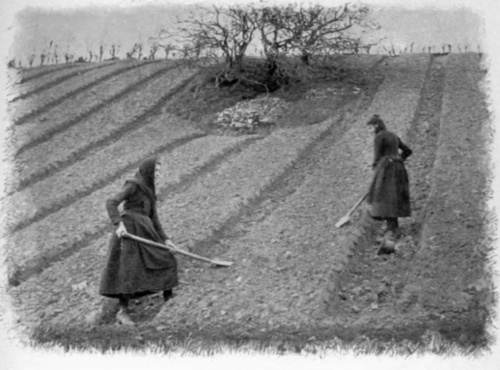
The Crop That Failed.

Grave Of Barry Sullivan.
It was this frightful picture of unutterable misery that the worn, wearied veteran, when more than seventy years of age, was forced to look upon, as he descended to the grave. Powerless to relieve the overwhelming wretchedness, he was unable to endure the anguish that it caused him; and he died, virtually, of a broken heart, hopelessly grieving for the people whom he had so fondly loved and long defended. The noble monument to O'Connell towers far above all other objects in the cemetery, including even the fine mortuary Chapel; but there are many shaded avenues and winding paths, along which one may walk between the resting-places of the dead and beautifully sculptured tributes to their memory.
One of the most tasteful of these marks the grave of Barry Sullivan, the tragedian. Upon a pure white pedestal stands an equally spotless statue of the actor, representing him as Ham-let, the skull of " Poor Yorick" in his hand. The face is frank and open, the posture easy, the costume graceful, and the whole work one that made me feel that, had I known the man, I should have loved him. The statue rises, like a sculptured flower, into the pure, sweet air, meeting the sunshine and the rain with all the freshness of immortal youth. The seed that caused this crystallized florescence reposes in the earth beneath. One wonders which was, after all, the better for poor Barry Sullivan, life or death; for who can be quite certain that one should not envy him, if, as the inscription tells us,
"After life's fitful fever he sleeps well"?
Almost within the shadow of the O'Connell monument rests the devoted patriot, Charles Stewart Parnell. No stately shaft or marble statue marks his place of sepulture. Only a mound of green turf covers him, surmounted by an iron cross, around which numerous floral wreaths are placed by those who love his memory, and have not forgotten the benefits he won for Ireland. His death is still too recent for even a dispassionate discussion of his work and character to be acceptable to either friends or foes. But this may surely be conceded, - always a loyal son of Ireland, a censurable weakness in his private life (common enough to poor humanity) made him, who otherwise had been invulnerable, the victim of abuse, ingratitude, and treachery. That he, too, died heart-broken is well known; but when the earth of Ireland covered him, there came reaction. It had been easy, even for those who were not " without sin," to cast upon him the sharp, cruel stones of genuine or pretended scorn; but there are those in Ireland to-day who title of the house, being as carefully carved in the marble as the name and age. This certainly shows that the Irish are attached to their homes, and do not change their abodes with either the alacrity or frequency of residents inmost Amer-ican cities. The other point that especially attracted my attention was the delicate wording of the numerous little signs, placed on the edges of the walks. Instead of the curt order: "Keep off the grass," or " Visitors must not touch the flowers," I here read: "Please do not injure flowers or grass. They are sacred to the dead."
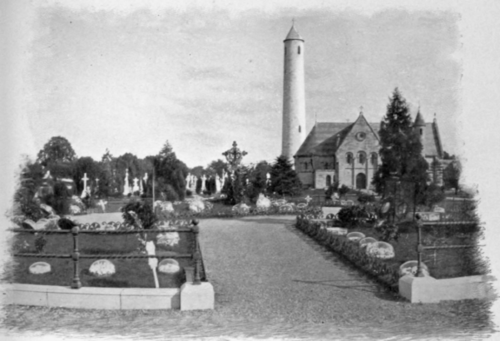
Parnell's Grave.
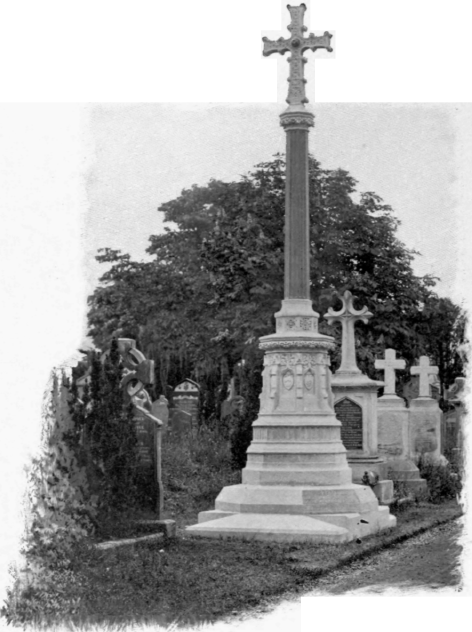
In the most prominent street of Dublin, among the people whom he loved and sought to elevate, stands the white marble figure of a priest. Beautiful in itself, it is additionally interesting from the history of the man whom it commemorates. It is the statue of Father Mathew, the "Apostle of Temperance." A friend and contemporary of O'Connell, this eloquent ecclesiastic labored to emancipate his country-men from slavery to their appetites as strenuously as the "Libera-tor" strove to free them from political oppression. They were unequal in their powers of oratory; but both possessed a wonderful magnetism, which, when united to unquestionable sincerity, carried everything before them. Ireland, always quick to give back love for love, still cherishes their memory, and guards their precious dust. It is but natural, however, that more monuments and statues should have been reared to the political, than to the spiritual, champion. O'Ccnnell's work was national, nor was there one of Erin's sons who did not share in the benefits which his rare cleverness and courage won. The work of Father Mathew, on the other hand, was principally individual, and only indirectly did the nation, as a whole, participate in his success. O'Connell's method of ameliorating Ireland was heroic; resembling that of the engineer who, in attempting to liberate a vessel locked in Arctic ice, makes use of vigorous measures to break up the frozen fields and force a channel to the open sea. The influence of Father Mathew was like the quiet action of the Gulf Stream, whose milder air and warmer waters surely and steadily dissolve the glacial barriers, till suddenly the. great result is seen to have been gained, and the emancipated ship floats out in safety. Yet the two men worked really hand in hand; and the illustrious leader could not have controlled so well the enormous crowds that flocked to hear him, had he not been so ably seconded by Father Mathew, whose eloquent appeals restrained them from indulgence, and gave to the huge gatherings, as has been said, a semi-religious character.
Continue to:


My Books

