


Spain. Part 26
Description
This section is from the book "Spain - John L. Stoddard's Lectures", by John L. Stoddard. Also available from Amazon: John L. Stoddard's Lectures 13 Volume Set.
Spain. Part 26

The Alhambra Battlements.
Deeds like this can best explain to us the mystery of the Moorish downfall. It is the old, old story of internal weakness and dissension. For where the caliph's wives were numerous, each one aspired to have her son succeed his father on the throne, and wished that the sons of other consorts should be considered illegitimate. And thus arose within these halls those plots and intrigues, which form the usual history of Oriental dynasties and pave the way to crime and ruin. Hence, when the Moors had become enervated by luxury and intrigue, their fate was sealed. A less refined but sturdier race was to supplant them, and did so in the very year that it also went forth to find and conquer a New World. Upon the second day of January, 1492, the plain before Granada was covered with a Spanish army, impatient to advance and take possession of the Moorish palace. For the long and memorable war had ended with the surrender of Granada. It was a perfect morning. The old vermilion towers of the Alhambra gleamed beneath a cloudless sky. Among the Moors a melancholy silence prevailed, but on the plain below the air was rent with shouts of victory and hymns of praise. The Spanish army was drawn up in line, their banners fluttering, their swords and armor glittering in the sun. Meanwhile, from a humble gate beneath the Tower of Justice, a mournful cavalcade came sorrowfully forth. It was composed of the family of Boabdil, last of the sovereigns of Granada, and had been thus sent off privately in advance, that they might not behold the exultation, possibly the insults, of the enemy. They were to proceed to a lonely spot and wait there until he should overtake them. His mother, it is said, rode on in silence, pale as death, yet able to control her feelings; but his young wife gave way to bitter lamentation, and had to be supported by her faithful guards, who walked beside her horse, themselves quite overcome with grief.
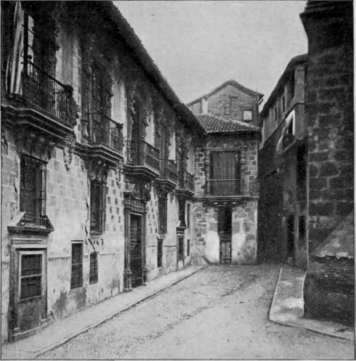
A Street In Granada.
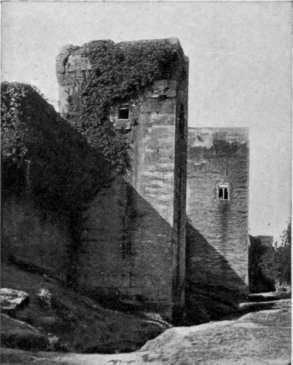
A Bit Of The Alhambra Walls.
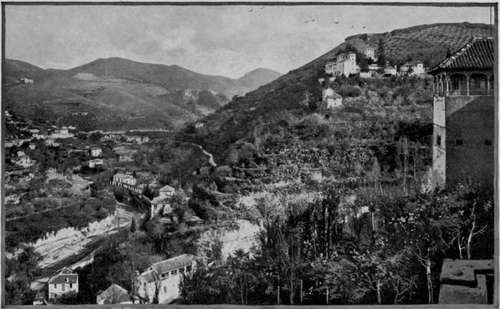
The Alhambra Hill.
Meantime, from another part of the Alhambra walls emerged Boab-dil, with some fifty cavaliers, and rode sadly downward toward the plain. In his hand he held the keys of the Alhambra, and as he approached King Ferdinand he gave them to his conqueror, exclaiming: "These keys are thine, O King, since Allah has decreed it." Then with the melancholy of a broken heart, he made this one request, that the gate through which he had just come to yield his palace and his kingdom should be walled up, never again to be repassed by mortal foot. The Spaniard granted his entreaty; and, in fact, the portal was closed up with masonry and has remained so ever since.
One of the mountains near Granada is still called "The Last Sigh of the Moor," because upon its crest the retreating monarch gazed for the last time on the Alhambra. This last Moorish gem had been transferred to the Spanish crown, the banner of the Christians floated over the vermilion towers, and all was lost. Behind him lay the most exquisite situation on earth; before him lay the desert of Africa, as cheerless as the prospects of a dethroned fugitive. What wonder that he wept in anguish, exclaiming: "God is great, but when did ever misfortune equal mine?" Yet his mother embittered his grief by exclaiming, "You weep now like a woman over what you could not defend as a man."
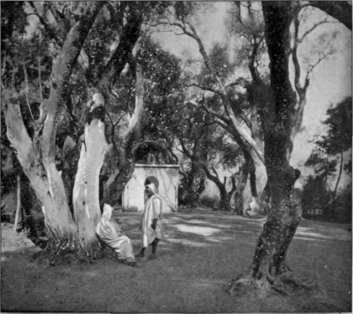
Among The Moors In Africa.
"The fascination and allure Of the sweet landscape chain our will; We also linger on the hill, Our parted lips are breathing still The last sigh of the Moor."
Beyond the summit where Boabdil breathed farewell to his ancestral home rises the chain of the Sierra Nevada, covered with dazzling snow, and piercing the blue sky at a height of eleven hundred feet. Rightly did the Arab poets compare these mountains to a spark-lingmass of mother-of-pearl, - a vision never to be forgotten. They have been the pride of Granada ever since fleet horsemen used to bring ice in baskets from their sparkling heights, to cool the drink of the Moorish kings. Beautiful in form and color, they stand above this Damascus of the West like beneficent deities, fanning her with cooling breezes, tempering her summer heat, and feeding her limpid rivers from an unfailing treasure-house of snow. What a contrast between this earthly paradise and the present home of the Moors in Africa! Their glory is departed. Little remains to them now save bitter memories. With the exception of the Jews, there is not another such case as theirs in history. Spain still appears to them as a "Paradise Lost." There is a sadness in the face of every genuine Moor that I have ever seen. Reserved and melancholy, with features rarely brightened by a smile, they seem to bear the consciousness of a lost paradise. It is said that some of them even now retain the keys to their old family homes in Spain. And to this day, when one of their number is unusually pensive or sad, his comrades will whisper as they point to him, "He is thinking of Granada."
Continue to:


My Books

