


Yellowstone National Park. Part 3
Description
This section is from the book "Yellowstone National Park - John L. Stoddard's Lectures", by John L. Stoddard. Also available from Amazon: John L. Stoddard's Lectures 13 Volume Set.
Yellowstone National Park. Part 3
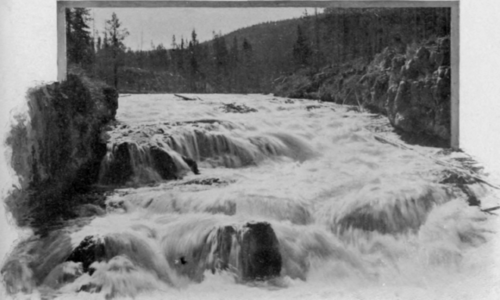
Fire-Hole R1ver.
It is sad to reflect how the buffaloes of this continent have been almost exterminated. As late as thirty years ago, trains often had to halt upon the prairies; and even steamboats were, occasionally, obliged to wait an hour or two in the Missouri River until enormous herds of buffalo had crossed their path. Now only about two hundred of these animals are in existence, - the sole survivors of the millions that once thundered over the western plains, and disputed with the Indians the ownership of this great continent.
Until very recently, travelers on our prairies frequently beheld the melancholy sight of laborers gathering up the buffalo bones which lay upon the plains, like wreckage floating on the sea. Hundreds of carloads of these skeletons were shipped to factories in the east. Now, to protect the few remaining buffaloes, as well as other animals, our troops patrol the Park even in winter. The principal stations are connected by telephone, and information given thus is promptly acted on. No traveler is allowed to carry fire-arms; and any one who attempts to destroy animal life is liable to a fine of one thousand dollars, or imprisonment for two years, or both.
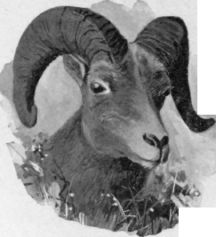
Mountain Sheep.
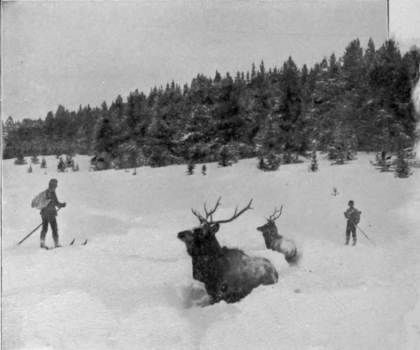
Yellowstone Elk.
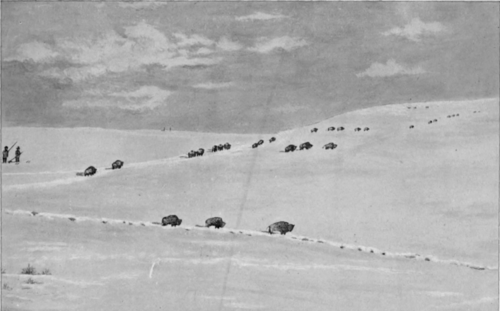
Buffaloes In The Snow.
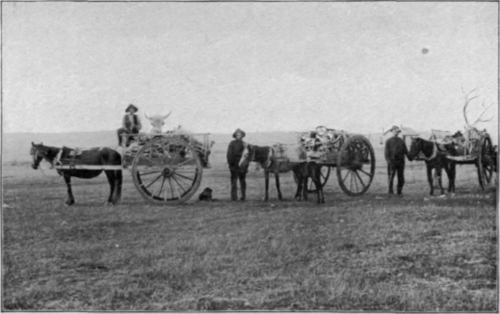
Gathering Buffalo Bones.
Still another task, devolving upon the Military Governor of the Park, is the building and repairing of its roads. No doubt the Superintendent is doing all he can with the amount of money that the Government allows him; but there is room for great improvement in these thoroughfares, if Congress will but make a suitable appropriation for the purpose. At present, a part of the coaching-route is of necessity traveled over twice. This should be obviated by constructing one more road, by which the tourist could be brought to several interesting features of the Park that are now rarely seen.
Every one knows how roads in Europe climb the steepest grades in easy curves, and are usually as smooth as a marble table, free from obstacles, and carefully walled-in by parapets of stone. Why should not we possess such roads, especially in our National Park ? Dust is at present a great drawback to the traveler's pleasure here; but this could be prevented if the roads were thoroughly macadamized. Surely, the honor of our Government demands that this unique museum of marvels should be the pride and glory of the nation, with highways equal to any in the world.
Only a few hundred feet distant from the Mammoth Springs Hotel stands a strange, naturally molded shaft of stone, fifty-two feet in height. From certain points its summit calls to mind the head-dress of the Revolution, and hence its name is Liberty Cap. It is a fitting monument to mark the entrance into Wonderland, for it is the cone of an old geyser long since dead. Within it is a tube of unknown depth. Through that, ages since, was hurled at intervals a stream of boiling water, precisely as it comes from active geysers in the Park to-day. But now the hand of Time has stilled its passionate pulsations, and laid upon its stony lips the seal of silence. At only a little distance from this eloquent reminder of the past I peered into a cavern hundreds of feet deep. It was once the reservoir of a geyser. An atmosphere of sulphur haunts it still. No doubt this whole plateau is but the cover of extinguished fires, for other similar caves pierce the locality on which the hotel stands. A feeling of solemnity stole over me as I surveyed these dead or dying agents of volcanic power. In the great battle of the elements, which has been going on here for unnumbered centuries, they doubtless took an active part. But Time has given them a mortal wound; and now they are waiting patiently until their younger comrades, farther up the Park, shall, one by one, like them grow cold and motionless.
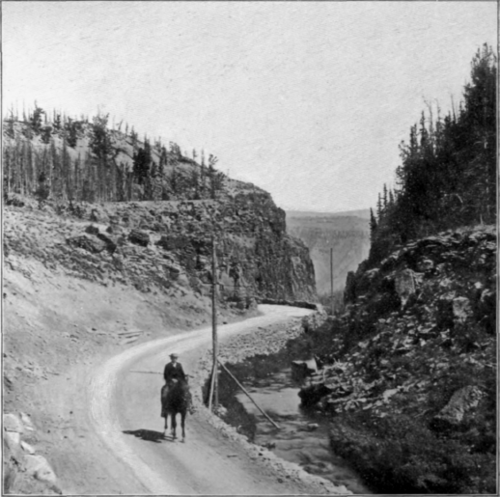
A Yellowstone Road.
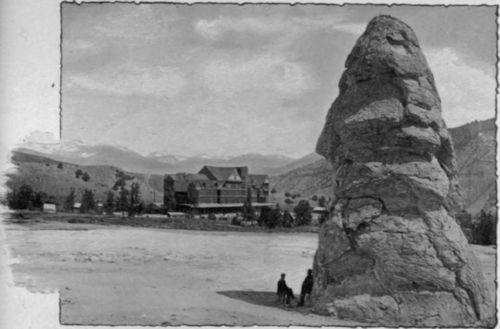
Liberty Cap.
Continue to:


My Books

